Articles

Latest posts

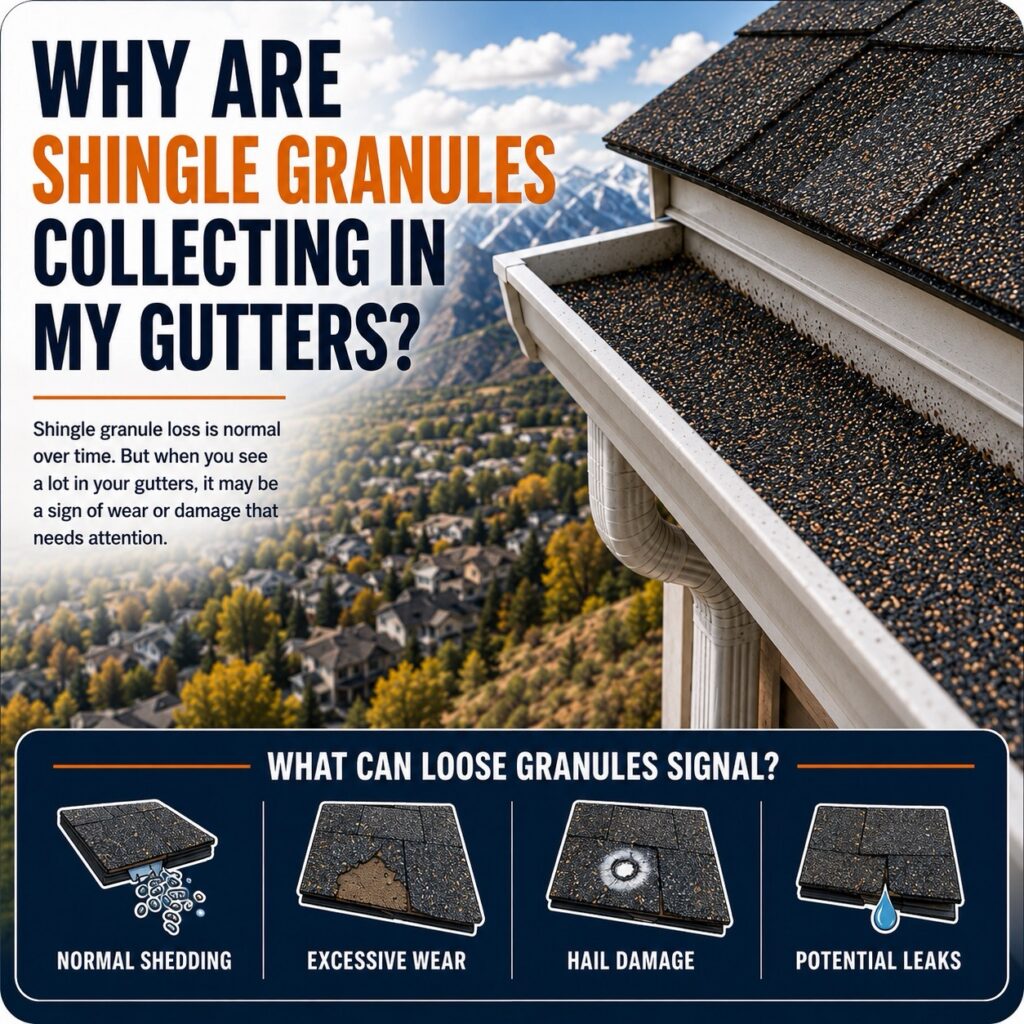
Why Are Shingle Granules Collecting in My Gutters?

Quick answer:  Some loose granules are normal, especially after installation, but a growing amount combined with bald spots, exposed asphalt, cracking, hail marks, or advanced age deserves a professional inspection. Good decisions separate visible symptoms from the underlying cause. The company’s asphalt shingle roofing  page explains the related service context before an on-site recommendation. Key takeaways Some loose granules are normal, especially after installation, but a growing amount combined with bald spots, exposed asphalt, cracking, hail marks, or advanced age deserves a professional inspection. Utah roofs experience strong sun along...

Continue reading: Why Are Shingle Granules Collecting in My Gutters?
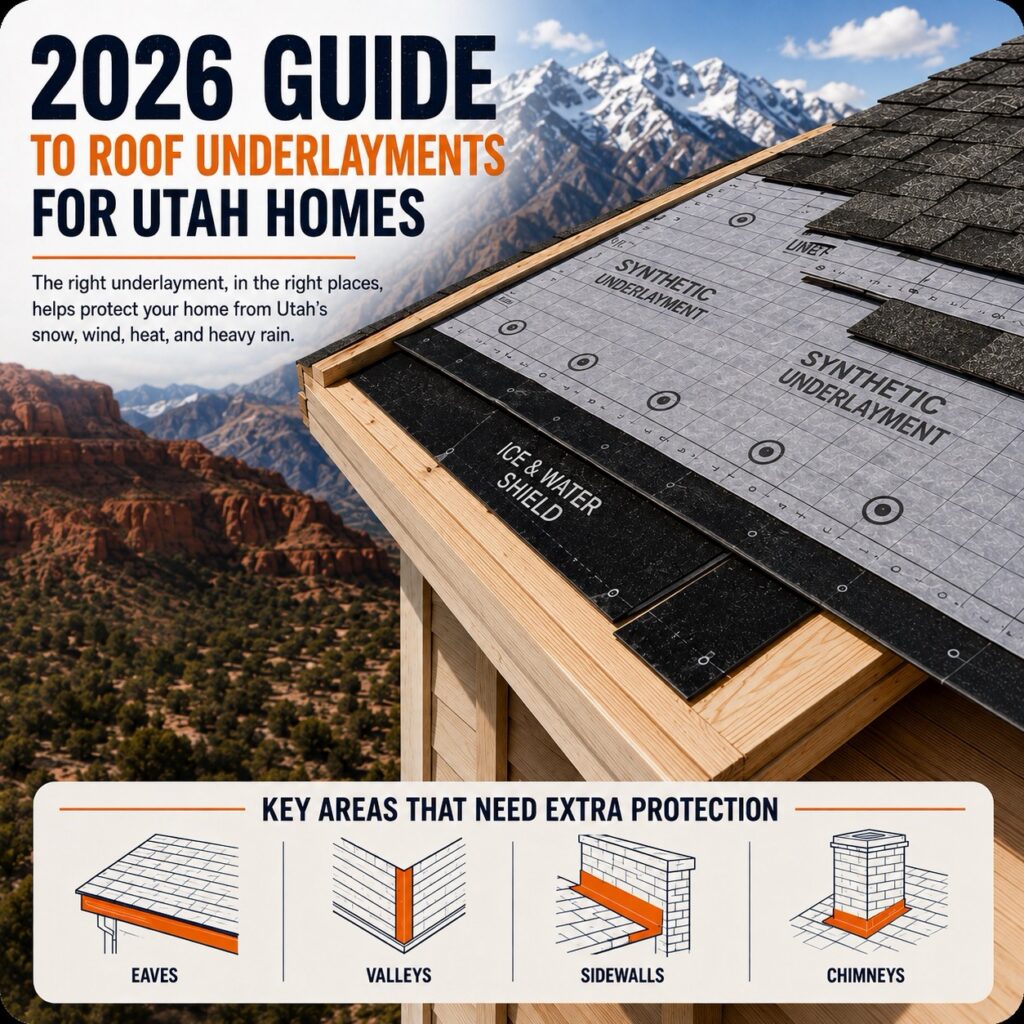

2026 Guide to Roof Underlayments for Utah Homes

Quick answer:  Roof underlayment is a secondary water-shedding layer beneath the finished covering. In Utah, the choice and placement should reflect roof slope, covering, valleys, eaves, penetrations, wind exposure, and ice-prone areas. A product label or roof age cannot settle this question by itself. Review the actual conditions and use  residential roofing services  as a starting point for relevant service options. Key takeaways Roof underlayment is a secondary water-shedding layer beneath the finished covering. In Utah, the choice and placement should reflect roof slope, covering, valleys, eaves, penetrations, wind exposure,...

Continue reading: 2026 Guide to Roof Underlayments for Utah Homes

2026 Guide to Roofing for Utah’s Climate Zones

Quick answer:  Utah does not have one roofing climate. A good roof specification changes with elevation, sun exposure, snow, wind, wildfire exposure, and the building itself; material choice is only one part of the decision. The practical answer comes from the whole assembly, exposure, and property goals. Use  Utah roofing resources  to frame the questions a written scope should answer. Key takeaways Utah does not have one roofing climate. A good roof specification changes with elevation, sun exposure, snow, wind, wildfire exposure, and the building itself; material choice is only...

Continue reading: 2026 Guide to Roofing for Utah’s Climate Zones

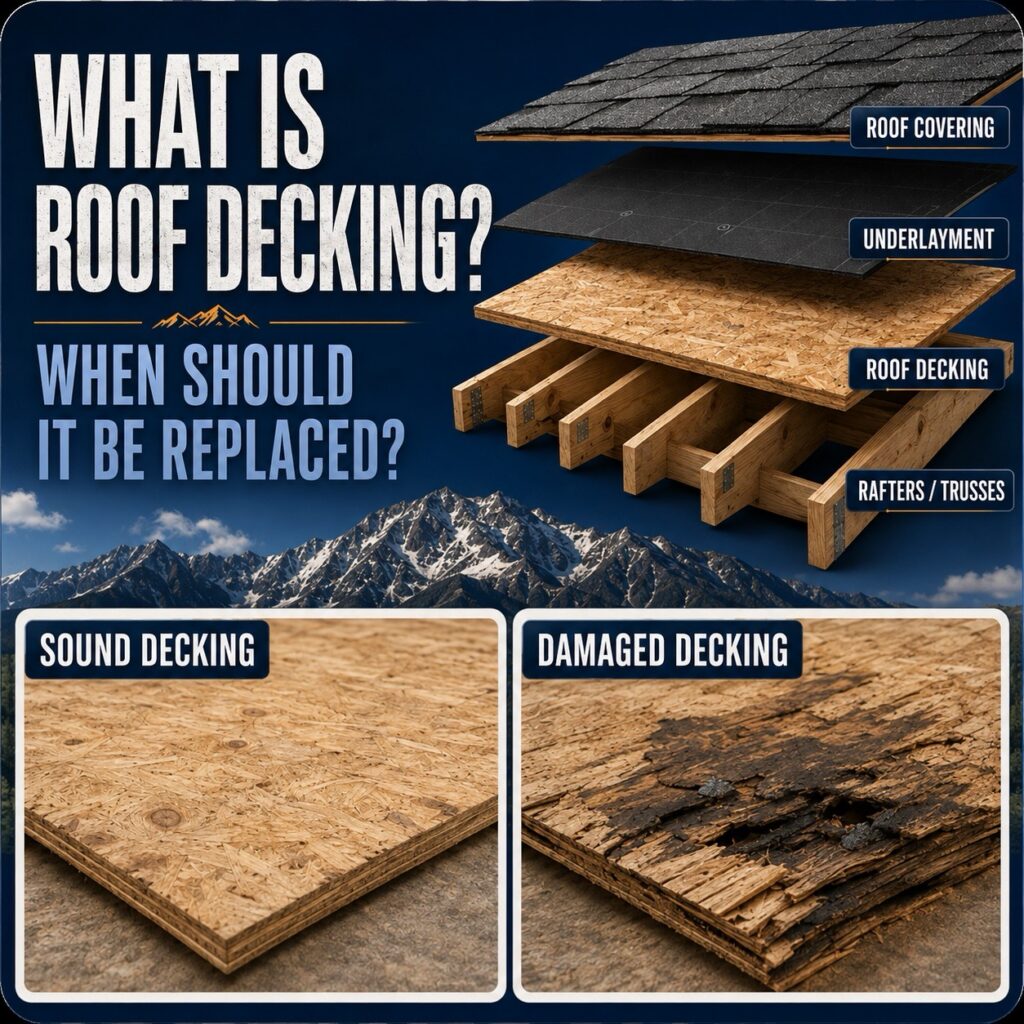
What Is Roof Decking, and When Does It Need to Be Replaced?

Quick answer: Roof decking, also called sheathing, is the solid surface attached to the roof framing beneath the underlayment and roof covering. Damaged sections may need replacement when they are soft, rotted, delaminated, broken, structurally inadequate, or unable to hold fasteners as required. The full extent is often confirmed only after tear-off. Decking is hidden during normal use, so homeowners may first hear about it in a roofing estimate. A clear proposal should explain how the contractor will inspect the deck, document damage, price additional work, and obtain approval before...

Continue reading: What Is Roof Decking, and When Does It Need to Be Replaced?

Buying or Selling a Utah Home? When to Get a Roof Inspection

Quick answer: A roof inspection is useful when a general home inspection identifies concerns, the roof's age or history is unclear, stains or prior repairs are visible, a recent storm may have caused damage, or the parties need a roof-specific repair or replacement opinion. Buyers should schedule it within their inspection timeline, while sellers often benefit from addressing uncertainty before listing. A home inspection and an appraisal serve different purposes from a contractor's roof inspection. The roofing review focuses on visible roof-system condition and practical repair or replacement options. It...

Continue reading: Buying or Selling a Utah Home? When to Get a Roof Inspection

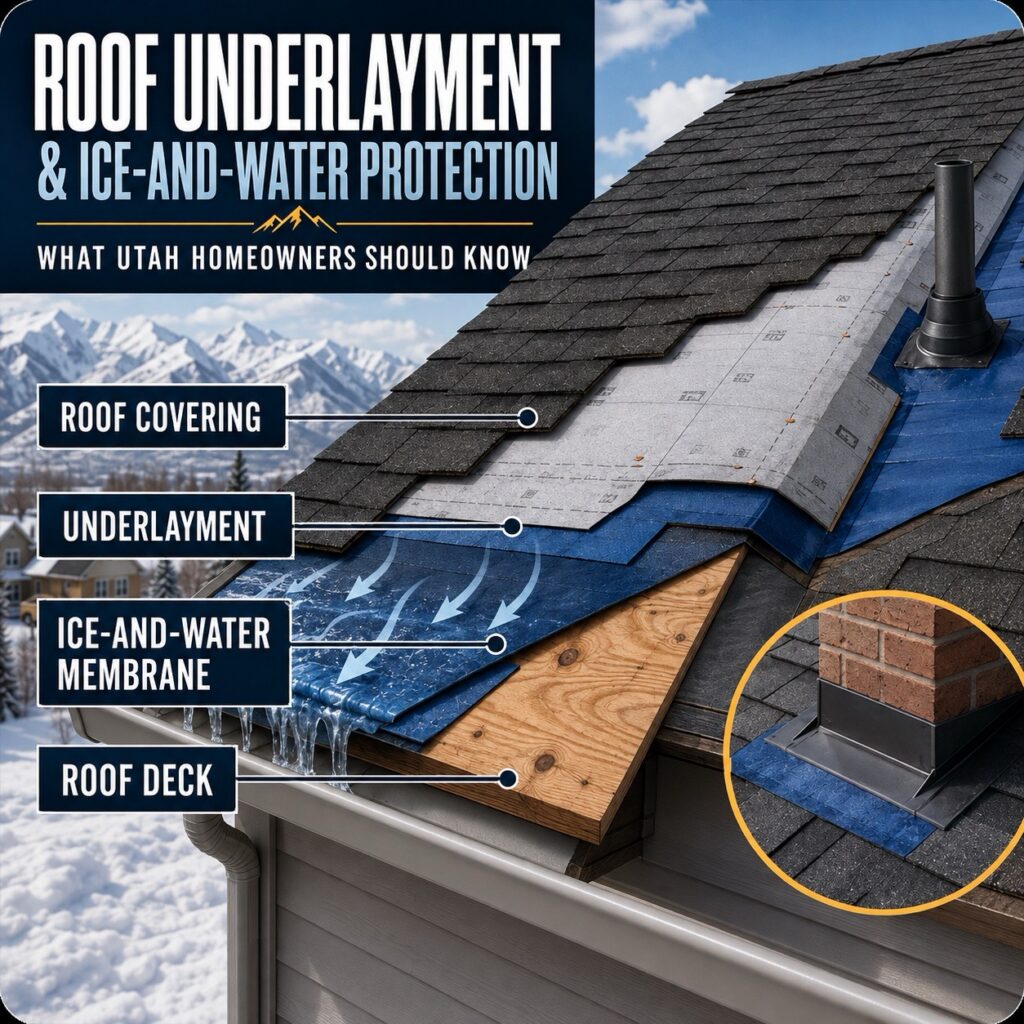
Roof Underlayment and Ice-and-Water Protection: What Utah Homeowners Should Know

Quick answer: Roof underlayment is a water-resistant layer installed over the roof deck and beneath the visible roof covering. Self-adhered ice-and-water protection is a specialized membrane used in selected vulnerable areas or as required by the roof design, manufacturer instructions, and applicable building requirements. Neither layer makes poor flashing or damaged roofing irrelevant. These materials are mostly hidden after installation, which makes them easy to overlook when comparing proposals. Yet their type, placement, compatibility, and installation affect how the full system manages wind-driven rain, snowmelt, and temporary exposure during construction....

Continue reading: Roof Underlayment and Ice-and-Water Protection: What Utah Homeowners Should Know