

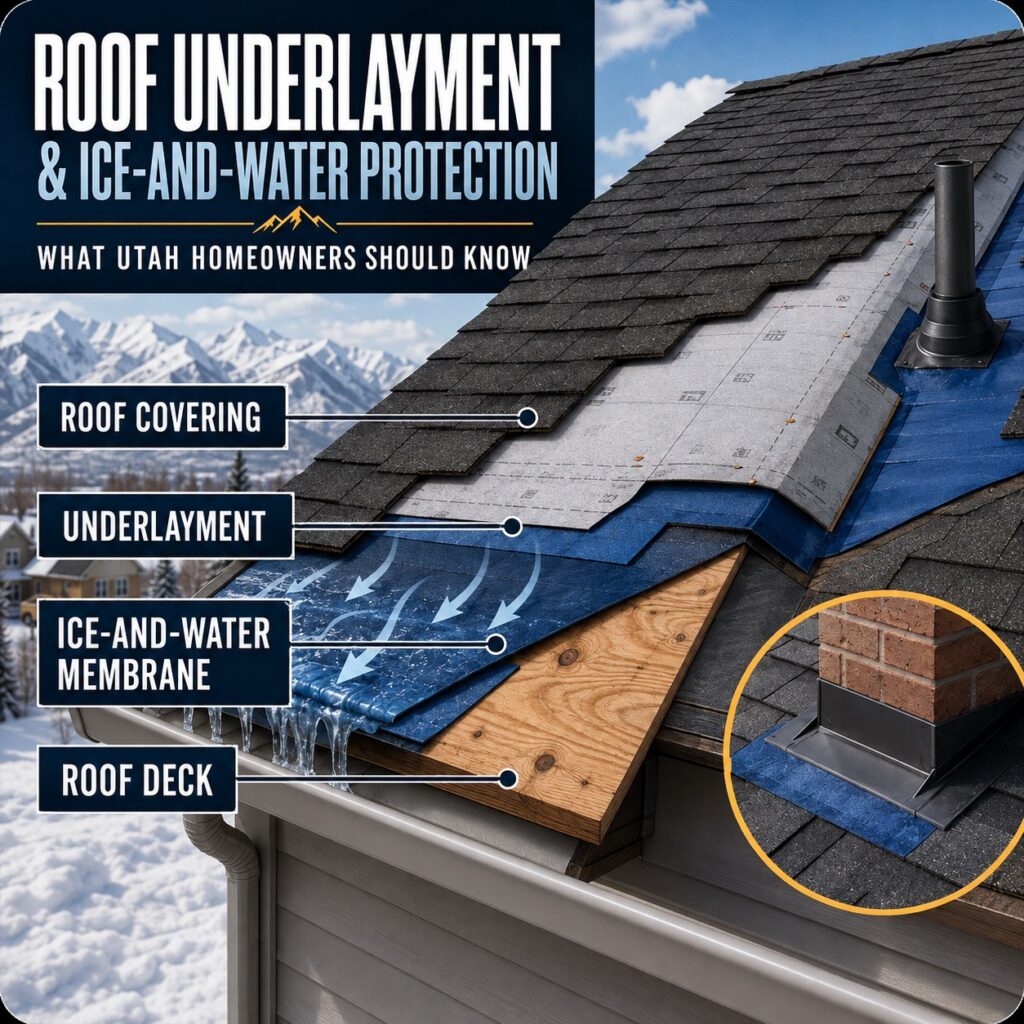
Quick answer: Roof underlayment is a water-resistant layer installed over the roof deck and beneath the visible roof covering. Self-adhered ice-and-water protection is a specialized membrane used in selected vulnerable areas or as required by the roof design, manufacturer instructions, and applicable building requirements. Neither layer makes poor flashing or damaged roofing irrelevant.
These materials are mostly hidden after installation, which makes them easy to overlook when comparing proposals. Yet their type, placement, compatibility, and installation affect how the full system manages wind-driven rain, snowmelt, and temporary exposure during construction.
Key Takeaways
Underlayment is a secondary water-shedding layer, not the finished roof surface.
Self-adhered membrane seals closely to the deck and around many fasteners.
Placement depends on the roof system, vulnerable details, manufacturer instructions, and local requirements.
A complete proposal should identify the product type and where it will be installed.
What Is Roof Underlayment?
Underlayment covers the roof deck before shingles, metal panels, or another roof covering is installed. It provides temporary protection during construction and a secondary layer beneath the finished system. Common categories include traditional asphalt-saturated felt and synthetic underlayments, each with product-specific installation instructions.
Underlayment must lie correctly, remain compatible with the covering, and be fastened or attached as required. Wrinkles, tears, prolonged exposure, poorly detailed laps, and incorrect fastening can reduce performance. The visible roof material still provides the primary weather surface.
What Is Ice-and-Water Protection?
Ice-and-water protection is usually a self-adhered membrane. It bonds to a prepared roof deck and can seal around many fasteners. It is often considered for areas where water can back up or concentrate, including eaves, valleys, penetrations, and some wall or low-slope transitions.
The membrane is not a substitute for correct flashing, slope, drainage, or ventilation. It also needs compatible materials and proper surface preparation. Covering a poor detail with membrane does not guarantee that water will never enter.
Why Does This Matter in Utah?
Northern Utah roofs experience snow, freeze/thaw cycles, hail, wind, intense sun, and large temperature changes. Snowmelt can move toward colder roof edges, while wind-driven precipitation can test valleys and penetrations. A carefully designed secondary layer can add protection beneath the covering when water reaches a vulnerable area.
Ice dam prevention still depends on more than membrane. Air sealing, insulation, ventilation, roof geometry, and drainage influence how snow melts. Self-adhered eave protection can reduce the chance of backed-up water reaching the deck, but it does not stop the ice dam from forming.
Where May Self-Adhered Membrane Be Used?
Depending on the roof, system, manufacturer, and applicable requirements, a contractor may specify membrane at:
Eaves and roof edges exposed to backed-up snowmelt
Valleys where water from two slopes concentrates
Chimneys, skylights, and roof-to-wall transitions
Plumbing vents and other penetrations
Low-slope transitions or other vulnerable details
More is not automatically better. Some assemblies need careful vapor and drying analysis, and material compatibility matters. The contractor should explain why the selected placement fits the specific roof.
How Does Underlayment Differ on Asphalt and Metal Roofs?
Asphalt shingles and metal roofing have different installation details and exposure to heat, movement, and condensation. The underlayment selected for one system may not be the right product for another. Metal roofs may require high-temperature-rated or system-specific products in certain applications.
When comparing material options, ask how the deck, underlayment, flashing, ventilation, and covering work together. All Star Roofing installs both residential roofing systems and metal roofing, so the recommendation can be tied to the chosen assembly.
What Should a Roofing Estimate Say?
The proposal should identify the underlayment category or product, the planned self-adhered membrane locations, and how unexpected deck damage will be handled. It should also describe flashing, roof edges, valleys, penetrations, ventilation work, tear-off, and cleanup.
If the proposal says only “felt” or “ice shield,” ask for more detail. Confirm which manufacturer instructions and applicable requirements the installer will follow. An instant roof estimate can start the budgeting conversation, but an on-site review is needed to define the actual system.
Can Underlayment Fix an Existing Leak?
Underlayment is normally installed as part of roof construction or replacement, not slipped beneath an intact roof as a simple leak repair. Existing leaks require diagnosis. A repair may involve shingles, panels, flashing, a penetration, a valley, or damaged decking.
During replacement, old roofing is removed so the deck can be inspected. Wet, soft, or deteriorated areas must be addressed before new underlayment covers them. The new system needs a sound base.
Frequently Asked Questions
Is synthetic underlayment always better than felt?
Not in every situation. Product properties, roof system compatibility, exposure limits, fastening, and manufacturer instructions all matter.
Does ice-and-water membrane prevent ice dams?
No. It is intended to help resist water that backs up beneath the covering. Ice dam causes may involve attic heat, insulation, ventilation, and weather.
Should the entire roof be covered with self-adhered membrane?
That depends on the assembly and design. Whole-roof coverage can affect drying and must be evaluated for the specific project.
Can underlayment be reused during reroofing?
A reroofing plan should follow the selected system and applicable requirements. Full tear-off typically exposes the deck so new layers can be installed and hidden damage reviewed.
Can I see underlayment after the roof is finished?
Usually not. Ask for product information and installation photographs as part of the project record.
Ask About the Whole Roofing System
For a roof-specific explanation of materials and hidden layers, schedule a free inspection with All Star Roofing or call (801) 381-0727.