
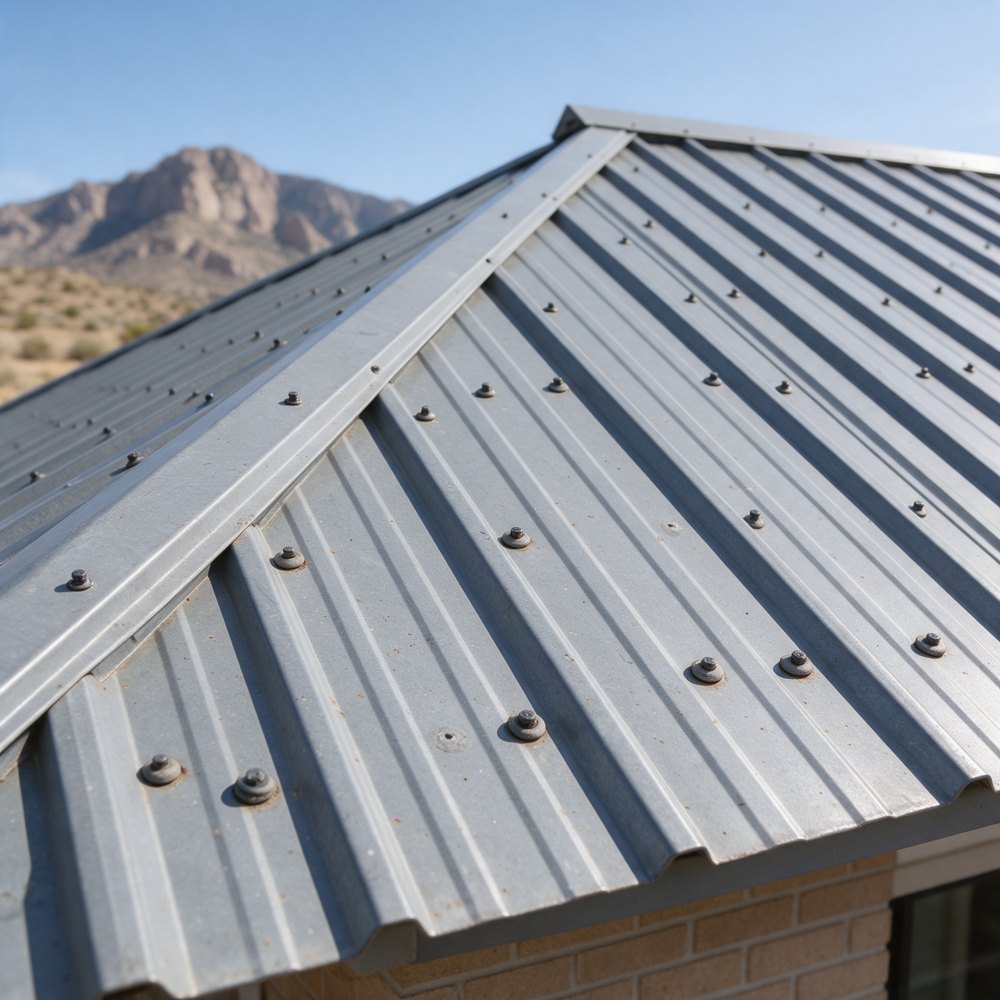
A leaking metal-roof screw is a symptom that needs diagnosis, not an automatic instruction to tighten every fastener. The washer may have deteriorated, the screw may have lost its hold, the hole may have enlarged, or panel movement may be stressing the connection. Water can also enter at a nearby lap or flashing and appear to implicate a screw that is not the source.
On a commercial building, a quick pass with a drill can create additional problems if the fastener, substrate, and panel system are not understood. A lasting repair starts by establishing why the connection failed and whether the problem is isolated or repeated across the roof.
This guide focuses on exposed-fastener metal roofs. Standing-seam systems use different attachment arrangements, often including concealed clips, and should not be maintained as though every visible screw serves the same purpose.
What the screw and washer are supposed to do
An exposed-fastener roof uses specified fasteners to secure panels to the supporting material. A sealing washer helps manage water at the penetration. The connection depends on the correct screw, compatible materials, sound substrate engagement, proper placement, and the specified installation.
Too little compression can leave the washer unable to seal properly. Too much can distort or damage it and deform the panel. A screw driven at an angle can produce uneven compression. A fastener that misses its intended support cannot provide the connection simply because its head looks tight.
Manufacturer guidance such as MBCI’s discussion of proper fastening explains why installation details matter. The repair specification still needs to match the existing roof system; a general article is not a universal torque setting or replacement-screw schedule.
The age of the washer is only one possible factor. It is important to look at the screw, the panel hole, the supporting material, and the pattern of affected locations together. Otherwise, a new washer can conceal an attachment problem rather than solve it.
Why fasteners can loosen or begin leaking
Metal panels expand and contract as temperatures change. The amount and effect depend on the panel and system. Repeated movement can stress fastener locations, laps, and details, particularly where the roof cannot accommodate movement as intended.
Wind vibration and other building movement can add demands. On a Utah commercial property, the evaluation should consider the actual exposure and roof layout rather than blaming every loose screw on “Utah weather.” Roof height, surroundings, edge conditions, and the original design matter.
Other contributors include improper installation, corrosion, incompatible materials, aged sealing components, weak or deteriorated substrate, and previous repairs that did not address the cause. A replacement screw can also be inappropriate for the existing support even when it appears similar to the original.
That range of possibilities is why a roof should not receive a one-size-fits-all “tighten and seal” treatment without inspection. The repair needs to restore the required attachment and water-management function, not simply make the visible head sit lower.
What a useful inspection should establish
Begin with the leak history. Does water appear only during wind-driven rain, after snowmelt, or during ordinary rainfall? Has the roof been coated, repaired, or penetrated for new equipment? Are there leaks near the perimeter, along a fastener line, or in several unrelated interior locations?
Those observations help direct the investigation, but they are clues rather than a diagnosis. Interior water can travel along panels, framing, or insulation before it becomes visible. A stain does not establish that the screw directly above it is defective.
A professional review should identify the panel type and available system documentation, then evaluate affected fasteners and surrounding details. Depending on the conditions, the contractor may need to assess substrate engagement, enlarged holes, corrosion, panel damage, laps, closures, and penetrations.
Ask for photographs and a plain-language explanation of the findings. A useful report distinguishes confirmed defects from suspected contributors and identifies any areas requiring further investigation. If structural or design questions are involved, the roofing scope should identify the need for the appropriate qualified professional.
| Observed condition | Question to investigate | Why tightening alone may fail |
|---|---|---|
| Aged or distorted washer | Is the washer the only defect? | The screw or hole may also be unsuitable |
| Screw repeatedly backs out | Is movement or substrate engagement involved? | Compression does not restore lost holding capacity |
| Corrosion near the connection | Are materials and exposure compatible? | A new seal does not resolve corrosion or damaged metal |
| Leaks along laps or transitions | Is the entry point elsewhere? | The visible screw may not be the source |
| Widespread repeated defects | Is a larger system repair needed? | Isolated spot work can leave the main problem in place |
If corrosion is part of the findings, read why metal roofs can corrode in Utah’s dry climate. A compatible fastener repair should address the surrounding metal condition as well as the leak.
When a replacement fastener is a reasonable repair
A specified replacement can be appropriate when the roof condition and system guidance support it. That means identifying the required material, diameter, length, thread, washer, and substrate engagement rather than choosing a larger screw by appearance.
An enlarged hole is not automatically repaired by upsizing. The supporting material must still be suitable, and the repair detail must provide the needed connection and seal. Damaged panel material, severe corrosion, or deteriorated support may require a different approach.
Ask whether the recommendation is limited to verified defects, a defined area, or the complete roof. A roof-wide fastener replacement may be justified in some situations, but there should be an explanation and a compatible specification. “We do all metal roofs this way” is not enough.
The proposal should also address affected laps and flashings where needed. Repairing screws while ignoring failing closures or movement-related transitions can leave water entry unresolved. The scope should follow the findings rather than a predetermined product package.
Why sealant and coatings need a defined role
Compatible sealants and specified repair materials can have useful roles in metal-roof work. They should not be treated as substitutes for sound attachment or used indiscriminately over every visible fastener. A material needs to suit the panel, exposure, existing coating, and intended repair detail.
Covering a loose screw with a large patch of sealant does not establish that the screw is secure. It can also make later inspection more difficult. If the connection continues moving, the patch may be asked to accommodate a problem it was not intended to solve.
A coating proposal deserves the same scrutiny. Ask what preparation and repairs must occur first, which existing conditions make the roof a suitable candidate, and what the coating warranty actually covers. Do not interpret a new coating as a new structural attachment system.
Discuss the roof findings with All Star Roofing and confirm the available repair or replacement scope in a written estimate.
Repair, broader restoration, or replacement?
An isolated defect on an otherwise serviceable roof can support a targeted repair. Repeated failures, widespread corrosion, panel deterioration, numerous incompatible patches, or attachment concerns can change the economics. The decision should be based on the condition of the complete roof and the expected result of the proposed work.
Consider a hypothetical comparison. One bid offers to tighten visible screws and apply sealant without describing the substrate. Another identifies weak fastener engagement in a defined area and specifies the necessary support and panel repairs. The second scope may cost more while addressing a problem the first one leaves unresolved. The point is to compare the work, not assume the higher or lower price is inherently right.
For an aging roof with many different leak points, ask what condition will remain after the repair. Will the work resolve the major causes, or is it a limited measure while replacement is planned? A clear answer helps an owner budget without mistaking a temporary reduction in leaks for a complete renewal.
Review commercial roof repair, commercial metal roofing, and commercial replacement options in that context. The inspection findings should lead the recommendation.
What your written repair scope should include
A good proposal should make the boundaries of the work understandable. The owner needs to know which areas are included, what the contractor expects to restore, and what conditions could change the price or require more investigation.
- The roof system and affected locations.
- The findings supporting the proposed repair.
- The specified fasteners and other compatible repair materials.
- The treatment of enlarged holes, damaged panels, corrosion, or unsuitable support.
- Associated lap, closure, flashing, and penetration work.
- How concealed damage or additional defects will be documented and authorized.
- Access, occupant protection, weather limitations, and cleanup.
- The applicable written warranty and any scope-specific exclusions.
All Star Roofing offers a 10-year labor warranty. Ask how the written terms apply to the work being proposed and distinguish that commitment from any manufacturer product or system warranty. Do not assume a localized repair transfers responsibility for every pre-existing part of the roof.
Protect the roof between inspections
Control roof access and keep records of work by other trades. Dropped hardware, new penetrations, equipment movement, and unreported damage can complicate both the roof condition and the leak investigation. Give service contractors a clear process for reporting anything they observe.
Do not send an untrained employee onto the roof with a drill to tighten screws. Metal roofs can be slippery and fragile in unexpected places, and an improvised repair can damage washers, strip holes, or deform panels. Wet, icy, steep, or storm-damaged surfaces add risk.
From safe interior and ground-level locations, note the dates and weather associated with leaks. Photograph affected areas and keep repair invoices. If there is active water intrusion, tell the roofing contractor when requesting assistance so immediate protection can be evaluated alongside the permanent scope.
For a commercial building in Orem, Provo, Salt Lake City, or another area All Star Roofing serves, request a roof assessment and estimate or call (801) 381-0727. The goal is a repair matched to the failed connection and surrounding system, with a clear explanation of what the work will accomplish.