

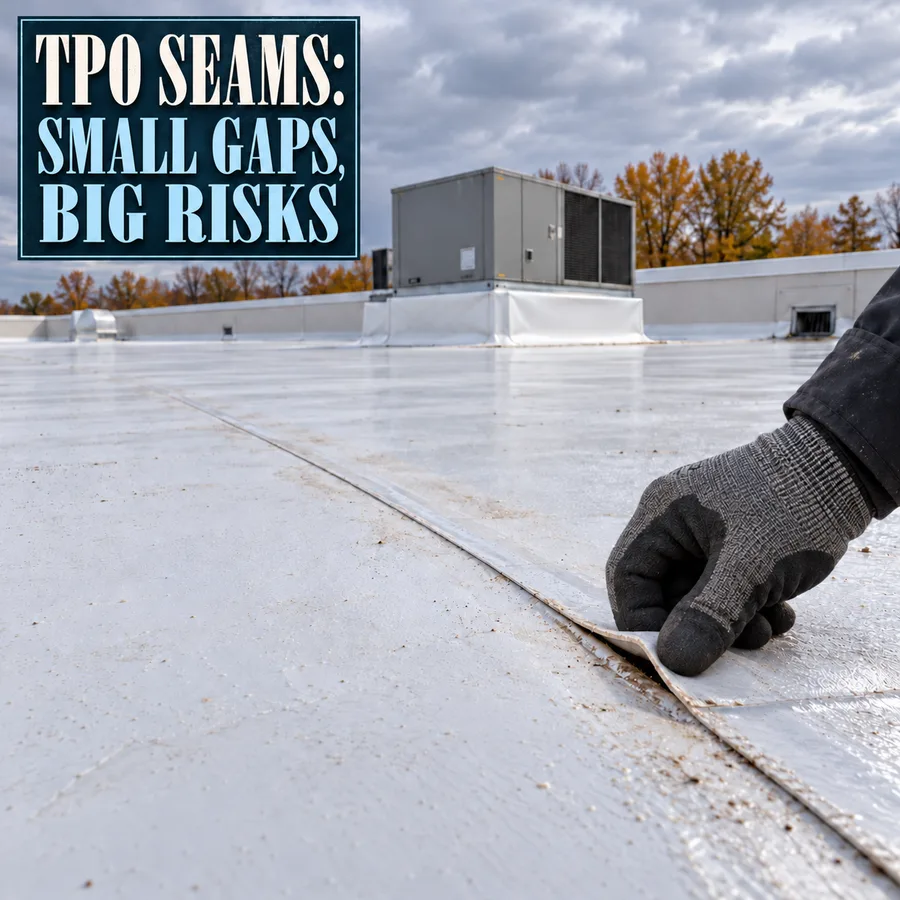
Quick answer: TPO seams join membrane sheets and details into a continuous water-control surface. A fall inspection can identify open edges, contamination, stress, punctures, or failing repairs before snow and freeze-thaw cycles make access and diagnosis more difficult.
Most seams are heat-welded, but the roof also includes flashing membranes, patches, terminations, drains, curbs, and penetrations. A seam-only inspection can miss the actual source of water entry.
Do not probe or patch seams with household sealant. TPO assessment and repair require compatible materials, clean surfaces, trained technique, and attention to the existing system and warranty.
Key Takeaways
- Inspect seams as part of the complete membrane and drainage system.
- Prioritize areas near rooftop traffic, curbs, drains, and previous repairs.
- Moisture may travel within the assembly, so the interior leak may not sit below an open seam.
- Cold, frost, and moisture affect safe access and repair procedures.
What does a TPO seam do?
TPO sheets are commonly joined by hot-air welding that fuses compatible surfaces. Correct heat, speed, pressure, cleanliness, overlap, and equipment setup matter during installation. Flashing and detail work may use different sheet shapes and methods while remaining part of the same system.
A seam can look continuous from standing height while containing a small open edge or contaminated section. Qualified inspectors use system-appropriate methods and should avoid destructive testing that is not part of the plan.
Which seam conditions deserve attention?
Look for visible lifting, wrinkles that stress an edge, fishmouths, cracked or aged patches, cuts, punctures, loose termination, and dirt patterns suggesting water movement. Areas around equipment service paths deserve special attention because tools and foot traffic can affect the membrane.
Not every surface line is a failed seam. Factory edges, cover strips, reinforcement, and prior repairs can create visible changes that require context.
- Field seams and end laps
- Base flashings and curb corners
- Drain and scupper details
- Previous patches and temporary repairs
Why inspect before freezing weather?
Dry, accessible conditions make it easier to clean, examine, and document the membrane. Once snow covers the roof, small defects can disappear, and safe access becomes more complex. Freeze-thaw weather can also move water through an existing opening.
Early inspection gives the owner time to obtain a written scope, coordinate tenants or operations, and schedule compatible materials rather than relying on an emergency patch during a storm.
Can a TPO seam be repaired in cold weather?
Some repairs may be possible when the system, equipment, substrate, surface condition, temperature, and manufacturer procedures allow. Frost, moisture, contamination, wind, and cold materials can interfere with preparation and welding.
The contractor should state whether the work is temporary or permanent, how the area will be prepared, and when it will be rechecked. A generic tube of sealant is not a system-level answer.
What should the inspection report include?
Ask for a roof plan or labeled photos showing the reviewed areas, observed defects, drainage conditions, prior repairs, and recommended priorities. Separate immediate water-entry risks from routine maintenance and longer-term replacement planning.
All Star Roofing can evaluate TPO conditions and connect seam findings to the broader commercial roof. Keep the report in the asset file for comparison after future storms or rooftop work.
Frequently Asked Questions
Are all TPO seams heat-welded?
Field sheets are commonly hot-air welded, but details and repairs vary by system. Confirm the actual assembly and manufacturer procedures.
Can I test a seam with a screwdriver?
Do not probe or cut the membrane without training and authorization. Improper testing can create damage.
Does an open seam mean the whole roof needs replacement?
No. A localized defect may be repairable when surrounding materials and the assembly remain suitable.
Can roof coating fix TPO seams?
Compatibility and roof condition must be evaluated. A coating should not be used to hide wet insulation, open details, or an unsuitable substrate.
How often should TPO seams be checked?
Use a maintenance plan based on system, age, exposure, warranty, traffic, and events such as storms or rooftop work.
Get a Clear Roof Recommendation
For related service information and next steps, explore TPO roofing, commercial roof maintenance, commercial roof repair, and free roof inspection.
All Star Roofing is a family-owned, licensed and insured roofing company based in Orem with 30+ years of roofing experience. Call (801) 381-0727 or schedule a free inspection for a practical recommendation based on the actual roof and current conditions.