

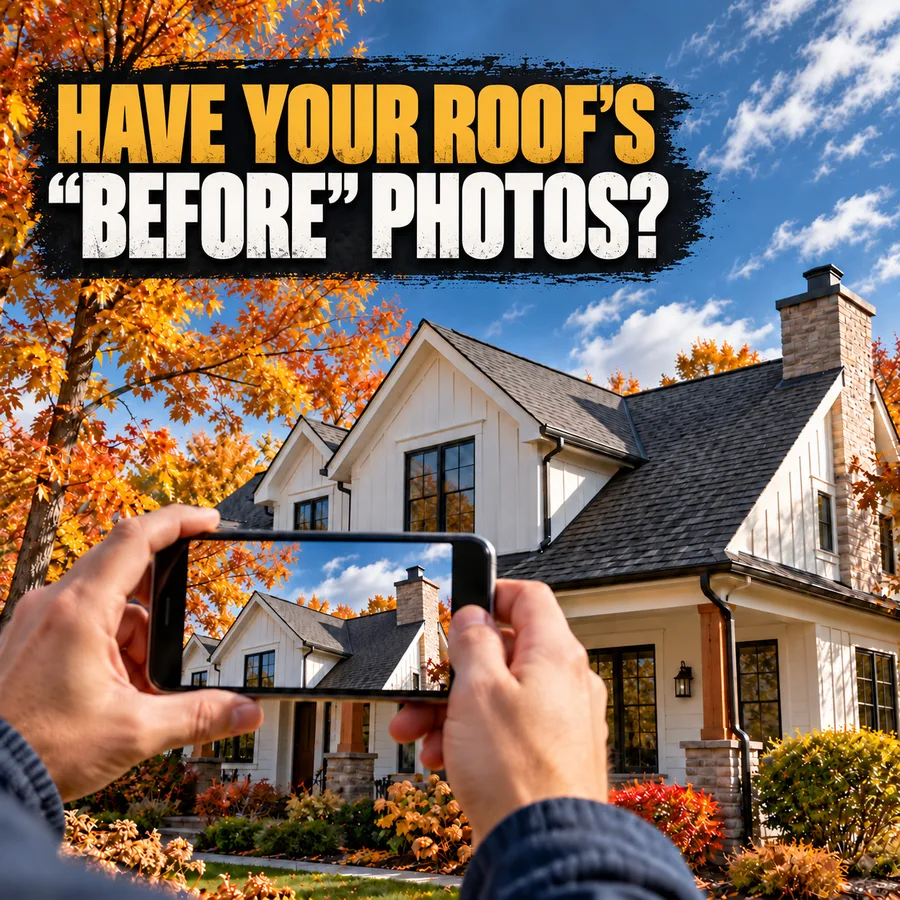
Quick answer: Pre-winter roof photos create a useful condition baseline before snow hides shingles, flashing, valleys, and roof edges. They can help a homeowner and roofer compare later changes, but photos alone do not prove when damage occurred, what caused it, or whether an insurance policy covers it.
A consistent photo record is more useful than a collection of extreme close-ups. Begin with wide views, then add safely obtained details and interior images.
Do not climb onto the roof for documentation. Ground-level images, upper-story windows, and professional inspection photos can provide the record without unnecessary fall risk.
Key Takeaways
- Photograph every slope and elevation from repeatable ground locations.
- Include gutters, downspouts, roof edges, chimneys, skylights, vents, and known repair areas.
- Save the date, property address, weather context, and a short description with the files.
- Keep inspection reports and invoices with the images so changes have context.
What should a basic roof photo set include?
Start with a front, rear, and side view that shows the overall roofline. Add oblique views of each slope, then photograph visible valleys, edges, gutters, downspout exits, chimneys, skylights, vents, solar equipment, and prior repair zones.
Inside, record existing ceiling stains and safely accessible attic conditions. Include a ruler or another scale only when it can be placed without roof access or disturbing the condition.
How can you make later comparisons easier?
Stand in the same safe locations and use similar framing each season. Name files by date, direction, and feature, such as `2026-10-25-north-valley.jpg`. Keep the original files rather than only screenshots or compressed messages.
Write down why the photos were taken. A note about recent tree trimming, a wind event, gutter work, or a prior repair can be as important as the image.
What can photos show after a storm?
Side-by-side images may reveal a missing shingle, displaced edge metal, a new branch impact, changed gutter alignment, or debris that was not present before. They can help a roofer focus the inspection and explain visible differences.
Images cannot reliably reveal every hail bruise, underlayment problem, wet layer, loose fastener, or hidden flashing condition. They also cannot establish insurance coverage or replace the carrier’s investigation.
When is a professional photo inspection more useful?
Use a professional when the roof is high, steep, fragile, wet, icy, storm-damaged, or difficult to view. A roofer can safely document close conditions and connect the photographs to specific components and recommendations.
Ask for labeled images and a written summary that separates observations from conclusions. A picture of a dark spot is more useful when the report states whether it is debris, wear, impact, moisture, or an unresolved condition.
How should records be stored?
Keep a folder for the property with inspection reports, contracts, material information, warranties, repair invoices, storm dates, and photo sets. Back it up somewhere separate from the home.
Share only the relevant records with contractors or insurers and keep copies of anything submitted. A clear timeline reduces confusion even when it does not settle the final cause or coverage decision.
Frequently Asked Questions
Do photos prove that a storm caused roof damage?
Not by themselves. They document visible conditions and timing, while cause requires evaluation, and insurance coverage remains the carrier’s decision.
Should I use a drone for roof photos?
Only if the operator follows applicable rules and can work safely around people, structures, and airspace. Drone images still have diagnostic limits.
How often should I update roof photos?
Update them after meaningful work, severe weather, or a visible change, and consider a consistent seasonal baseline.
What if snow is already on the roof?
Photograph visible patterns from the ground and wait for safe access. Do not disturb snow or climb up merely to complete the record.
Should inspection photos show the whole roof?
Yes. Wide context views and labeled close-ups together are more useful than isolated detail shots.
Get a Clear Roof Recommendation
For related service information and next steps, explore roof inspections, roofing resources, service areas, and free roof inspection.
All Star Roofing is a family-owned, licensed and insured roofing company based in Orem with 30+ years of roofing experience. Call (801) 381-0727 or schedule a free inspection for a practical recommendation based on the actual roof and current conditions.