

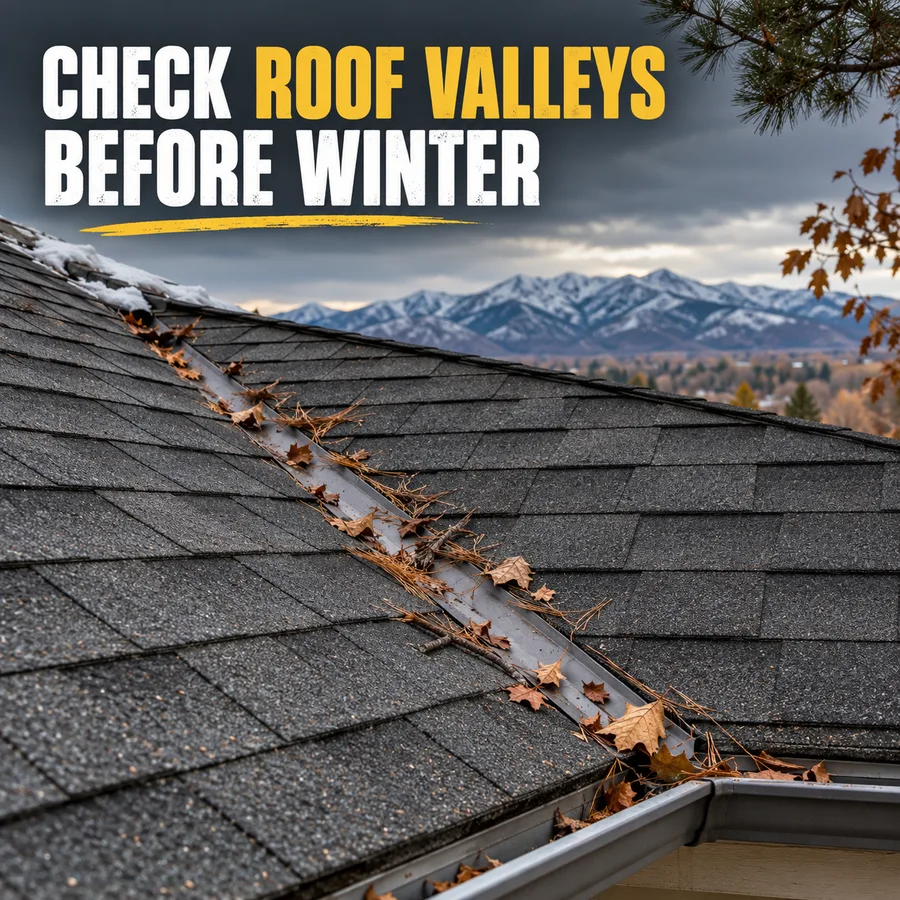
Quick answer: Roof valleys deserve a pre-winter check because they concentrate rain, snowmelt, leaves, and ice into a narrow drainage path. Debris, damaged shingles, open seams, or poorly integrated flashing can slow water and make an existing weakness more likely to leak during freeze-thaw weather.
A valley is not automatically a problem area, but it carries more water than most of the surrounding roof. On a Northern Utah home, that same channel may also hold windblown leaves in October and repeated snowmelt later in the season.
The useful goal is not to diagnose the valley from the driveway. It is to spot changes early, document them, and have a roofer check the complete detail while the surface is still dry and accessible.
Key Takeaways
- Valleys need an open drainage path before the first sustained snow.
- Debris can hide wear and hold moisture against roofing materials.
- Interior stains may appear away from the valley because water can travel along decking or framing.
- Stay off the roof; valley materials can be slippery and easy to damage underfoot.
What makes a roof valley different from the rest of the roof?
A valley forms where two roof slopes meet. Rain and melting snow from both slopes move toward that line, so the valley handles a concentrated flow instead of only the water that lands directly on it. The detail may be built with woven shingles, cut shingles, exposed metal, or another approved system, depending on the roof and materials.
Performance depends on more than the visible center line. Underlayment, valley flashing, shingle cuts, fasteners, nearby roof penetrations, and the condition of the deck all affect how the assembly manages water. A surface that looks tidy from below can still have a hidden installation or aging concern.
What valley warning signs can you see safely?
From the ground or a stable upper-story window, look for a dark line of leaf debris, branches lodged at the valley entrance, displaced shingles, exposed fasteners, corrosion on visible metal, or a section that appears buckled. After ordinary rain, watch for water spilling over a gutter directly below a valley.
Inside, check ceilings and accessible attic areas near the valley path for new stains, damp insulation, darkened sheathing, or a musty odor. The visible stain is evidence, not a precise map of the entry point, so avoid sealing the nearest exterior spot without a broader inspection.
- Photograph the same valley from the same safe location.
- Note whether symptoms occur during rain, snowmelt, or both.
- Record recent wind, hail, tree work, or prior repairs.
Why should debris be removed before freezing weather?
Leaves and needles can form a mat that slows drainage and remains damp. When temperatures move above and below freezing, trapped water can repeatedly freeze in small gaps. Debris can also conceal cracked shingles or loose flashing that would otherwise be visible during an inspection.
Removal should not involve walking the valley or scraping it with metal tools. A qualified crew can choose a method that protects the covering and can inspect the newly exposed surface at the same visit.
What should a professional valley inspection cover?
The roofer should identify the valley type, review the covering on both sides, check the lower termination into the gutter or eave, and look for fastener placement, cuts, gaps, corrosion, prior sealant, and signs of movement. Interior clues and the roof’s leak history should be compared with exterior findings.
The recommendation may be cleaning, a focused repair, replacement of a damaged valley section, or monitoring. Ask for photographs and a written scope that explains how new work will integrate with sound surrounding materials.
When should a valley concern be handled promptly?
Active dripping, exposed decking, a visible opening, sagging, widespread displaced shingles, or recurring stains during snowmelt deserve prompt attention. Conditions become harder to evaluate once snow and ice cover the area, and emergency access may be more limited.
All Star Roofing can evaluate valleys as part of a broader roof inspection and explain whether a focused repair is reasonable. That keeps the decision tied to actual conditions instead of treating every valley stain as a full-roof problem.
Frequently Asked Questions
Can leaves in a roof valley cause a leak?
Leaves do not create every leak, but they can slow drainage, hold moisture, and hide damaged materials. The valley should be cleared and inspected before the cause is determined.
Is exposed metal in a valley normal?
It can be. Some valley systems intentionally use visible metal, while others use shingles over the valley. What matters is whether the installed system is intact and correctly integrated.
Can I clean a roof valley with a pressure washer?
A pressure washer can damage roofing materials and force water where it does not belong. Use a qualified professional if cleaning requires roof access.
Why does my ceiling stain appear beside the valley?
Water can travel along underlayment, decking, rafters, or insulation before reaching drywall, so the interior mark may not sit directly below the entry point.
Should valleys be inspected after a windstorm?
Yes, especially if branches or roofing debris landed nearby or shingles appear displaced. Document visible changes from the ground and arrange a safe inspection.
Get a Clear Roof Recommendation
For related service information and next steps, explore roof inspections, roof repair, residential roofing services, and free roof inspection.
All Star Roofing is a family-owned, licensed, and insured roofing company based in Orem with 30+ years of roofing experience. Call (801) 381-0727 or schedule a free inspection for a practical recommendation based on the actual roof and current conditions.