

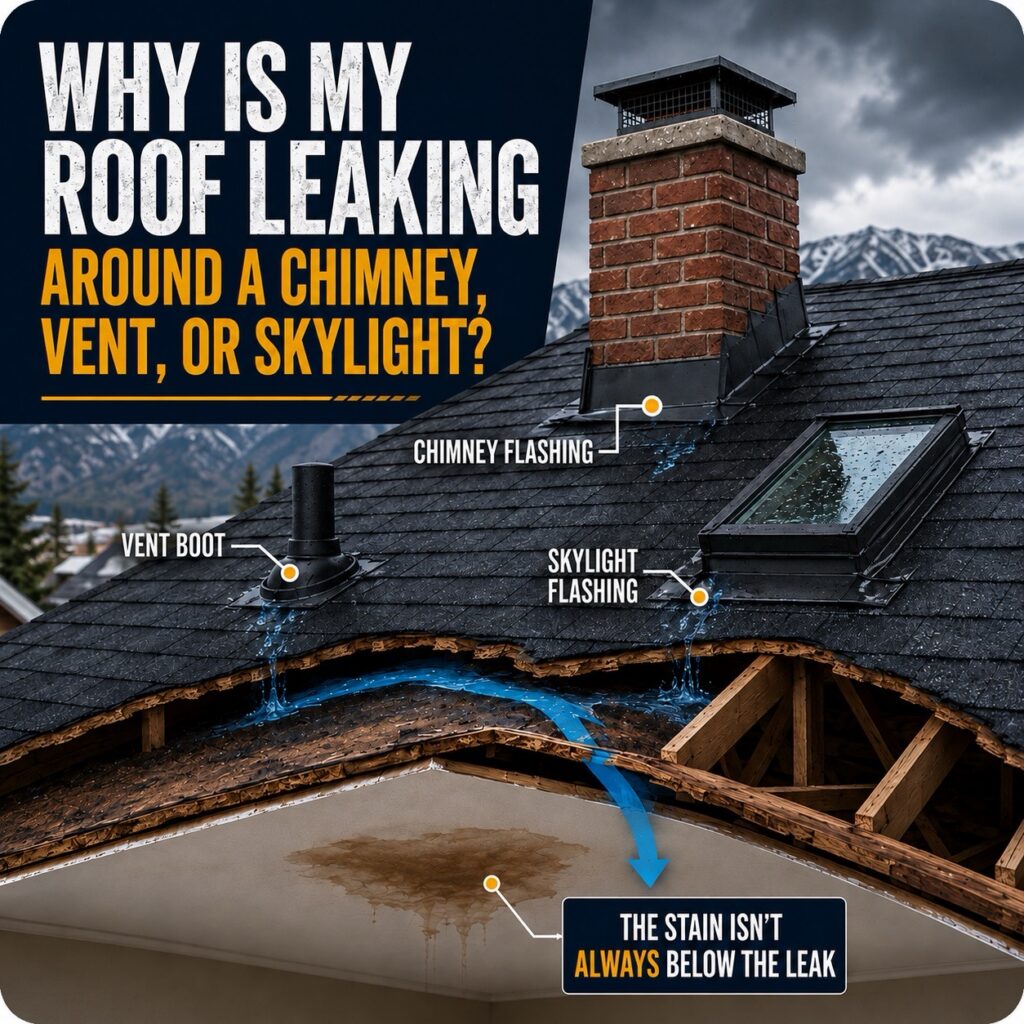
Quick answer: Leaks near chimneys, plumbing vents, skylights, and wall transitions often involve flashing, a failed boot or seal, damaged surrounding roofing, or water entering higher on the roof and traveling before it becomes visible. The stain tells you where water appeared, not always where it entered.
Because penetrations interrupt the roof surface, they need carefully layered materials that direct water around the opening. A surface bead of sealant may hide a symptom for a short time, but it will not correct missing, loose, or improperly integrated flashing. The repair should be based on the water path.
Key Takeaways
Water can travel along decking, rafters, fasteners, or insulation before reaching a ceiling.
Flashing must work with the roofing and underlayment, not just sit on top of them.
Chimney masonry, skylight components, and attic condensation can mimic a roof-covering leak.
Active entry, sagging drywall, electrical exposure, or a spreading stain calls for prompt help.
Why Is the Interior Stain Not Always Below the Leak?
After entering the roof assembly, water follows slope, gravity, and available surfaces. It may run along a rafter, collect on a vapor barrier, follow a pipe, or soak into insulation before reaching drywall. Wind-driven rain can also push water into a detail that does not leak during a calm storm.
That is why replacing the shingle directly above a ceiling stain may not solve the problem. A professional starts with the interior pattern, then compares it with roof geometry, valleys, walls, penetrations, and storm direction. Timing matters too: rain-only leaks, snowmelt leaks, and condensation often leave different clues.
What Causes Leaks Around a Chimney?
Chimneys usually require several flashing components. Step flashing directs water where the roof meets the chimney sides. Counterflashing covers and protects the upper edges of that step flashing. The upslope side may need a cricket or other detail to move water around a wide chimney.
Leaks can develop when flashing is loose, corroded, missing, poorly layered, or separated from the masonry. Mortar or the chimney cap can also admit water that later appears near the roofline. Debris behind the chimney may slow drainage. A good inspection checks the chimney itself as well as the roofing around it.
What Causes Leaks Around Plumbing Vents?
Plumbing pipes often pass through a flashing boot. Sun, temperature changes, age, and movement can crack the flexible collar or separate it from the pipe. Fasteners and surrounding shingles may also loosen or deteriorate.
The correct repair depends on the condition of the boot, shingles, underlayment, and decking. Smearing sealant around a cracked collar is not the same as restoring the layered water-shedding detail. If the surrounding materials are brittle or damaged, a larger repair area may be necessary.
Why Do Skylights Leak?
A skylight leak may come from its flashing kit, surrounding roofing, a blocked drainage channel, glazing seals, condensation, or the skylight unit itself. The age and installation method matter. Some leaks appear only during wind-driven rain, while condensation may show up during cold weather even when the roof is watertight.
An inspection should determine whether water is entering at the roof-to-skylight connection or forming on the interior side. Replacing surface sealant without that distinction can delay the real repair.
How Do Roofers Trace a Leak?
A systematic inspection typically begins inside. The roofer looks at stain location, wet insulation, decking marks, fasteners, and nearby penetrations. Outside, the same area is evaluated in relation to roof slope, valleys, flashing, previous repairs, and storm exposure.
Controlled water testing may be appropriate in some cases, but it should isolate small areas in sequence. Randomly soaking the entire roof rarely clarifies the entry point. The final recommendation may be a flashing repair, boot replacement, localized shingle repair, skylight work, chimney work, or correction of an attic moisture source.
All Star Roofing provides inspections and residential roof repair guidance across Northern Utah. After hail or high winds, the inspection may also connect to storm damage documentation.
What Should You Do While the Roof Is Actively Leaking?
Keep people away from bulging or sagging ceiling material. Protect belongings and place a container beneath a drip only if the area is safe and away from electrical fixtures. Photograph the damage, note the time and weather, and call a roofer. Do not climb onto a wet, icy, or storm-damaged roof.
If water is near wiring, fixtures, or the electrical panel, treat the situation as a safety concern and contact the appropriate emergency professional. Temporary exterior covering should be installed by someone with the equipment and training to work safely at height.
Frequently Asked Questions
Is caulk a permanent fix for roof flashing?
Usually not by itself. Sealant can be part of a designed detail, but it does not replace correctly layered flashing and sound roofing materials.
Why does the roof leak only during wind-driven rain?
Wind can push water sideways or uphill into a weak edge, flashing joint, vent, or wall transition that stays dry during calm rain.
Can a chimney leak even if the flashing looks normal?
Yes. The issue may be hidden flashing, masonry, a cap, a cricket, or water entering higher on the chimney.
Does a skylight leak mean it must be replaced?
Not always. The source may be flashing or nearby roofing, but the unit’s age and condition should be evaluated.
How quickly should a roof leak be repaired?
Active entry should be addressed promptly. Even a small leak can wet insulation, decking, and finishes beyond the visible stain.
Get the Leak Diagnosed, Not Just Covered
For clear repair options, read more Utah homeowner roofing guides, then contact All Star Roofing or call (801) 381-0727.