

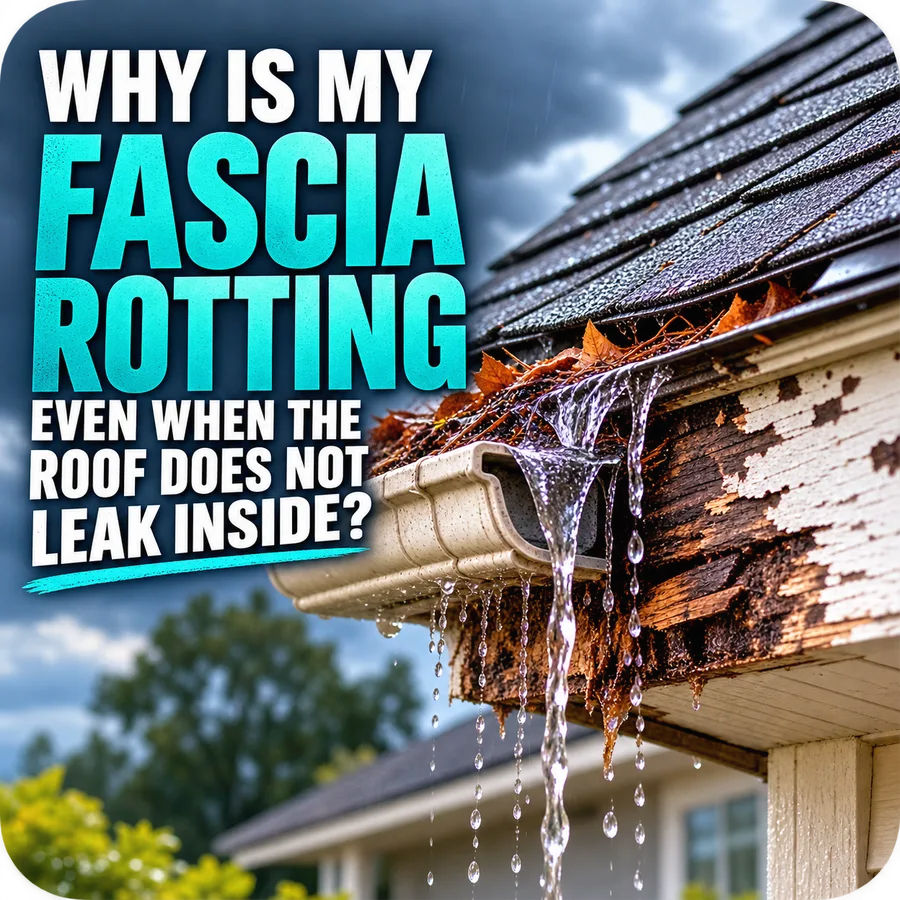
Quick answer: Fascia can rot from overflowing gutters, missing or poorly integrated drip edge, water tracking behind gutters, short roof overhangs, ice, damaged edge flashing, or repeated wetting. Interior ceilings may stay dry because the problem is outside the wall line.
Good decisions separate visible symptoms from the underlying cause. The company’s roof repair services page explains the related service context before an on-site recommendation.
Key takeaways
- Fascia can rot from overflowing gutters, missing or poorly integrated drip edge, water tracking behind gutters, short roof overhangs, ice, damaged edge flashing, or repeated wetting. Interior ceilings may stay dry because the problem is outside the wall line.
- Snowmelt and freeze-thaw cycles can hold moisture at eaves, while summer cloudbursts can overwhelm blocked gutters quickly.
- Best next step: Replace damaged wood only after correcting the water source.
What factors matter most?
Gutter position
Water can run behind a gutter when the back edge and roof edge do not work together. Look for evidence on this roof rather than assuming the same condition exists across every slope or area.
Drip edge
The metal edge should direct water away from vulnerable wood and into the drainage path. Product instructions and the actual substrate help determine the appropriate response.
Roof covering overhang
Too little or irregular projection can let water return toward the fascia. Evaluate it with the surrounding assembly because water and movement rarely stop at one component.
Debris and ice
Blocked gutters and frozen edges can redirect water. Its importance depends on location, adjacent details, exposure, and the condition of the rest of the roof.
Paint and wood condition
Exposed end grain and failed coatings accelerate deterioration once wetting begins. A useful scope states how this detail connects to drainage, attachment, flashing, or maintenance.
How do Utah conditions change the answer?
Snowmelt and freeze-thaw cycles can hold moisture at eaves, while summer cloudbursts can overwhelm blocked gutters quickly.
Utah’s seasons test roof components in different ways. Dry-weather, winter, and post-storm observations may each reveal a different part of the problem. Use product-specific requirements and local observations rather than a single statewide lifespan or performance promise.
What should you do next?
- Observe the eave during rainfall from a safe location. Write the result down so later estimates and inspections can use the same facts.
- Inspect gutter slope, attachment, seams, and discharge. The goal is to compare a complete scope instead of relying on a product name or a quick visual guess.
- Check drip edge and the first courses of roofing. Where safety, structure, code, or electrical work is involved, use the appropriately qualified professional.
- Replace damaged wood only after correcting the water source. Keep photos, product data, and written recommendations with the property records.
When the visible evidence is unclear, start with free roof inspection. The next step should explain observed conditions, separate urgent work from maintenance, and result in a clear written recommendation.
What should a professional review?
- Roof covering and visible wear
- Flashings, valleys, edges, and penetrations
- Decking and interior moisture clues
- Ventilation and drainage
- Repair history and storm exposure
A useful inspection connects exterior evidence with interior symptoms and the building’s history. It should also identify when another qualified professional is needed for structural, electrical, mechanical, design, policy, or legal questions.
What should you avoid?
Avoid replacing fascia as a cosmetic project without diagnosing roof-edge and gutter details.
Safety limits the do-it-yourself portion of this work. Avoid walking on a damaged or slippery roof and keep people clear of active snow- or debris-shedding areas.
Frequently asked questions
Can gutters cause fascia rot?
Yes. Overflow, rear leakage, poor slope, and loose attachment are common contributors.
Does drip edge go behind the gutter?
The exact integration depends on the assembly, but it should direct water into the intended drainage path.
Can rot spread to decking?
Yes. Persistent edge moisture can affect adjacent sheathing and framing.
Why is damage worse at corners?
Valleys, roof geometry, downspouts, seams, and concentrated runoff can increase wetting.
Who repairs it?
Roofing, gutter, and carpentry scopes may all be involved depending on the cause and extent.
Get a clear roof recommendation
The right answer depends on the actual roof, not only its age or material. Learn about residential roofing services, or call All Star Roofing at (801) 381-0727 to schedule a free inspection or estimate. Coverage decisions remain with the insurance carrier, and project timing depends on weather, scope, materials, and scheduling.