

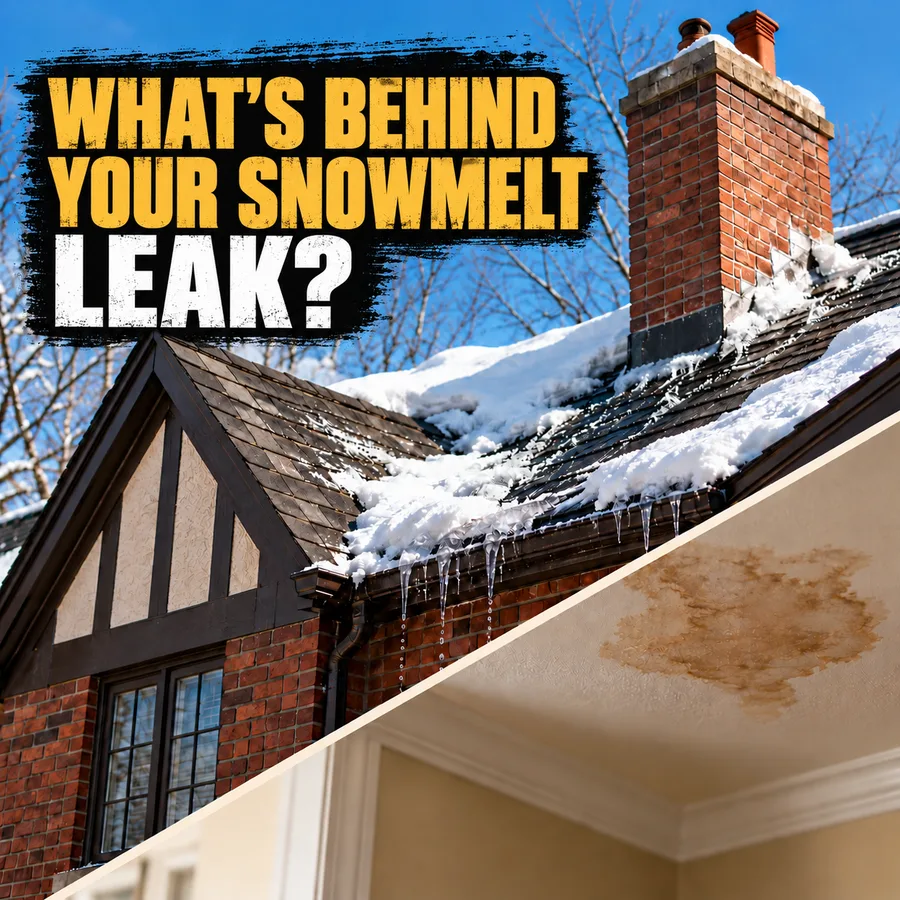
Quick answer: A roof can leak during snowmelt but stay dry in ordinary rain because melting snow moves slowly, refreezes at cold edges, sits against roof transitions, or reaches a detail from a different direction. Ice dams, buried flashing, frozen drainage, and attic condensation can produce similar timing, so the source must be traced.
Leak timing is valuable evidence. Note whether the stain appears during warming, after sunny afternoons, during rain-on-snow, or when an icy edge is present.
The interior stain may be downhill or sideways from the entry point. Water can follow decking, rafters, pipes, or insulation before becoming visible.
Key Takeaways
- Snowmelt can expose weaknesses that calm rain does not reach in the same way.
- Ice dams are one possible cause, not the only cause.
- Condensation can imitate a roof leak during cold weather.
- Photos of the exterior snow pattern and interior stain help preserve evidence for a later dry-weather inspection.
How is snowmelt different from rainfall?
Rain usually runs across an exposed surface and drains away. Snow can remain against a chimney, sidewall, skylight, vent, valley, or low-slope transition for days. As it melts, water may repeatedly wet the same joint at a slow rate.
Refreezing can also block the normal drainage path. Water may move sideways or back up beneath roofing at a vulnerable edge, especially when an ice ridge has formed below the melting area.
Which roof details are common snowmelt suspects?
Eaves, valleys, roof-to-wall intersections, chimneys, skylights, plumbing vents, low-slope transitions, and areas below an upper roof all deserve review. Frozen gutters or drains may contribute by holding water where it normally would leave.
The correct diagnosis examines the detail and its surroundings. A bead of surface caulk may temporarily cover a gap while leaving the underlying flashing, underlayment, or drainage problem unresolved.
- Ice at eaves and valleys
- Snow packed against walls or chimneys
- Frozen low-slope drains
- Transitions between different roof pitches or materials
Could the moisture be attic condensation?
Yes. Warm, humid indoor air can reach cold roof decking or metal fasteners and condense or freeze. During a thaw, that frost may melt and create stains that resemble a roof leak.
Bathroom exhausts ending in the attic, air leaks around penetrations, uneven insulation, or blocked airflow can contribute. A roof leak and condensation can also exist together, which is why both exterior and attic evidence matter.
What should you record while the leak is active?
Photograph the stain, place a container if it can be done safely, move belongings, and record the date, temperature trend, sunshine, precipitation, and visible roof ice. Mark the stain boundary lightly or take repeat photos to show whether it grows.
Do not enter an area with a bulging ceiling, active electrical hazard, or structural concern. Do not climb onto the snowy roof to search for the source.
How does a roofer diagnose a snowmelt leak?
The roofer compares the leak history with the roof geometry, exterior details, drainage, and safely accessible interior or attic evidence. Photographs taken during the event can be especially useful because the snow and ice may be gone by inspection day.
The outcome may be a focused flashing or covering repair, a roof-edge correction, drainage work, or referral for air sealing and insulation. A useful recommendation explains why the observed evidence supports that path.
Frequently Asked Questions
Why does the leak stop when temperatures drop again?
Liquid water movement may pause when meltwater refreezes, but the underlying condition can remain and return during the next thaw.
Does a snowmelt leak always mean an ice dam?
No. Buried flashing, frozen drainage, roof transitions, and attic condensation can create similar timing.
Can a roof be inspected after the snow melts?
Yes. Event photos and notes can be compared with visible roofing, flashing, drainage, and attic conditions during a safer inspection.
Should I add sealant where I think the leak starts?
Not until the source and detail are understood. Surface sealant can hide evidence or interfere with a durable flashing repair.
Is snowmelt damage covered by insurance?
Coverage depends on the policy, cause, exclusions, maintenance history, and the carrier’s findings. Review your policy and contact the insurer for coverage questions.
Get a Clear Roof Recommendation
For related service information and next steps, explore roof repair, roof inspections, residential roofing services, and free roof inspection.
All Star Roofing is a family-owned, licensed and insured roofing company based in Orem with 30+ years of roofing experience. Call (801) 381-0727 or schedule a free inspection for a practical recommendation based on the actual roof and current conditions.