

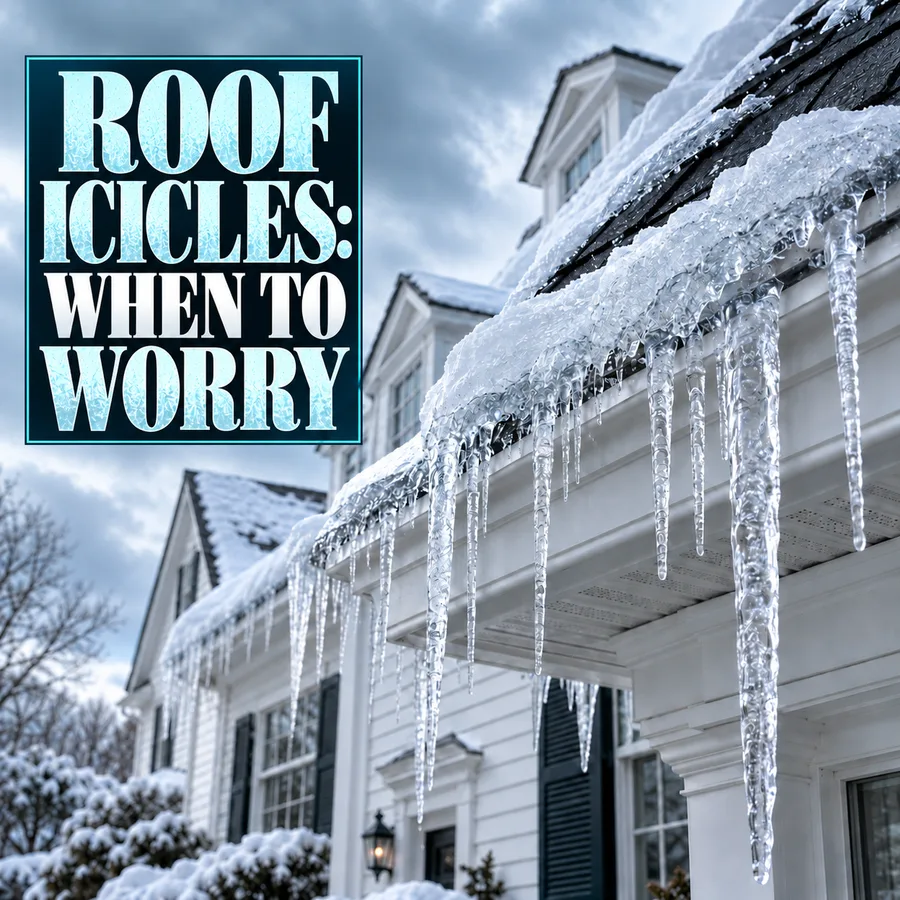
Quick answer: Icicles form when liquid water reaches a surface or edge cold enough to freeze. Small icicles can follow ordinary sun-driven melting, but repeated heavy icicles, a ridge of ice at the eave, uneven snowmelt, or interior staining may signal an ice dam or drainage problem that deserves evaluation.
The icicle is the visible result of water movement and freezing, not a complete diagnosis. Its location and the conditions that produced it matter.
Do not stand below large icicles or try to knock them down from a ladder. Falling ice and slippery surfaces can injure people and damage property.
Key Takeaways
- Photograph where icicles form and whether they return after each melt cycle.
- Watch for ice behind gutters, water stains, damp insulation, and unusual snowmelt above the eave.
- Keep entries and walkways outside the fall zone until the hazard is addressed.
- Evaluate air sealing, insulation, ventilation, roofing, and drainage as a connected system.
What creates icicles at a roof edge?
Sun can warm a roof surface even when outdoor air remains below freezing. Heat from the building may also warm portions of the roof deck. Meltwater moves downslope and freezes when it reaches a colder gutter, eave, or shaded edge.
A dripping downspout joint, blocked outlet, or overflowing valley can create icicles in a localized spot. The pattern can therefore involve roof temperature, drainage, or both.
When do icicles point to a possible ice dam?
An ice dam is a buildup at a colder roof edge that can hold additional meltwater upslope. Signs may include a continuous band of ice, repeated icicles along the same eave, water entering during thaw, or interior staining near exterior walls.
Heavy icicles alone do not prove that water has backed under the covering. A professional should compare the exterior pattern with attic and interior evidence before recommending roof, insulation, or ventilation work.
Can gutters cause the problem?
Gutters do not create every ice dam, and ice dams can occur on roofs without gutters. Clogged or poorly draining gutters can, however, hold water at the edge and create heavy localized ice. Loose gutters may also be stressed by accumulated ice.
The review should follow the entire drainage path, including the roof edge, gutter position, outlets, downspouts, and discharge point. Surface heat cable or sealant should not be used as a substitute for identifying the cause.
What should homeowners do around large icicles?
Reroute foot traffic and keep children, pets, vehicles, and deliveries away from the fall zone. Do not strike icicles from below or lean a ladder against an icy gutter. If water is entering, protect the interior without entering a sagging or electrically hazardous area.
A professional can remove or manage immediate hazards using appropriate access and then inspect the roof when conditions allow. Document the pattern before it changes if you can do so safely.
How is a recurring icicle problem corrected?
The solution depends on the findings. Work may involve roof-edge repairs, drainage correction, air sealing, insulation changes, ventilation improvements, or coordination of several trades. The order matters because adding one component can be ineffective when another part of the system is still wrong.
All Star Roofing can evaluate the visible roofing, flashing, gutter, and ventilation conditions and explain when an insulation, energy, HVAC, or structural specialist should join the review.
Frequently Asked Questions
Are a few small icicles normal?
They can form from ordinary sun-driven melt and refreeze. Repeated, widespread, or unusually large icicles deserve closer attention.
Do icicles always mean the roof is leaking?
No. They show that water is freezing at the edge. Look for a broader pattern and interior evidence before diagnosing a leak.
Can I break icicles off with a tool?
Avoid standing below or striking them. Falling ice, sharp tools, slippery footing, and damaged gutters create serious risks.
Will cleaning gutters stop icicles?
It may correct a drainage issue, but it will not fix heat loss or every ice-dam condition.
Who should inspect recurring icicles?
Start with a roofer for exterior conditions and coordinate with insulation, energy, or HVAC professionals when attic heat and moisture are involved.
Get a Clear Roof Recommendation
For related service information and next steps, explore roof inspections, roof repair, roofing resources, and free roof inspection.
All Star Roofing is a family-owned, licensed and insured roofing company based in Orem with 30+ years of roofing experience. Call (801) 381-0727 or schedule a free inspection for a practical recommendation based on the actual roof and current conditions.