

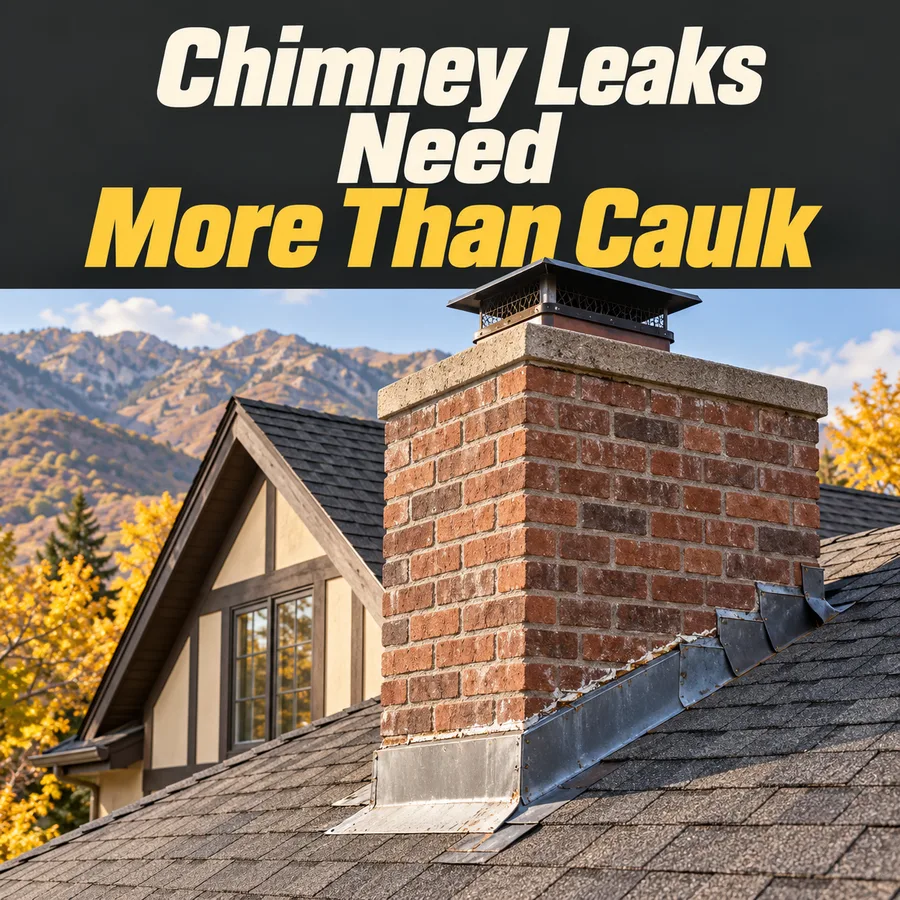
Quick answer: Counterflashing covers and protects the top edge of base flashing where a roof meets a chimney or masonry wall. Surface sealant may be part of a compatible detail, but sealant alone rarely replaces properly formed and integrated metal flashing.
This question is best answered by connecting the visible condition to the surrounding roof system, the building history, and Northern Utah weather. Use roof repair services to understand the relevant service context, then base the final decision on an on-site inspection and a written scope.
Key Takeaways
- Base flashing manages water on the roof plane; counterflashing protects its upper edge at masonry.
- Mortar, brick, caps, and roof flashing can each admit water and may require different trades.
- Repeated caulk lines often signal that the underlying detail has not been corrected.
- A chimney leak investigation should include the uphill, side, and downhill conditions.
How Do the Flashing Layers Work Together?
Base flashing turns from the roof onto the chimney and connects with shingles or the roof membrane. Counterflashing overlaps it from above so water running down the masonry is directed over the base flashing rather than behind it.
The pieces must allow drainage and expected movement. A rigid bridge of sealant across moving materials can split, separate, or trap water even when it looks complete on installation day.
Could the Masonry Be the Source?
Cracked mortar, porous masonry, a damaged cap, open joints, or penetrations can admit water above the roof flashing. Wind-driven rain can make this especially difficult to distinguish from a roof-covering leak.
A roofer can assess roof integration and visible flashing, while a qualified masonry or chimney professional may be needed for brick, mortar, cap, flue, or combustion-system concerns.
What Should a Chimney Repair Scope State?
The scope should identify which flashing is being removed or replaced, how it connects with the roof covering, how counterflashing engages the masonry, and who handles masonry cuts or repairs. It should also address any cricket, saddle, or uphill drainage condition.
Photographs after removal can document concealed conditions. If wet decking or framing is found, the contract should explain how added work is authorized rather than hiding it behind a generic allowance.
What Should You Do Next?
- Photograph the chimney from all visible sides and record which storms cause the leak.
- Look for interior staining at the chimney, attic water tracks, and visible masonry cracks.
- Ask the roofer to separate roof flashing work from masonry or chimney-system work.
- Require the proposal to describe the flashing assembly, not only ‘seal around chimney.’
For a condition-specific recommendation, review free roof inspection. Keep photographs, dates, estimates, product information, and repair records together so later decisions use the same facts.
What Should a Professional Review?
- Base flashing and counterflashing
- Chimney cap, crown, mortar, and brick
- Uphill cricket or saddle
- Roof covering and decking at the perimeter
- Interior and attic water paths
A useful inspection separates the likely entry point or defect from contributing conditions. It should also identify when structural, electrical, mechanical, masonry, energy, design, or insurance questions belong with another qualified professional.
What Should You Avoid?
Avoid coating every joint with roof cement or sealant, and do not assume a roofing contractor is evaluating flue safety or structural masonry unless that service is specifically included.
Ground-level photographs and safely accessible interior observations are useful. Leave roof access, destructive testing, temporary coverings, and repairs to trained personnel, especially when surfaces are wet, icy, steep, or storm-damaged.
Frequently Asked Questions
Is counterflashing the same as chimney flashing?
It is one part of the chimney flashing assembly and overlaps the roof-level base flashing.
Can caulk stop a chimney leak?
A compatible sealant may support a designed joint, but it is not a dependable substitute for missing or failed flashing.
Can brick absorb enough water to cause a leak?
Masonry and mortar can admit moisture, but the source should be evaluated with the flashing and cap.
Does every chimney need a cricket?
Requirements and practical need depend on chimney width, roof slope, drainage, code, and the actual assembly.
Who should inspect the flue and chimney cap?
Use a qualified chimney or masonry professional for those components, coordinated with the roofer as needed.
Get a Clear Roof Recommendation
The right answer depends on the actual roof, not one symptom viewed in isolation. Explore Utah roofing resources, or call All Star Roofing at (801) 381-0727 to schedule a free inspection or estimate. All Star Roofing is a family-owned, licensed and insured roofing company based in Orem with 30+ years of roofing experience. Insurance coverage decisions remain with the carrier, and project timing depends on weather, scope, materials, and scheduling.