

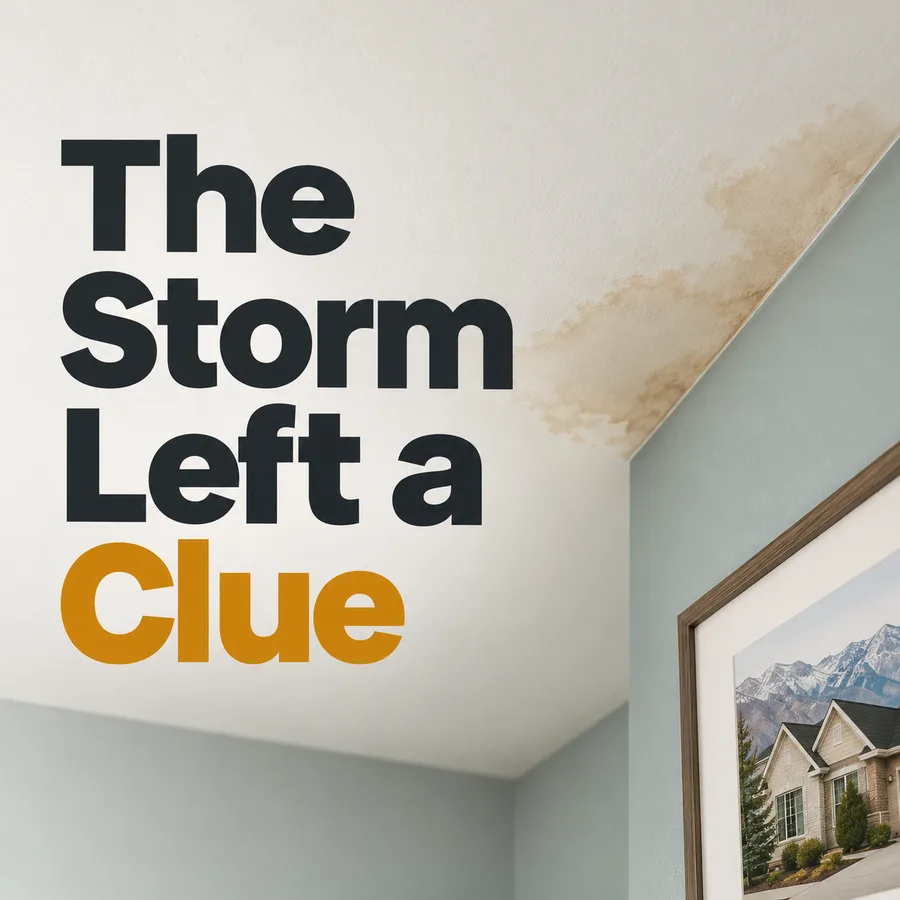
Quick answer: Treat a new ceiling stain as evidence of moisture, not proof of one specific roof defect. Protect people and belongings, avoid wet electrical areas or sagging drywall, document the timing, and arrange an inspection to trace whether the source is roofing, plumbing, condensation, or another building component.
This question is best answered by connecting the visible condition to the surrounding roof system, the building history, and Northern Utah weather. Use roof repair services to understand the relevant service context, then base the final decision on an on-site inspection and a written scope.
Key Takeaways
- Safety comes before finding the source, especially near lights, outlets, or bulging drywall.
- Photographs, storm timing, and the stain’s changing edge help distinguish active moisture from an old mark.
- A ceiling stain can appear after water has traveled away from the exterior opening.
- Temporary mitigation should limit further damage without erasing evidence or becoming a permanent patch.
What Requires Immediate Action?
Keep people away from a sagging, cracked, or bulging ceiling and from water near electrical fixtures. If there is an immediate electrical, structural, or fire concern, leave the affected area and contact the appropriate emergency or utility professional.
Move furniture and valuables only when it is safe. A container may catch a small drip beneath stable drywall, but do not stand under a swollen ceiling or puncture it without qualified guidance.
What Should You Document?
Take wide and close photographs before cleaning. Record the date, the type and direction of the storm, when the stain first appeared, whether it grew, and whether previous repairs or plumbing fixtures are nearby.
If an insurance claim may be involved, contact the carrier or agent for document requirements and keep receipts for reasonable temporary mitigation. Coverage, deductibles, and notice requirements depend on the policy.
How Does an Inspection Trace the Source?
The inspection should compare the indoor location with the attic, roof slopes, penetrations, flashing, walls, and drainage above it. A moisture meter or thermal imaging may help in some situations, but readings still need interpretation and do not identify a roof defect by themselves.
The written recommendation should separate emergency drying or interior work from the exterior repair. When plumbing, HVAC, masonry, or condensation is involved, more than one trade may be needed.
What Should You Do Next?
- Keep people away from unstable ceilings and wet electrical components.
- Protect movable belongings and photograph the room before cleanup.
- Record storm timing, wind direction, and whether the stain is growing.
- Call for an inspection and notify the insurer when policy guidance or the extent of damage warrants it.
For a condition-specific recommendation, review storm damage roofing. Keep photographs, dates, estimates, product information, and repair records together so later decisions use the same facts.
What Should a Professional Review?
- Ceiling stability and electrical proximity
- Attic moisture path and insulation
- Roof covering, flashing, and penetrations
- Plumbing and mechanical sources
- Interior drying and material condition
A useful inspection separates the likely entry point or defect from contributing conditions. It should also identify when structural, electrical, mechanical, masonry, energy, design, or insurance questions belong with another qualified professional.
What Should You Avoid?
Avoid painting over a fresh stain, entering an unsafe attic, or assuming that a dry surface means the hidden assembly is dry.
Ground-level photographs and safely accessible interior observations are useful. Leave roof access, destructive testing, temporary coverings, and repairs to trained personnel, especially when surfaces are wet, icy, steep, or storm-damaged.
Frequently Asked Questions
Does every ceiling stain mean the roof leaks?
No. Plumbing, condensation, HVAC equipment, and exterior walls can create similar stains.
Should I call a roofer before my insurer?
The order depends on urgency and policy instructions. Protect the property, document conditions, and contact the carrier promptly when a claim may be involved.
Can I paint over the stain after it dries?
First confirm that the moisture source is corrected and affected materials are dry and sound.
What if the stain is near a ceiling light?
Keep away from the area and contact an electrician or emergency professional as appropriate before touching the fixture or nearby switches.
Why did the stain appear after the storm ended?
Water can collect or travel through materials before it reaches the finished ceiling.
Get a Clear Roof Recommendation
The right answer depends on the actual roof, not one symptom viewed in isolation. Explore schedule a free inspection, or call All Star Roofing at (801) 381-0727 to schedule a free inspection or estimate. All Star Roofing is a family-owned, licensed and insured roofing company based in Orem with 30+ years of roofing experience. Insurance coverage decisions remain with the carrier, and project timing depends on weather, scope, materials, and scheduling.