

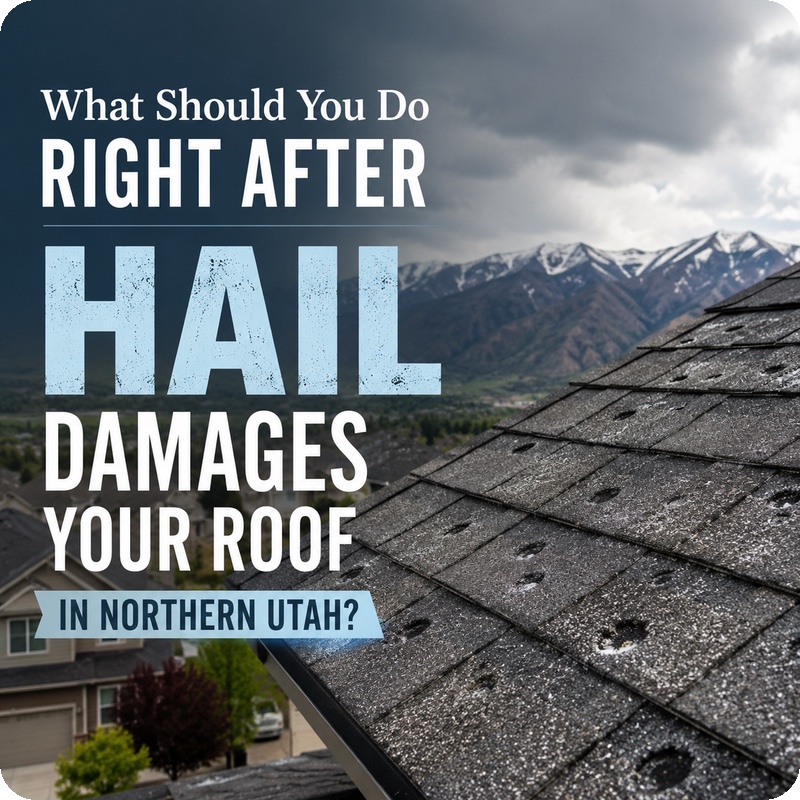
What Should You Do Right After Hail Damages Your Roof in Northern Utah?
After hail damage, the safest first steps are to document what you can see from the ground, protect the interior if water is entering, and schedule a professional roof inspection before small storm damage turns into hidden leaks. Start with the homeowner’s urgency after a storm and reassure them that the first steps are documentation, interior protection, and inspection timing.
This guide is written for homeowners after a recent storm in Northern Utah, with practical next steps, climate context, and a clear path toward a professional inspection when that is the smartest move.
Quick Answer
After hail damage, the safest first steps are to document what you can see from the ground, protect the interior if water is entering, and schedule a professional roof inspection before small storm damage turns into hidden leaks.
In most cases, the right next step depends on scope, timing, and the condition of the surrounding roof system. That is why the clearest answer usually comes from a documented inspection instead of a guess from the driveway.
Key Takeaways
- Document what changed, protect the home if water is getting in, and schedule an inspection before the next storm makes the picture worse.
- Keep insurance conversations grounded in documentation and policy details instead of promises about what will be covered.
- Use repair-versus-replace logic to explain the next step clearly and calmly.
What to do first after hail hits your roof
In Northern Utah, snow load, hail, wind, freeze-thaw cycles, and strong summer sun all change how roofing decisions should be made. The first priority is to lower risk, stop small problems from spreading, and gather the kind of information that will still be useful once a roofer looks at the property. The smartest first steps are the calm ones: protect the home, document what changed, and avoid doing anything that could create more damage. Readers who are still comparing service options can review residential roofing services to see how these decisions connect to real project scope.
The order matters. When people jump straight to assumptions, they often miss the basic steps that protect the home and make the inspection more useful. A steadier approach usually saves both time and frustration.
Stay safe and start from the ground
Homeowners should stay on the ground, use clear photos from safe angles, and note where debris, displaced materials, stains, or overflow are showing up. That kind of documentation is useful because it captures the condition without adding the risk of a DIY roof walk.
What photos and notes to gather right away
Useful documentation usually includes wide photos, close-up photos when possible, dates, weather timing, and a short note about what changed after the event. Good notes help both the homeowner and the roofing contractor keep the conversation tied to evidence.
How to tell if the damage may be more serious than it looks
In Northern Utah, snow load, hail, wind, freeze-thaw cycles, and strong summer sun all change how roofing decisions should be made. Roof problems rarely announce themselves in a clean, obvious way. Most homeowners are trying to sort out whether they are looking at a minor issue, a bigger pattern, or damage that will become more expensive after the next storm. That is why the most useful signs are the ones that help separate surface symptoms from system-wide trouble. For local context, All Star Roofing’s Orem service page reinforces how Northern Utah weather patterns shape real roofing decisions.
A sign only helps if the homeowner understands why it matters. A stain, bruise, overflow point, or open seam becomes much more useful once it is tied to leak risk, shortened roof life, or a wider repair scope.
Exterior clues after hail and wind
Exterior clues after a storm can include fresh granule loss, bruised or displaced shingles, bent flashing, damaged vents, dented metal details, and debris patterns that match the storm direction. Even limited-looking damage can justify an inspection when the roof has already been worked over by Utah weather.
Interior signs that suggest moisture is already getting in
Interior signs often show up as stains, damp insulation, bubbling paint, musty odors, or moisture near penetrations and exterior walls. These clues matter because the visible ceiling stain is not always directly below the roof entry point.
When to call a roofer and how the inspection helps
In Northern Utah, snow load, hail, wind, freeze-thaw cycles, and strong summer sun all change how roofing decisions should be made. A good inspection should replace guesswork with a clear written picture of what is happening. That usually means identifying where water may be getting in, how broad the damage is, how much healthy roof life is left, and whether repair, maintenance, or replacement makes the most sense.
Inspection conversations are easier when the homeowner knows what should be documented, what may still need confirmation, and how the contractor will explain repair, maintenance, or replacement recommendations after the visit.
Why prompt inspection matters in Northern Utah
A strong inspection should explain what was found, what may still need confirmation, and how the condition affects the next decision. Homeowners usually benefit most when the findings are written in a way that separates observations from assumptions. If the condition is still unclear, contacting the team is a better next step than making assumptions from visible symptoms alone.
What happens after the inspection
After the inspection, homeowners should expect photos, a clear summary of the damage, and a written recommendation for repair, replacement, or monitoring. That follow-up matters because it turns a stressful storm event into a plan you can actually act on, whether that means moving quickly on repairs or organizing documentation for a claim.
How storm-damage roof inspections and claim support fit into the next step
For this topic, the most helpful service conversation usually starts after the homeowner understands the issue, the likely scope, and the practical next step. That is where Storm & Hail Damage Roofing, a documented inspection, and clear written recommendations become useful. If the reader wants to keep moving, the best internal paths here are usually the contact page, service coverage in Orem, and customer reviews.
If you want a clearer answer for your home, call (801) 381-0727 or request a free inspection or estimate. A documented roof review is often the fastest way to move from uncertainty to a practical next step.
Frequently Asked Questions
What counts as visible hail damage?
Visible hail damage may show up as bruised shingles, displaced granules, dented metal details, or fresh impact marks, but not every sign is easy to confirm from the ground. That is why a careful inspection is still the best way to separate real storm damage from normal aging.
Should you call insurance first or a roofer first?
A practical first move is to document what you can safely see and schedule a professional inspection so the roof condition is understood before the claim conversation gets ahead of the facts. Policy and claim decisions still sit with the insurer, but a clear inspection usually helps the process make more sense.
Can hail damage cause leaks later even if the roof looks fine now?
Yes, storm damage can show up later when weakened materials, flashing, or underlayment are exposed to more wind, rain, or UV. That is one reason early inspection matters even when the roof does not seem dramatic from the ground.
Final Thoughts
After storm damage, the goal is not to react the fastest. It is to react clearly. Document what changed, protect the home if water is getting in, and get the roof inspected before small issues spread.
If you want a clearer answer for your home, call (801) 381-0727 or request a free inspection or estimate. A documented roof review is often the fastest way to move from uncertainty to a practical next step. Readers who want a broader sense of the company can also review All Star Roofing’s services and project gallery examples.