

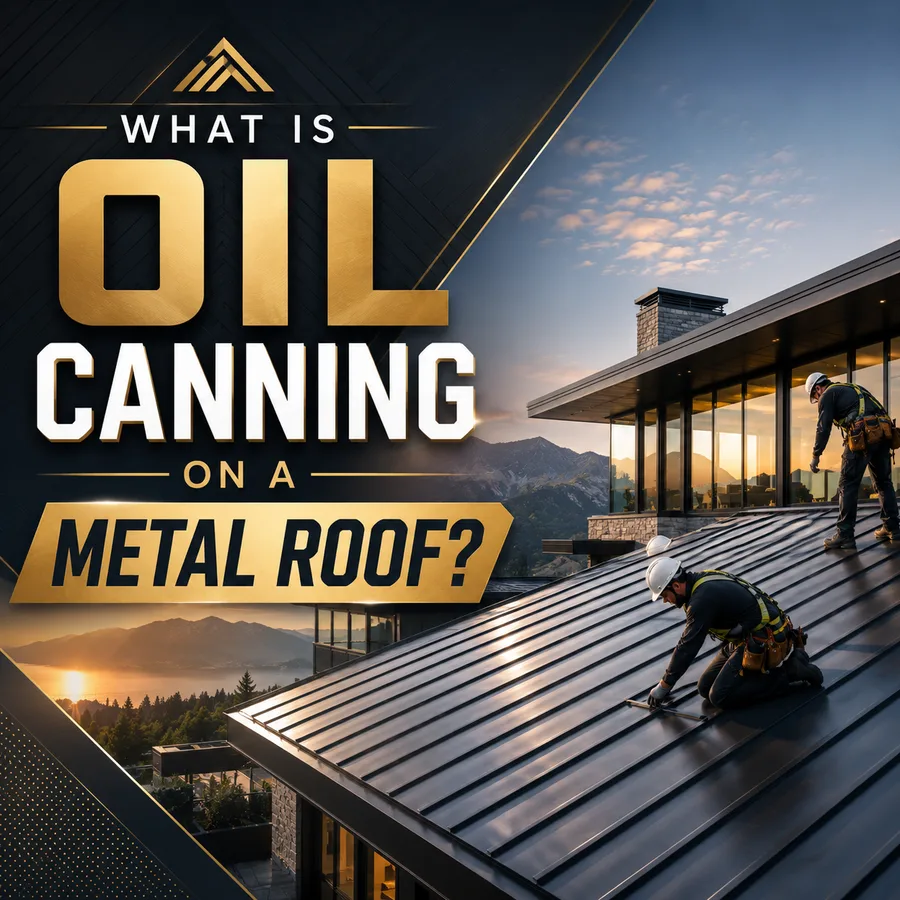
Quick answer: Oil canning is visible waviness or buckling in broad flat areas of metal panels. It is primarily an appearance condition and can be influenced by metal properties, panel width, substrate flatness, fabrication, handling, attachment, and thermal movement.
The practical answer comes from the whole assembly, exposure, and property goals. Use metal roofing options to frame the questions a written scope should answer.
Key takeaways
- Oil canning is visible waviness or buckling in broad flat areas of metal panels. It is primarily an appearance condition and can be influenced by metal properties, panel width, substrate flatness, fabrication, handling, attachment, and thermal movement.
- Utah’s strong sunlight and large temperature swings can make visual waviness more noticeable and make movement details important.
- Best next step: Evaluate substrate flatness and system attachment.
What factors matter most?
Panel geometry
Wide flat pans show reflected light and small deviations more readily. Its importance depends on location, adjacent details, exposure, and the condition of the rest of the roof.
Substrate
An uneven deck or support plane can telegraph through panels. A useful scope states how this detail connects to drainage, attachment, flashing, or maintenance.
Residual stress
Coiling, slitting, roll-forming, and handling can introduce stress. Look for evidence on this roof rather than assuming the same condition exists across every slope or area.
Attachment
Restrained movement or uneven fastening can distort panels. Product instructions and the actual substrate help determine the appropriate response.
Lighting
Low-angle sun makes waviness more visible at some times of day. Evaluate it with the surrounding assembly because water and movement rarely stop at one component.
How do Utah conditions change the answer?
Utah’s strong sunlight and large temperature swings can make visual waviness more noticeable and make movement details important.
Local exposure matters as much as the city name. Two nearby roofs can experience different wind, sun, snow retention, and drying patterns. Use product-specific requirements and local observations rather than a single statewide lifespan or performance promise.
What should you do next?
- Discuss acceptable appearance before selecting a profile. Write the result down so later estimates and inspections can use the same facts.
- Consider narrower pans, stiffening ribs, striations, or heavier metal where appropriate. The goal is to compare a complete scope instead of relying on a product name or a quick visual guess.
- Require proper storage and handling. Where safety, structure, code, or electrical work is involved, use the appropriately qualified professional.
- Evaluate substrate flatness and system attachment. Keep photos, product data, and written recommendations with the property records.
To connect the guidance to an actual building, see free roof inspection. The next step should explain observed conditions, separate urgent work from maintenance, and result in a clear written recommendation.
What should a professional review?
- Panel profile, seams, and attachment
- Coating and cut-edge condition
- Edges, valleys, ridges, and penetrations
- Thermal-movement details
- Snow, drainage, and pedestrian consequences
A useful inspection connects exterior evidence with interior symptoms and the building’s history. It should also identify when another qualified professional is needed for structural, electrical, mechanical, design, policy, or legal questions.
What should you avoid?
Avoid promising a perfectly flat mirror-like surface or automatically calling all waviness a functional failure.
Ground-level photos and interior observations are useful records. Leave close roof access to trained personnel, especially after wind, rain, snow, or ice.
Frequently asked questions
Does oil canning cause leaks?
Not by itself, though any suspected installation or attachment defect should be evaluated.
Can it be eliminated?
It can be reduced but not always completely eliminated from light-gauge flat metal surfaces.
Do striations help?
They can break up reflections and add visual stiffness, depending on panel design.
Is darker metal worse?
Color and gloss affect visibility, but they are not the root cause.
Should panels be replaced?
That depends on contract appearance criteria, severity, cause, and whether functional defects are present.
Get a clear roof recommendation
The right answer depends on the actual roof, not only its age or material. Learn about instant roof estimate , or call All Star Roofing at (801) 381-0727 to schedule a free inspection or estimate. Coverage decisions remain with the insurance carrier, and project timing depends on weather, scope, materials, and scheduling.