
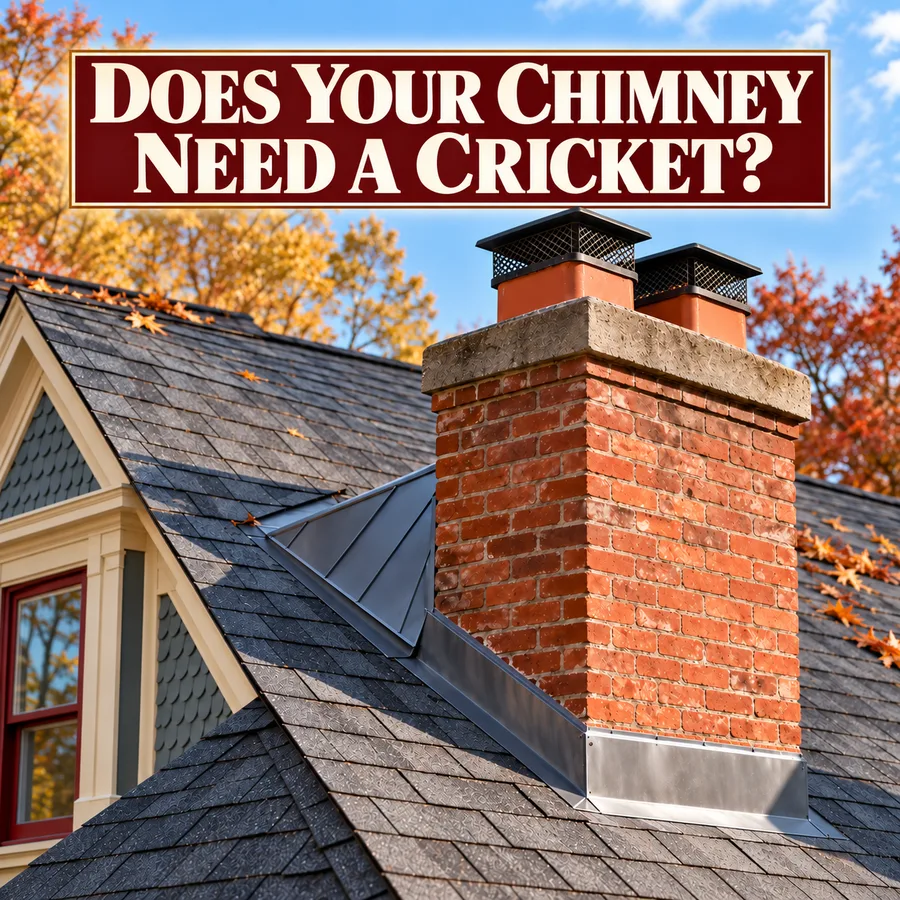
Quick answer: A chimney cricket is a small peaked structure built on the upslope side of a chimney or wide penetration to divide runoff and direct it around the obstruction. Whether a roof needs one depends on the penetration width, slope, drainage, code, roof material, and existing detail.
A cricket is not simply a decorative bump. Its deck, underlayment, covering, and flashing must connect correctly to the main roof and chimney.
Utah’s residential code includes cricket or saddle requirements for certain chimneys or penetrations more than 30 inches wide, but project-specific code and existing-building conditions should be confirmed locally.
Key Takeaways
- Crickets reduce the amount of water and debris that meet a broad upslope wall.
- A poorly flashed cricket can leak even when its shape looks correct.
- Snow can drift around a chimney, so the inspection should consider more than rain drainage.
- Existing masonry or chimney-cap problems may imitate a roof-flashing leak.
How does a chimney cricket work?
Without a cricket, runoff moving down the roof meets the full width of the chimney. A cricket creates two smaller drainage paths, directing water toward the chimney sides and reducing the sheltered pocket where leaves and snow can collect.
The side slopes must drain freely into correctly layered flashing. If the geometry is too flat or the transitions are poorly sealed, the cricket can become another place for water to pause.
When is a cricket required?
The applicable code, chimney width, roof slope, material, and jurisdiction determine the requirement. The 2021 Utah residential roof provisions include a cricket or saddle at the ridge side of a chimney or penetration more than 30 inches wide, measured perpendicular to the slope, with a stated skylight exception.
That rule should not be applied casually to every existing roof or project. A contractor should confirm the adopted requirements, permits, and the actual measurement before writing the scope.
What problems develop behind a chimney?
Leaves, needles, snow, and windblown debris can settle on the upslope side. Water may then move slowly against masonry, flashing, sealant, or roofing. Freeze-thaw cycles can worsen an existing gap or masonry defect.
Interior staining near a chimney may come from step flashing, counterflashing, a cap, masonry, condensation, or an opening higher on the roof. The cricket is one part of that investigation.
- Debris collecting upslope
- Open or corroded flashing
- Cracked masonry or cap
- Stains that recur during snowmelt
What should a cricket inspection include?
The roofer should examine the slopes, ridge, covering, underlayment transitions where accessible, side and back-pan flashing, counterflashing, sealant joints, and drainage exits. The chimney itself should be reviewed or referred to a qualified masonry or chimney professional.
Ask for photos that show the whole upslope relationship, not only a close-up bead of caulk. A durable repair needs correctly layered materials that shed water even after exposed sealant ages.
Should a cricket be added during roof replacement?
Replacement provides access to the deck and hidden flashing, making it a practical time to correct geometry or integration when required. The scope should state who builds the cricket, how it is sheathed and covered, and how masonry flashing is handled.
If the chimney is no longer used or is deteriorated, discuss those facts before roofing begins. Removal or structural changes require the appropriate qualified trades and approvals.
Frequently Asked Questions
Is a cricket the same as chimney flashing?
No. The cricket changes drainage geometry; flashing seals and sheds water at the roof-to-chimney intersections. They must work together.
Can a chimney leak without a cricket?
Yes. Many narrower chimneys perform with correctly designed flashing, while a missing required or useful cricket can contribute to drainage problems.
Does every chimney over 30 inches need a cricket?
Current project requirements depend on the adopted code, measurements, roof conditions, and any applicable exception. Confirm with the contractor and local authority.
Can sealant replace counterflashing?
Surface sealant is not a substitute for a correctly designed flashing assembly.
Why does snow collect behind my chimney?
The chimney blocks wind and downslope movement, creating a sheltered zone. Geometry, wind direction, and adjacent roof slopes affect the drift.
Get a Clear Roof Recommendation
For related service information and next steps, explore roof repair, roof replacement, roof inspections, and free roof inspection.
All Star Roofing is a family-owned, licensed and insured roofing company based in Orem with 30+ years of roofing experience. Call (801) 381-0727 or schedule a free inspection for a practical recommendation based on the actual roof and current conditions.