

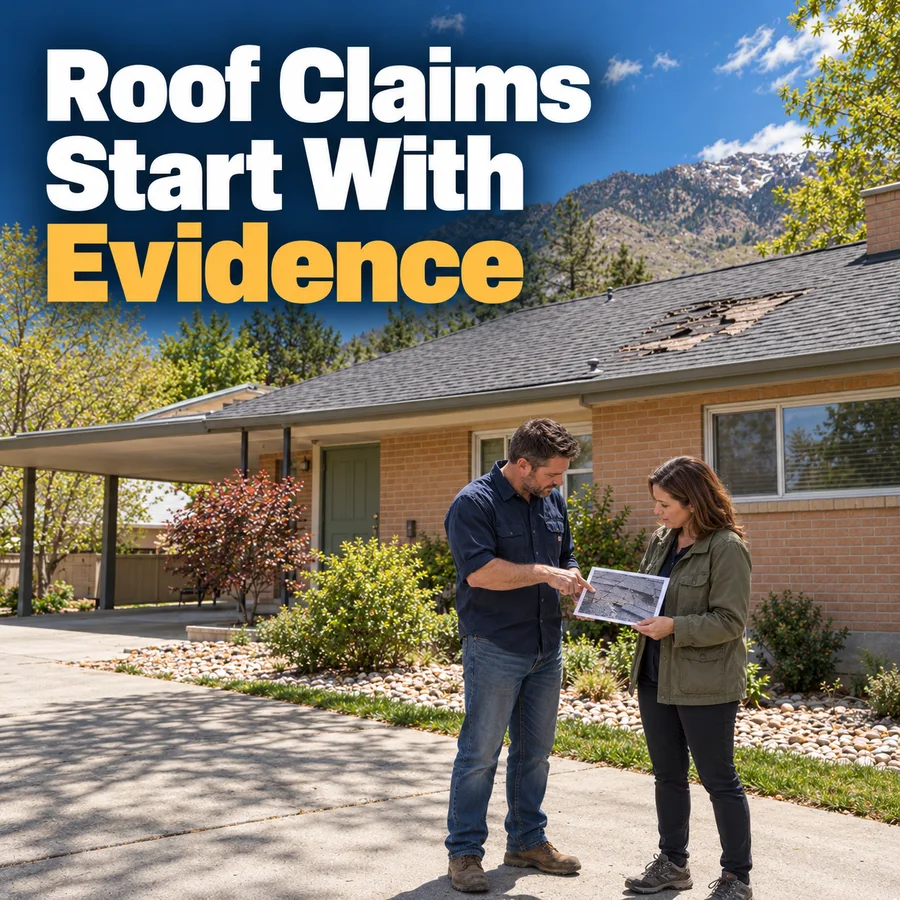
Quick answer: At an adjuster meeting, a roofer can provide access coordination, point out documented roof conditions, identify roofing components, discuss repair methods, take photographs, and answer construction-scope questions. The adjuster and carrier determine coverage and claim payment; the roofer does not approve the claim or act as the homeowner’s public adjuster unless separately licensed and engaged for that role.
This question is best answered by connecting the visible condition to the surrounding roof system, the building history, and Northern Utah weather. Use storm damage roofing to understand the relevant service context, then base the final decision on an on-site inspection and a written scope.
Key Takeaways
- The roofer should bring the inspection record, roof measurements, photographs, and a clear repair or replacement scope.
- The meeting is an evidence review, not a guarantee of coverage.
- Pre-existing wear and event-related damage should not be blended or exaggerated.
- Disagreements should be documented and handled through the policy and carrier process.
What Should Be Prepared Before the Meeting?
Gather the claim number, loss date, policy contact, inspection photos, interior damage record, temporary-repair receipts, prior roof records, and the contractor’s estimate. Label photographs by slope and component so they can be discussed efficiently.
The homeowner should ask the carrier who will attend, what access is needed, and whether any materials or forms are required. The roofer should confirm that the roof can be accessed safely.
What Can the Roofer Explain On Site?
The roofer can identify shingles, metal, underlayment, flashing, vents, gutters, commercial membrane details, and construction methods. The roofer can also explain why a proposed repair needs adjacent removal or why a component is part of the roofing scope.
The explanation should stay within roofing expertise and observed facts. Policy interpretation, legal advice, claim negotiation, and coverage decisions belong to the licensed or authorized parties responsible for them.
What Happens After the Meeting?
Compare the carrier’s written estimate and decision with the contractor’s scope. Differences may involve measurements, quantities, components, pricing databases, depreciation, deductibles, or coverage rather than one simple error.
Ask questions in writing and provide requested documentation. If the roofing scope changes after tear-off or new evidence appears, follow the carrier’s process before assuming the added work is covered.
What Should You Do Next?
- Confirm the loss date, claim contact, safe access, and meeting purpose.
- Organize labeled photos, prior records, temporary receipts, and the roofing estimate.
- Keep the on-site discussion factual and tied to observed components and scope.
- Review the carrier’s written response and route coverage questions to the insurer or qualified adviser.
For a condition-specific recommendation, review free roof inspection. Keep photographs, dates, estimates, product information, and repair records together so later decisions use the same facts.
What Should a Professional Review?
- Documented storm and interior evidence
- Roof measurements and component identification
- Repairability and construction sequence
- Temporary mitigation records
- Differences between contractor and carrier scopes
A useful inspection separates the likely entry point or defect from contributing conditions. It should also identify when structural, electrical, mechanical, masonry, energy, design, or insurance questions belong with another qualified professional.
What Should You Avoid?
Avoid promises that attendance will produce approval, statements outside roofing expertise, or any attempt to create, exaggerate, or mislabel damage.
Ground-level photographs and safely accessible interior observations are useful. Leave roof access, destructive testing, temporary coverings, and repairs to trained personnel, especially when surfaces are wet, icy, steep, or storm-damaged.
Frequently Asked Questions
Does the roofer negotiate my claim?
A roofer can discuss construction scope and documentation. Claim negotiation or public-adjusting services require the appropriate authority and licensing.
Does the adjuster have to meet my contractor?
Carrier procedures vary. Ask the insurer whether and how contractor participation can be coordinated.
Will the meeting guarantee roof replacement?
No. Coverage and scope decisions remain with the carrier under the policy and claim facts.
What if the two estimates differ?
Compare quantities and line items, ask for written explanations, and submit supporting roofing documentation through the carrier’s process.
Should I attend the meeting?
Ask the carrier and contractor what is practical. The homeowner should remain informed even if roof access is limited to trained professionals.
Get a Clear Roof Recommendation
The right answer depends on the actual roof, not one symptom viewed in isolation. Explore Utah roofing resources, or call All Star Roofing at (801) 381-0727 to schedule a free inspection or estimate. All Star Roofing is a family-owned, licensed and insured roofing company based in Orem with 30+ years of roofing experience. Insurance coverage decisions remain with the carrier, and project timing depends on weather, scope, materials, and scheduling.