

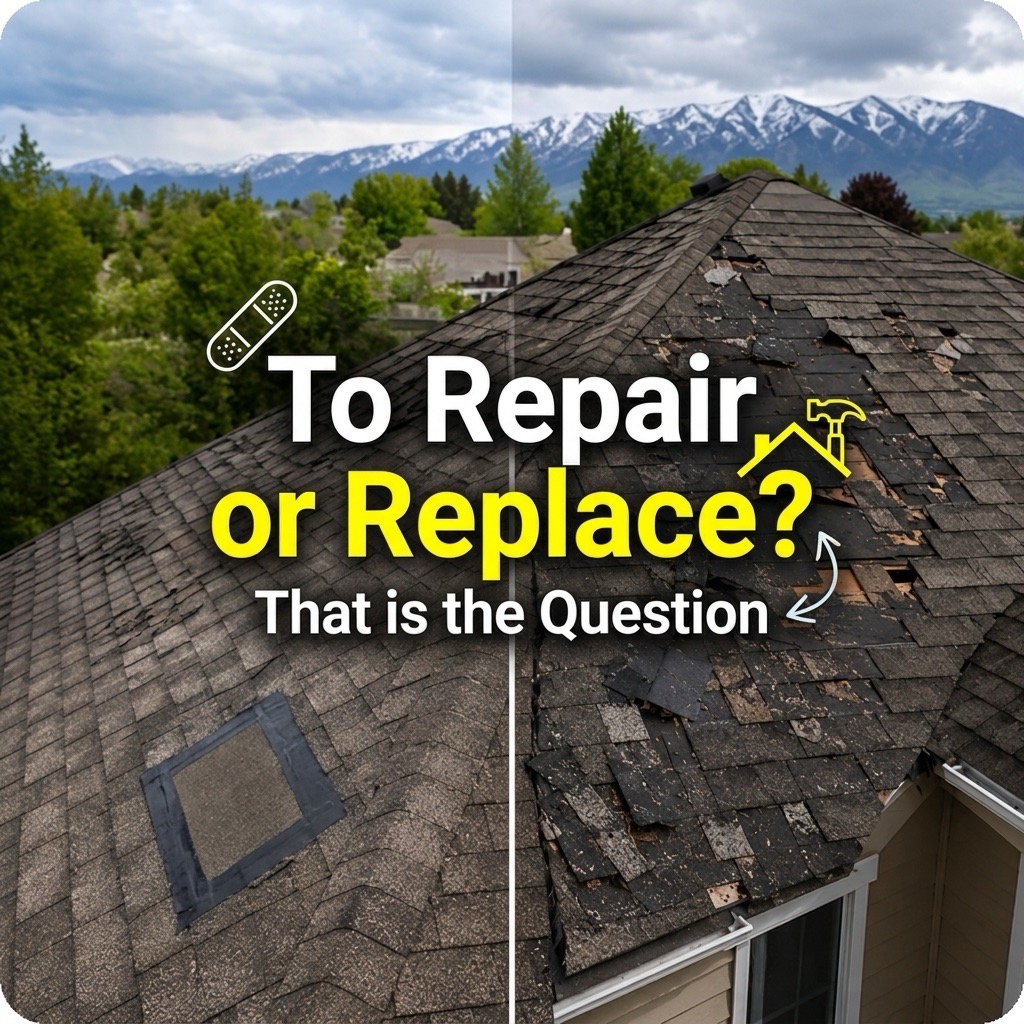
Navigating the world of home ownership is an exciting but challenging journey. During that journey, you’ll come across many different questions. One part of that journey will be discovering roof damage. And the inevitable question every homeowner will ask themselves when this happens is: Is it better to repair or replace my roof?
Coming to the correct conclusion is going to be a process of weighing a number of different factors. Maybe you’re only dealing with some light storm damage, a couple missing shingles, or a small leak doesn’t automatically necessitate an entire new roof. On the other hand, if the roof has already gone through a number of repairs, simply continuing to perform repeat repairs can lead to more cost, damage, and stress in the long term.
When making the choice between repairing the roof or replacing the roof, the key is to keep the bigger picture in mind. You are going to want to consider how old the roof is, the severity of the damage, how much money the repairs will cost, if the damage extends to past the roof to the roofing system, and if you plan on living in the home long term or planning on selling.
We are going to go over the most important and common questions for homeowners to ask when trying to decide whether they should repair or replace their roof.
What are the Differences Between Roof Repair, and Roof Replacement?
Before you can make an informed decision, you need to be informed! We’ll go over the basics and explain the differences between the two choices:
Repairing the Roof
Repairing the roof is focused on fixing a specific problem while leaving the rest of the roofing system alone. Common examples of roofing repairs are:
- Replacing shingles that are missing or damaged
- Fixing a small leak
- Flashing repairs (around chimneys or vents)
- Applying new sealing to small gaps or cracks
- Fixing minor storm damage
Going the repair route is generally going to be quicker and has a lower upfront pricetag. If the roof is in generally good condition and doesn’t have a history of repairs, going with a repair is probably an appropriate choice.
Replacing the Roof
Replacing the roof is a bigger project because you are removing all the existing materials on the roof and installing a whole new system. What you can expect from a replacement is:
- Removing the old shingles (or whatever type of material is used)
- Inspecting the roof decking and making necessary repairs
- Replacing the underlayment
- Applying new flashing
- Installation of the new roofing materials
- Updating ventilation components
Getting a new roof is going to be a larger upfront investment, but for those who want to build a home that lasts decades or generations, a replacement might be the better choice.
How Do I Know If My Roof Only Needs Repairs?
When first discovering a roofing issue, many homeowner’s first concern running through their mind is: “Am I about to have to pay for an entirely new roof?” While its not impossible a replacement might be the best choice, in many instances repairs will do the job just fine.
Going with a roof repair may be the superior option if:
- The damage is contained to a small area
- The roof was replaced relatively recently
- Most of the roofing materials are still in good condition
- There aren’t multiple leaks
- Storm damage isolated to one part of the roof
- You have tighter budget constraints and can’t make a replacement work right now
Take this example: If a storm comes through and a strong wind removes a few shingles, and the rest of the roof is still in good condition, simply getting new shingles to replace the missing ones could be all you ned to restore the roof to it’s previous condition.
The question goes deeper than just asking if there is damage. The more important question is: “How much of the roof has been affected and what is the quality of the rest of the roof?”
When Should a Roof Be Replaced Instead of Repaired?
In certain situations, performing a repair is only a temporary solution. Every roofing system comes with a lifespan. If your roof is reaching the end of its expected lifespan, or the problems you are facing are widespread, going with replacement may be the superior option. Especially in the long term.
Lets go over some of the scenarios where replacement might be the recommended choice:
The Roof Is Approaching The End of It’s Expected Lifespan
Nothing lasts forever, and the same applies to your roofing materials. Depending on the type of materials you use for your roof, your material’s lifespan may vary. For example, asphalt shingles (which are one of the most common roofing materials used for homes) are usually expected to last 20 to 30 years. This can vary based on installation quality, how well you maintain the roof, the climate you live in, and the type of material.
If you are in a situation where the roof is approaching the end of its expected life, and problems keep appearing, you should be prepared for a replacement. Going with a repair in these situations is just delaying the inevitable.
Leaks Occur Frequently/ Multiple Leaks Present
One small leak is likely repairable. But repeated leaks over time, or more than one at a time, likely point to a larger problem.
Repeated leaks are an indication of:
- Materials getting old
- Flashing is failing
- Underlayment deterioration
- Water intrusion is widespread
Constantly performing repairs is going to quickly add up, and will eventually become more expensive than getting a replacement.
Damage to the Roof is Widespread
It’s one thing if just a small section is damaged. But if a large section or multiple sections have taken damage, making repairs might not restore the roof to its proper condition. Damage that should call for replacement include:
- Extensive storm damage
- A large area is missing shingles
- Severe cracks or curling found
- Detoriation is widespread
The Roof Is Sagging
If you can see that your roof is sagging, you are most likely facing some underlying structural problems. Unfortunately a sagging roof won’t be fixed with a quick repair. In this scenario you are going to want to have a trusted professional assess the situation and perform a replacement.
Is Repairing a Roof Cheaper Than a Replacement?
Generally speaking, yes a repair is going to cost less than a replacement. At least in upfront cost. That being said, immediately jumping to the cheapest upfront option might cost you more in the long run.
If a homeowner is using a repair as a band-aid for a larger problem, they will spend money repairing the same roof over and over again during a span of several years. And eventually you will have to face the reality of needing a replacement. At that point, you’ve spent way more than you needed to by delaying the replacement.
Here’s the question homeowners should ask themselves:
“Will this repair extend the life of my roof, or is this delaying a replacement I will eventually need to get?
If you are not sure what the answer is, consult a professional roofing contractor for an evaluation is a safe option for a trusted answer.
What Factors Do I Need To Consider Before Deciding on a Repair or Replacement?
This isn’t a one dimensional problem, you will need to take multiple factors into account.
Roof Age
Age is arguably the most important factor to consider. A new roof with contained minor damage is most likely a good candidate for a simple repair. But an older roof won’t be able to is more likely to get damaged more easily and face multiple problems. This would be a scenario more fitting for a replacement.
Amount of Damage
A small section with damage is going to be handled differently from a roof with widespread issues. Here’s what you should consider in this situation:
- How many areas are damaged?
- Does the damage only affect the appearance or the structure?
- Is there any water getting into the home?
- What is the repair history of the roof?
Plans for the Future
What are your plans for your home? Whether you repair or replace could change based on the plans you have for your home.
If you think selling is going to happen in the near future, replacing the roof might entice potential buyers and increase the value of your home. Some people view the home as more of a financial investment with the goal to sell for a profit, buy a new home, and eventually repeat. Other homeowners have found the home they want to spend the rest of their lives in. Replacing could give you the long-term protection you want for a longstanding home. If you aren’t sure one way or another, maybe a repair is the best choice for the moment.
Budget
Money doesn’t grow on trees, and it is important to be realistic about what you can afford without putting too much financial strain on yourself. That being said, you should still find a good balance between a reasonable budget and long-term value.
The more budget-friendly repair could be the right solution if it effectively solves the problem. Replacing the roof might be the better financial choice if repairs are just delaying the inevitable.
Can You Repair a Roof Too Many Times?
The short answer is: Absolutely! Handling repairs is an important part of properly maintaining your roof, but this only goes so far. At a certain point, repeating repairs might no longer be a reasonable solution. Your roof might be at this point if:
- The roof has multiple repair areas
- Leaks are recurring
- Roofing materials have aged
- You have to perform maintenance increasingly often
- You can visibly see signs of deterioration over a large area
You want your roof to be reliable. If a homeowner is consistently coming across new problems with the roof, replacement is likely the more appropriate choice.
What Happens If I Just Keep Repairing My Roof?
While this might sound appealing at first glance due to the lower upfront cost, you may end up creating several problems for yourself. These can include:
Increased Interior Damage
Problems with a roof can cause water to enter:
- Walls
- The ceiling
- Insulation
- Electrical systems/components
The more time water and moisture are in the home, the more expensive the repairs get.
More Expense Over Time
A small repair is certainly more affordable upfront when compared to a replacement. However, repeated inspections and repairs can quickly add up if the underlying issue is not addressed.
Reduced Home Value
If you view your home as a financial investment, it is important to note that an old roof with damage or a long repair history can make it more difficult to sell the home. A potential buyer might see this and worry if the next repair is right around the corner.
Is a Roof Inspection Worth Getting Before I Decide?
Absolutely! Getting a trusted professional to assess the situation and provide recommendations is a vital step to take before making a final decision. A reliable roofing contractor will be able to evaluate:
- Quality of the roofing materials used
- The severity of any damage present
- The extent of water intrusion present
- Condition of the flashing
- Structure of the roof
- Quality of the ventilation system
- How many years in the roof’s lifespan
An inspection from a high-quality contractor will detail the condition of the roof and give you options, not jump immediately to the most expensive solution.
What Questions Do I Ask a Roofing Contractor?
Sometimes it can be hard to think of questions, and other times we just don’t know enough to know what questions need answering. No worries, we are going to go over some questions you should ask your contractor:
- How many years do I have left on my current roof?
- Is the damage contained to one area or widespread?
- Is there a permanent solution to this problem?
- What would the impact be if I just repaired it?
- What would replacement include?
- Does the problem extend beneath the roofing material?
- What warranties are available?
A credible contractor should be able to clarify the advantages and disadvantages of going with a repair vs. a replacement.
Are There Situations Where Replacement Is The Better Option
Of course! When long-term protection is top priority, replacement is usually going to be the better option.
Here are some of the benefits a new roof can provide:
- Improved protection from weather conditions
- Improved appearance
- Reduced maintenance/upkeep
- Potentially increases value of the home
Yes replacement is going to be a longer, larger, and more expensive project. But that doesn’t mean it isn’t the right choice for your situation. It can eliminate some of the recurring and ongoing problems an old roofing system can cause.
Are There Situations Where Repair Is the Better Option?
There are many scenarios where repair is the right answer, such as:
- When the roof is still young
- There is only limited damage
- The structural integrity is still sound
- The repair is a lasting solution and not just a delay
If you take the time to find an experienced, well-reviewed, and trusted contractor, they will recommend the solution that best fits your needs, not just the most expensive option.
Overview: Making The Final Decision
The answer is going to depend on not just if there is any damage, but also on the overall condition of the roof.
Repairing the roof might be the favorable option when it is just a small problem, and the roofing system is otherwise in good health and has a long lifespan still. Replacing the roof may the better route if the damage is widespread, the roof is old, or repairs are happening frequently.
The ideal approach is to evaluate the system as a whole. Inspect the age, condition, repair history, and long-term costs before deciding to repair or replace. If you are ever unsure, you can consult a professional roofing contractor to get their input.
Sometimes it’s better to look beyond simply fixing today’s roofing problem. The goal is to find the option that best suits your individual needs, keeps your home protected, increases the home’s value, and keeps your mind at ease for years to come.