

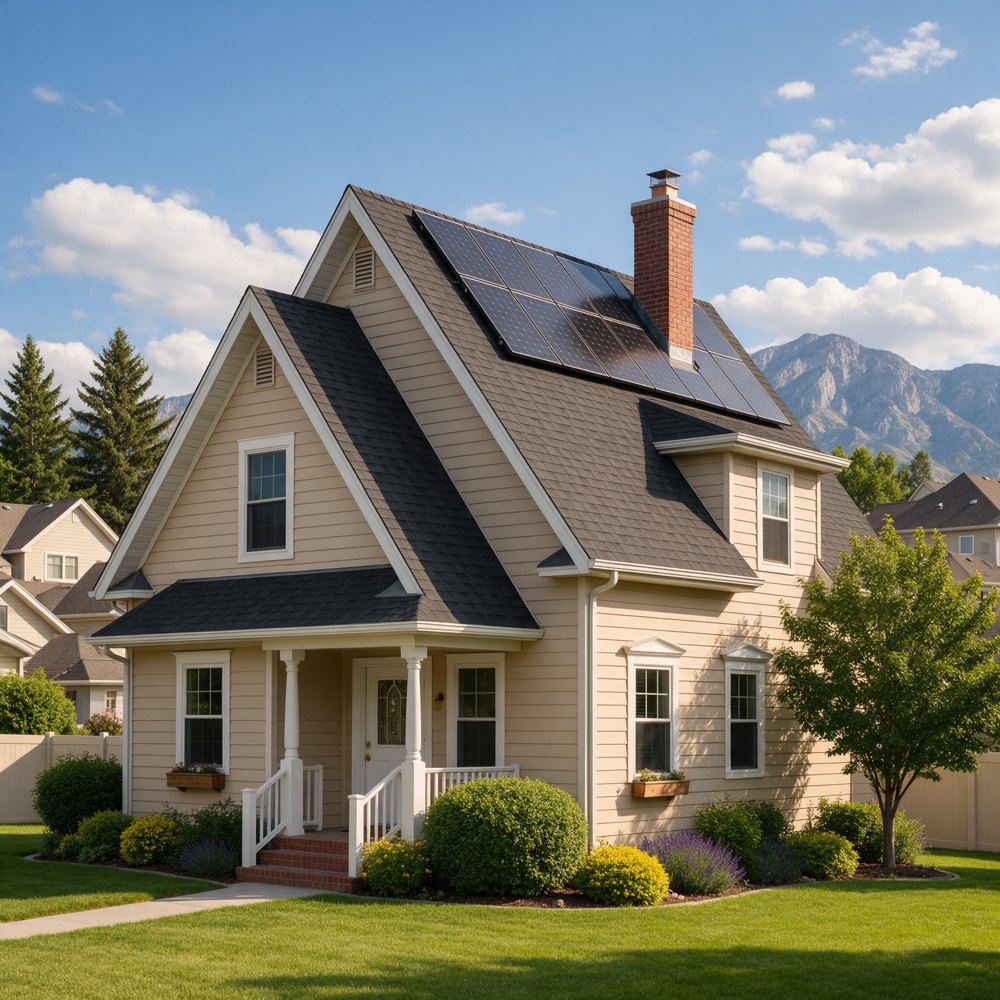
If you are considering Tesla Solar Roof for a Utah home in late 2026, start with availability before comparing payback. Reuters reported on August 24, 2026, that Tesla had stopped selling its premium solar roof tiles on its website. In our November 5 check, Tesla’s former Solar Roof sales address redirected to its conventional solar-panel offering.
That changes the familiar “Is Tesla Solar Roof worth it?” question. An old online price, a support manual, or a photograph of an existing installation does not establish that a new tile-roof system can be ordered for your address. Homeowners should compare currently available alternatives and obtain written confirmation for any proposed Solar Roof project.
What happened to the Solar Roof ordering page?
Reuters’ August 2026 report specifically described the end of Solar Roof tile sales on Tesla’s website and the redirect to solar panels. Tesla’s former Solar Roof address led to the panel offering when checked for this article.
Existing technical and owner-support documents remain available. Those materials can help identify an installed system or explain maintenance requirements, but they are different from a current new-project quote. Homeowners with a prior order or an existing Solar Roof should ask Tesla about their specific project or service situation.
If an installer offers a new Solar Roof installation, ask what is available, how it will be supplied, who will install it, what warranty will be issued, and how future parts and service will be handled. Get those answers in writing before making a commitment. Avoid treating a general claim about “solar roofing” as confirmation of Tesla tile availability.
Solar Roof and rooftop solar panels are different choices
Tesla Solar Roof is a building-integrated photovoltaic system. Its roof includes power-producing and non-power-producing tiles. Conventional solar panels are separate modules mounted above an underlying roof covering.
Tesla’s Solar Roof technical introduction explains the integrated system. For a homeowner, the practical distinction is the relationship between roofing and electricity production: an integrated roof combines them in a specialized assembly, while a panel system relies on a separate serviceable roof beneath it.
That affects project scope, future repairs, installer coordination, and how you compare prices. A complete integrated-roof proposal should not be compared with a panel-only price that excludes a roof replacement your house already needs.
| Option | What you are evaluating | Important first question |
|---|---|---|
| Tesla Solar Roof tiles | A specialized integrated roofing and solar system | Is a new project actually available for this address, with documented supply and support? |
| Conventional solar panels on a sound roof | Solar modules and attachments above the existing covering | Is the roof suitable to remain beneath the system? |
| New roof plus conventional panels | A coordinated roof replacement and separate solar installation | Do both scopes account for attachment, flashing, scheduling, and future service? |
| Another integrated solar-roof product | A different manufacturer’s complete system | Is the exact product locally available with a qualified installer and clear warranty? |
For many homeowners, roof condition comes first
If the existing roof is approaching replacement, adding panels without a roofing assessment can complicate the next project. The relevant question is not just whether the roof is leaking today. It is whether its condition, remaining serviceability, and details fit the proposed solar installation.
A professional assessment should consider the roof covering, deck concerns, flashings, penetrations, repair history, and any active moisture issue. It should explain the limits of the findings rather than promise an exact number of years remaining.
If replacement is appropriate, coordinate it with the solar provider before equipment is installed. The proposed attachments, access routes, clearances, and responsibilities should be understood by both teams. For an existing panel system, removal and reinstallation may require separate qualified work.
Our guide to solar-panel removal during roof replacement explains that coordination in more detail. All Star Roofing can evaluate roofing needs and prepare a repair or replacement scope; solar-system design and installation should be arranged with the appropriate qualified provider.
What makes a Utah roof a better solar candidate?
A useful solar proposal should account for the home’s actual roof planes, orientation, shading, usable area, and electricity use. Utah sunshine alone does not establish the production or financial outcome for a specific house.
Nearby trees, chimneys, dormers, neighboring buildings, and roof complexity can limit useful placement. Snow and seasonal conditions also belong in the production estimate and system design. Ask the solar provider to explain its assumptions rather than relying on a single annual sunshine statistic.
Roof geometry matters for the roofing side too. Valleys, wall transitions, skylights, and penetrations require compatible details. A visually simple rendering may omit the locations where the actual project needs the most coordination.
If the property is in an HOA, confirm the applicable design-review process and documentation requirements. City permitting, electrical work, utility interconnection, and association review each address different parts of the project.
Use current tax rules in the comparison
Older solar payback articles commonly assume a federal residential credit equal to 30% of qualifying costs. That assumption is not appropriate for a new 2026 installation under the current rules.
The IRS states that the Residential Clean Energy Credit is unavailable for property placed in service after December 31, 2025. Its related FAQ explains that paying before the deadline does not preserve the credit when the original installation is completed afterward.
Utah’s Office of Energy Development also states that residential solar photovoltaic systems installed in 2024 and later are ineligible for the state renewable-energy credit. Other technologies, commercial arrangements, and prior-year carryforwards are separate questions. Have a qualified tax adviser review your situation rather than treating a sales estimate as tax advice.
For a new homeowner comparison, count only incentives whose eligibility you have confirmed. Do not subtract an expired credit from the price or assume that a financing payment already reflects a benefit you will receive.
Compare roof and solar costs on the same basis
Start with a clearly defined roof-only scope if the house needs replacement. Then obtain the complete installed solar scope. This makes it easier to distinguish an expense the house already requires from the additional investment in electricity generation and storage.
Ask whether the proposal includes electrical upgrades, permits, utility-related work, roof preparation, battery equipment if desired, and any removal or reinstallation. Identify exclusions and allowances. A price described as “all in” still needs a written scope.
For an integrated system, determine which parts of the roof generate electricity and what the complete assembly includes. For panels, confirm the underlying roof and attachment details. If you compare another integrated product, obtain a current address-specific quote rather than substituting a national cost estimate for Tesla’s former offering.
Use a current, address-specific quote for a project that is actually available, including its required roofing and electrical work. Older Tesla Solar Roof price ranges are not a dependable budget for a new project.
Payback depends on more than annual production
Ask the solar provider to show how projected production translates into savings under your current utility’s tariff. Electricity used in the home and electricity exported to the grid may be valued differently. Fixed charges can remain even when solar reduces purchased electricity.
Review at least a full year of electricity use and discuss expected changes. Work schedules, daytime occupancy, electric heating, and vehicle charging can affect how generation aligns with consumption. A larger annual output is not automatically the most economical system if the additional production has a different value.
Compare cash price with financed total cost, including interest and fees. If a proposal emphasizes the monthly payment, ask how long it lasts, what assumptions underlie the savings, and what obligations apply when selling the house.
A simple payback estimate divides an appropriately defined net investment by expected annual savings. It is a screening tool, not a guarantee. Degradation, maintenance, equipment replacement, changes in utility rates, financing, and ownership plans can change the result.
Consider future repairs and warranties before signing
Ask who responds if the roof leaks, who handles an electrical or production issue, and how the two scopes interact. The owner should not have to discover those boundaries after a problem develops.
For an integrated roof, confirm the available replacement components and service process. For conventional panels, ask how future roof access, removal, and reinstallation will be handled and priced. Keep the roof and solar contracts, system design, product details, and warranties together.
All Star Roofing offers a 10-year labor warranty for its roofing work under the written terms. That coverage is separate from a solar manufacturer’s product, production, inverter, or battery warranty. Obtain the actual documents for each part of the project and understand any notice, maintenance, or transfer conditions.
What is the practical choice in late 2026?
For a Utah homeowner starting a new project, a sound roof with a currently available, properly designed solar system is the useful baseline to price. Tesla’s current panel offering is one possibility to investigate; local availability and the final scope still need confirmation. Other solar providers and integrated products should be evaluated on the same basis.
A prior Tesla Solar Roof order or an existing installation deserves a project-specific discussion with Tesla. Its service needs and contractual terms should not be inferred from a general news report about new website sales.
If you are in Orem, Provo, South Jordan, or another area All Star Roofing serves, arrange a roof inspection before committing to panels over an aging roof. Contact All Star Roofing for a roofing estimate or call (801) 381-0727. Establishing the roof’s condition and replacement needs gives you a clearer foundation for the solar decision.