

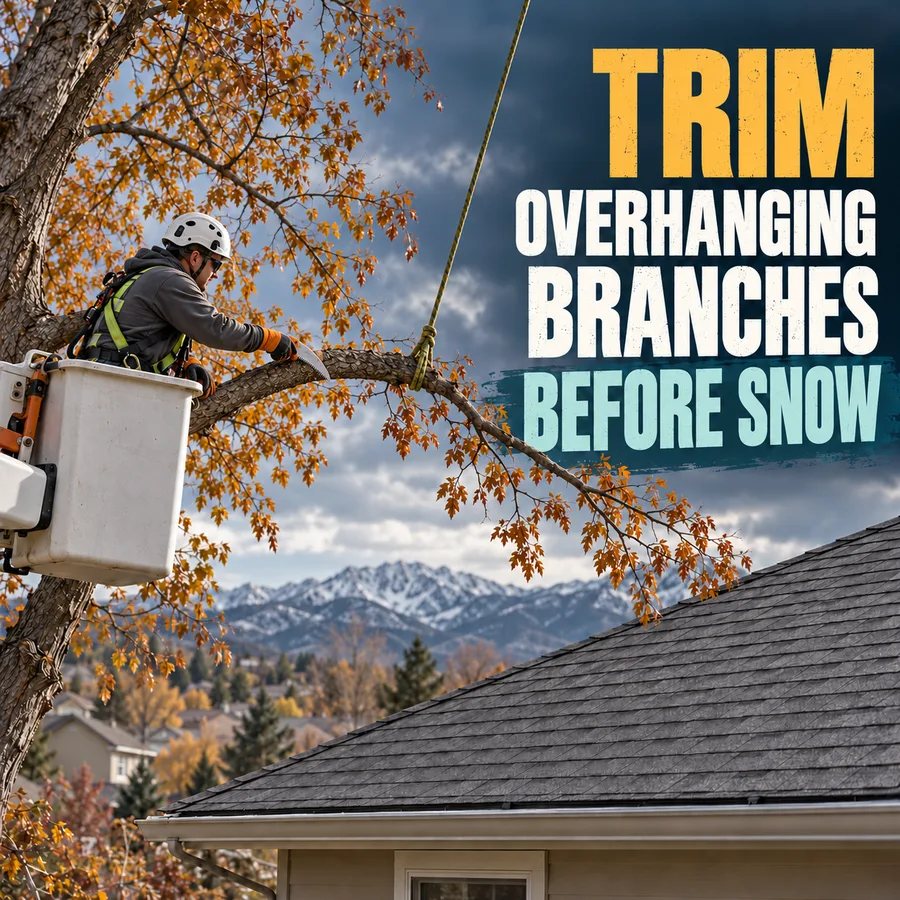
Quick answer: Branches that touch, hang low over, or drop heavy debris onto a roof should be evaluated before winter. Snow and wind can change how branches move, but trimming should be planned by a qualified tree professional so limbs, tools, and workers do not damage the roof.
The relationship between a tree and roof is more important than a simple distance rule. Species, branch health, slope, prevailing wind, and the roof material all matter.
Roofing and tree work solve different parts of the problem. An arborist evaluates the tree; a roofer checks the covering, flashings, gutters, and any areas already affected by contact or falling debris.
Key Takeaways
- Address branches that scrape roofing, block drainage, or appear dead, split, or poorly supported.
- Do not cut a limb and let it fall onto shingles, metal panels, gutters, or rooftop equipment.
- After major pruning, inspect the roof for impact marks and clear remaining debris.
- Utility-line conflicts require the utility or an appropriately qualified contractor.
How can branches affect a roof?
Repeated rubbing can wear protective surfaces, loosen edge materials, or scratch coatings on metal components. Falling twigs and leaves can collect in valleys and gutters. A larger limb can damage shingles, panels, flashing, decking, gutters, or structural framing depending on its weight and the point of impact.
Shade can also slow drying in sheltered areas, especially when debris is present. None of these conditions proves that a leak exists, but they justify a closer look before snow hides the surface.
Which branches deserve attention first?
Prioritize limbs that already touch the roof, hang over chimneys or service lines, show cracking or decay, or sit where snow shedding could push them into the building. Branches above valleys and low-slope areas also deserve attention because they contribute debris to critical drainage paths.
A healthy branch high above the roof may present less immediate concern than a smaller dead limb at the eave. Ask a qualified arborist to evaluate tree health and pruning needs rather than making the decision from roof appearance alone.
- Branches touching shingles or panels
- Dead or split limbs over the structure
- Growth blocking roof or gutter access
- Limbs near utility conductors
How should tree work be coordinated with roof protection?
Tell the tree contractor about fragile roof areas, skylights, gutters, metal panels, and recent repairs. Controlled lowering, ground protection, and a clear cleanup plan can reduce avoidable impacts. Roof surfaces should not be used as a staging platform unless the work plan and fall protection are appropriate.
After trimming, photograph the roof from safe locations and schedule an inspection if limbs struck the building or workers needed roof access. A small impact may affect flashing or a shingle tab without creating an immediate interior leak.
What should a roofer check after branch contact?
The review should follow the impact path. That may include the roof covering, edges, valley, flashing, gutters, downspouts, penetrations, and visible deck condition. On metal roofing, scratches, displaced trim, open seams, or dented panels may matter even when no hole is visible.
If water is already entering, interior protection and prompt professional help take priority. Keep people away from sagging ceilings and do not climb onto a wet or storm-damaged roof.
What belongs on a fall tree-and-roof checklist?
Complete tree work before sustained freezing weather when practical, clear the resulting debris, verify that gutters and outlets are open, and keep photos of the cleaned roof. Confirm that downspouts discharge away from the building and that no cut branch is resting on a roof edge.
This coordinated approach reduces surprises. It also gives the roofer a clear surface to inspect and the arborist room to work without snow or ice complicating access.
Frequently Asked Questions
How far should branches be from a roof?
There is no single distance that fits every tree and site. Ask an arborist to consider branch size, health, growth, wind exposure, and the roof below.
Can branches scratch a metal roof?
Yes. Repeated contact or falling limbs can damage coatings or trim. Have visible scratches or displaced metal evaluated before applying any coating or sealant.
Who should trim branches near power lines?
Contact the utility or an appropriately qualified line-clearance tree professional. Do not approach branches or tools near energized conductors.
Should the roof be inspected after a branch falls?
Yes, if the branch struck the roof, gutter, chimney, skylight, or another component, even when no interior leak is visible.
Can overhanging trees void a roof warranty?
Warranty terms vary. Review the actual manufacturer and contractor documents rather than assuming a universal rule.
Get a Clear Roof Recommendation
For related service information and next steps, explore roof inspections, roof repair, service areas, and free roof inspection.
All Star Roofing is a family-owned, licensed and insured roofing company based in Orem with 30+ years of roofing experience. Call (801) 381-0727 or schedule a free inspection for a practical recommendation based on the actual roof and current conditions.