

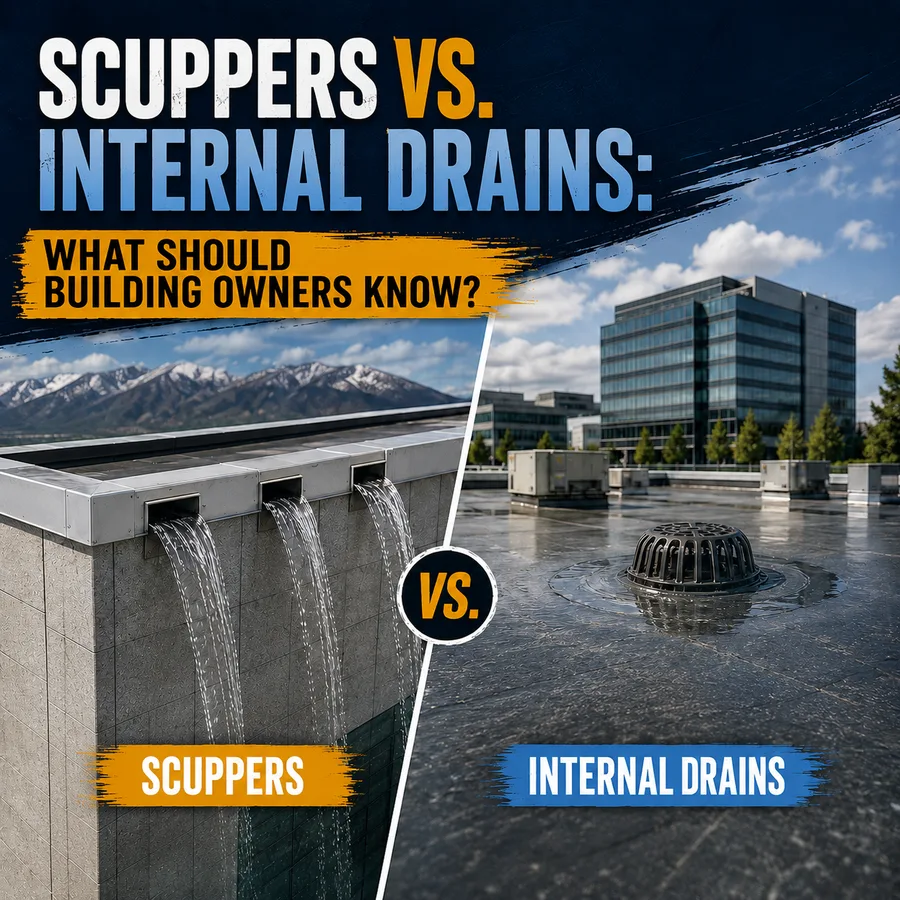
Quick answer: Scuppers move water through perimeter walls, while internal drains route it through piping inside the building. Many roofs use one or both plus overflow provisions; the right design depends on structure, layout, climate, and maintenance access.
The practical answer comes from the whole assembly, exposure, and property goals. Use commercial roofing services to frame the questions a written scope should answer.
Key takeaways
- Scuppers move water through perimeter walls, while internal drains route it through piping inside the building. Many roofs use one or both plus overflow provisions; the right design depends on structure, layout, climate, and maintenance access.
- Utah snowmelt can concentrate water even when no rain is falling, and freeze-thaw cycles can affect outlets. Summer cloudbursts can test capacity quickly.
- Best next step: Have design or capacity changes reviewed by qualified professionals.
What factors matter most?
Flow path
Owners should know where water travels after it leaves the membrane. Its importance depends on location, adjacent details, exposure, and the condition of the rest of the roof.
Visibility
Scupper discharge is easy to observe, while internal piping problems may show indoors. A useful scope states how this detail connects to drainage, attachment, flashing, or maintenance.
Freeze exposure
Exterior components and shaded discharge points can behave differently in winter. Look for evidence on this roof rather than assuming the same condition exists across every slope or area.
Maintenance
Strainers, sumps, leaders, and discharge areas need routine checks. Product instructions and the actual substrate help determine the appropriate response.
Overflow
Secondary paths should be identifiable and kept open. Evaluate it with the surrounding assembly because water and movement rarely stop at one component.
How do Utah conditions change the answer?
Utah snowmelt can concentrate water even when no rain is falling, and freeze-thaw cycles can affect outlets. Summer cloudbursts can test capacity quickly.
Local exposure matters as much as the city name. Two nearby roofs can experience different wind, sun, snow retention, and drying patterns. Use product-specific requirements and local observations rather than a single statewide lifespan or performance promise.
What should you do next?
- Label drainage components on the roof plan. Write the result down so later estimates and inspections can use the same facts.
- Walk the interior after major rain or melt events. The goal is to compare a complete scope instead of relying on a product name or a quick visual guess.
- Record staining, slow drainage, ice, and repeated ponding. Where safety, structure, code, or electrical work is involved, use the appropriately qualified professional.
- Have design or capacity changes reviewed by qualified professionals. Keep photos, product data, and written recommendations with the property records.
To connect the guidance to an actual building, see commercial roof repair. The next step should explain observed conditions, separate urgent work from maintenance, and result in a clear written recommendation.
What should a professional review?
- Membrane or panel field
- Seams, flashings, curbs, and penetrations
- Drainage and recurring ponding
- Insulation or deck moisture indicators
- Access history, repairs, and rooftop equipment
A useful inspection connects exterior evidence with interior symptoms and the building’s history. It should also identify when another qualified professional is needed for structural, electrical, mechanical, design, policy, or legal questions.
What should you avoid?
Avoid converting or blocking any outlet based only on appearance; drainage changes can shift loads and leak risk.
Ground-level photos and interior observations are useful records. Leave close roof access to trained personnel, especially after wind, rain, snow, or ice.
Frequently asked questions
Can a roof have both types?
Yes. Designs may combine primary and overflow components in several ways.
Why is water coming from an overflow?
It may indicate blocked, undersized, frozen, or overwhelmed primary drainage and should be investigated.
Are internal drains harder to maintain?
They require access and coordination with interior piping, but maintenance difficulty depends on the building.
Can snow block a scupper?
Snow and ice can obstruct outlets, which is why winter observation matters.
Who should evaluate drainage design?
A roofing professional can inspect the roof; structural or plumbing design questions may require the appropriate licensed professional.
Get a clear roof recommendation
The right answer depends on the actual roof, not only its age or material. Learn about Utah roofing resources, or call All Star Roofing at (801) 381-0727 to schedule a free inspection or estimate. Coverage decisions remain with the insurance carrier, and project timing depends on weather, scope, materials, and scheduling.