
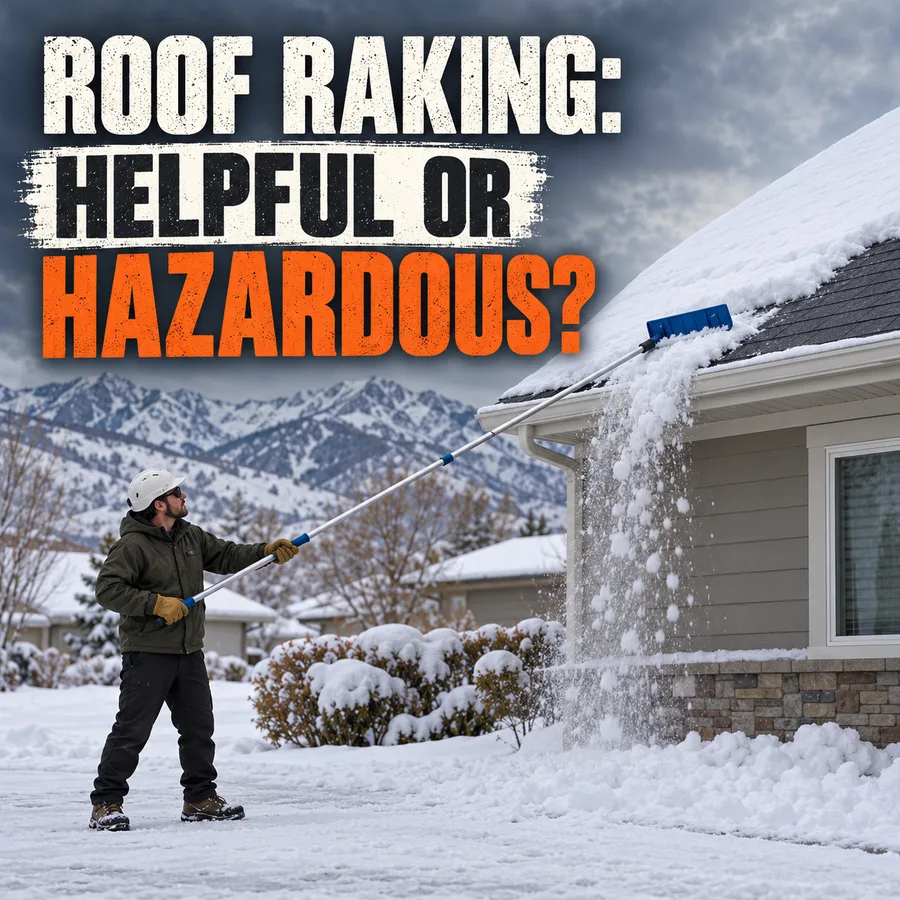
Quick answer: A roof rake can remove a limited amount of fresh snow from some roof edges while the user stays on the ground, but it is not appropriate for every roof or snow condition. Never rake from a ladder or stand below falling snow and ice; deep, heavy, crusted, or structurally concerning accumulation calls for trained help.
Snow removal changes the load and can release sliding material. The task needs a protected drop zone and a method that does not damage the roof covering.
A rake is not a cure for recurring ice dams. If edge ice returns, the building may need a broader review of heat loss, insulation, ventilation, drainage, and roofing details.
Key Takeaways
- Use a roof rake only from stable ground and only if the product and roof conditions allow it.
- Never combine a roof rake with a ladder; OSHA specifically warns against this practice for workers.
- Keep people, pets, doors, vehicles, and fragile property out of the fall zone.
- Stop and call for help when you see structural warning signs or cannot work without pulling near utilities.
What can a roof rake actually do?
A purpose-made rake may help pull small amounts of loose snow from the lower portion of an accessible roof. Removing snow near an eave can reduce the supply of meltwater reaching an existing cold edge, but it does not correct the conditions that made the roof surface unevenly warm.
The tool should glide without scraping granules, catching shingle edges, bending metal seams, striking vents, or pulling on heat cable. Roof geometry, material, height, overhead lines, and the weight of the snow can make the same tool acceptable at one home and unsafe at another.
Why is roof raking hazardous?
Snow and ice can release suddenly toward the user. Long poles can be difficult to control in wind, contact electrical conductors, or pull roofing components loose. Reaching from a ladder adds a severe balance hazard; the force needed to pull snow can shift the ladder as material falls.
Cold surfaces also create slip hazards on the ground. Establish a wide work zone, wear appropriate footwear and head protection, and stop if visibility, footing, wind, or falling ice makes the task unpredictable.
When should you not use a roof rake?
Do not rake when the only workable position is on a ladder, roof, icy slope, or narrow walkway. Avoid areas near power lines and do not pull snow toward a doorway, gas meter, window well, parked vehicle, or public path.
Crusted snow, large drifts, adhered ice, solar panels, fragile materials, steep roofs, and metal roofs that may release snow quickly all deserve professional evaluation. A building showing movement or distress needs structural guidance, not improvised snow removal.
- Popping, cracking, or creaking sounds
- New sagging in ceilings or roof members
- Doors or windows suddenly binding
- Bowed framing, falling ceiling material, or displaced sprinkler lines
Can raking prevent ice dams?
It may reduce snow near an eave in limited circumstances, but recurring ice dams usually involve the relationship among indoor heat, air leakage, insulation, attic airflow, roof geometry, and outdoor temperatures. Removing visible ice without understanding that system can damage shingles and gutters while leaving the cause intact.
Document where the ice forms and when interior stains appear. A roofer can inspect the exterior assembly, while insulation or energy professionals may need to evaluate the ceiling and attic.
What is the safer next step for heavy accumulation?
Keep people away from the potential slide area and call a qualified snow-removal or roofing contractor with appropriate access and fall protection. If structural warning signs appear, leave the affected area and contact emergency services or a qualified structural professional as conditions warrant.
All Star Roofing can inspect roof damage or leakage after snow and ice conditions allow safe access. A written record of photos, weather, sounds, movement, and leak timing helps the evaluation.
Frequently Asked Questions
Can I use a roof rake from a ladder?
No. Pulling snow while on a ladder greatly increases fall risk. OSHA warns workers not to use a snow rake or shovel while on a ladder.
How much snow should I remove?
There is no universal depth because snow weight, drifting, roof design, and condition vary. Use professional guidance when load is a concern.
Will a roof rake damage shingles?
It can if the head scrapes, catches edges, or is used on brittle or icy materials. Follow the tool instructions and stop if safe clearance cannot be maintained.
Can I chip an ice dam with a shovel?
Do not use sharp or impact tools on the roof edge. They can damage roofing, gutters, and flashing and expose you to falling ice.
Who removes snow from a commercial roof?
Use a contractor or trained team with a site-specific safety and load-management plan. Commercial roofs may contain hidden edges, skylights, drains, and equipment.
Get a Clear Roof Recommendation
For related service information and next steps, explore roof inspections, roof repair, roofing resources, and free roof inspection.
All Star Roofing is a family-owned, licensed and insured roofing company based in Orem with 30+ years of roofing experience. Call (801) 381-0727 or schedule a free inspection for a practical recommendation based on the actual roof and current conditions.