

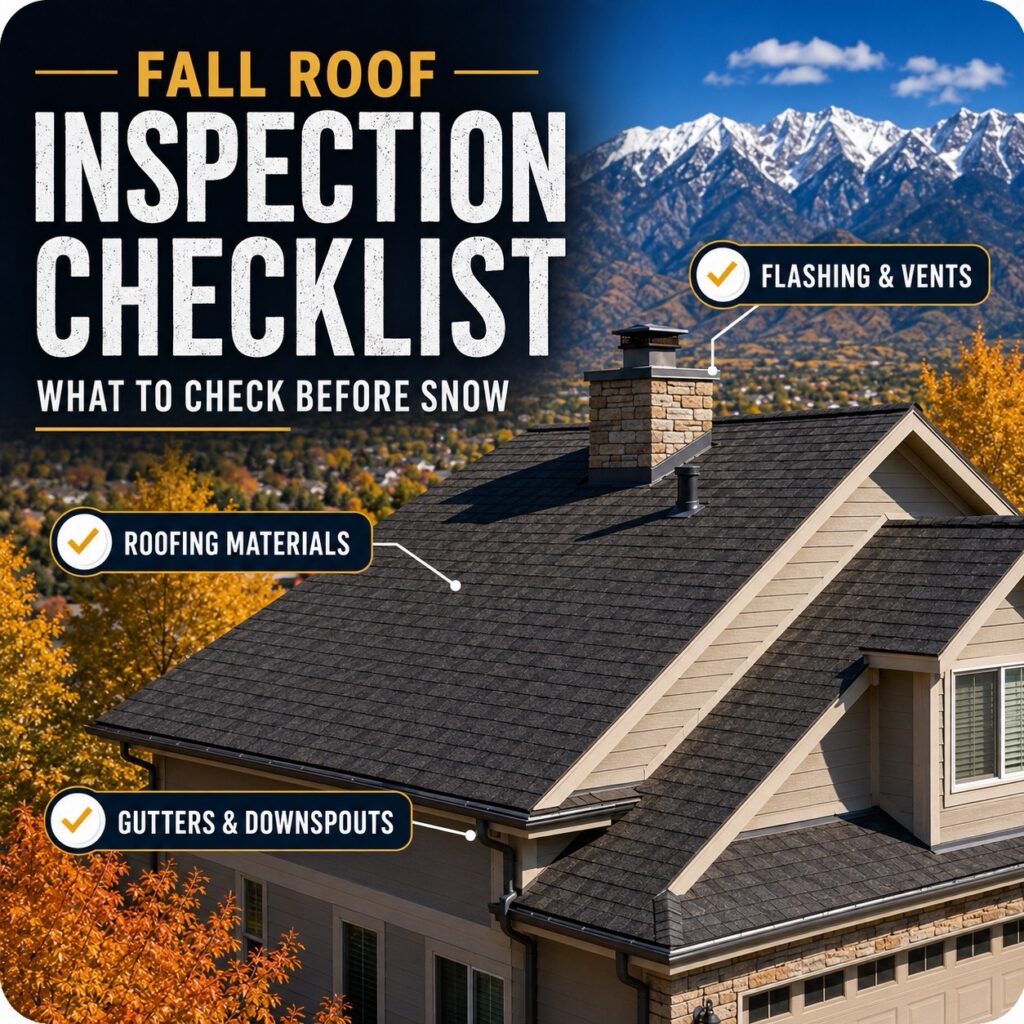
Quick answer: In Northern Utah, late summer or early fall is a practical time to inspect a roof because repairs are easier to plan before snow, ice, and repeated freeze/thaw cycles arrive. Homeowners can check many warning signs from the ground and inside the attic, but roof access and repairs should be left to an experienced roofing professional.
A fall inspection does not need to begin with a leak. Its purpose is to find loose materials, weak flashing, blocked drainage, and moisture clues while there is still time to address them. If your roof has also been through summer hail or high winds, a pre-winter review is especially useful.
Key Takeaways
Check the roof, gutters, downspouts, ceilings, and accessible attic areas before the first sustained freeze.
Stay on the ground. Binoculars and photographs can help you document visible concerns without climbing.
Missing materials, active water stains, loose flashing, sagging, or recurring leaks deserve prompt professional attention.
A professional inspection can evaluate details that are difficult or unsafe to assess from below.
What Should You Check on the Roof From the Ground?
Start by walking around the property on a clear day. Look at each roof slope from several angles. The goal is not to diagnose every defect; it is to notice changes that justify a closer inspection.
Shingles or Metal Panels
On an asphalt roof, look for missing, lifted, cracked, or visibly displaced shingles. Uneven areas and heavy granule accumulation near downspout exits can also be worth discussing with a roofer. On a metal roof, look for panels or trim that appear loose, shifted, bent, or separated at edges. Do not try to press materials back into place from a ladder.
Flashing and Roof Penetrations
Flashing helps direct water around chimneys, walls, valleys, plumbing vents, and other roof transitions. From the ground, note flashing that appears lifted, rusted, bent, or separated. Sealant that is cracked or pulling away may be a clue, but adding surface caulk is not always the correct repair because the underlying flashing detail may be the real issue.
Roofline and Edges
Look for a roofline that appears newly uneven, sections of fascia pulling away, or damaged drip edges. A visible sag or soft-looking area should be evaluated promptly. It may reflect a localized decking concern, prolonged moisture exposure, or a structural issue that cannot be judged from the yard alone.
Are the Gutters and Downspouts Ready for Winter?
Drainage is part of the roof system. Leaves, needles, roofing granules, and other debris can slow water at the eaves. During fall, confirm that gutters are attached, downspouts are connected, and outlets are not visibly blocked. Watch the system during ordinary rain if it is safe to do so. Overflow at one corner may point to a clog, poor slope, an undersized outlet, or a damaged section.
Downspouts should move runoff away from the building rather than releasing it beside the foundation. If gutters are sagging, pulling from the fascia, or leaking at joints, address the problem before snow and ice add stress. All Star Roofing can consider roof and drainage concerns together as part of a broader residential roofing evaluation.
What Should You Look for Inside the Home?
Roof problems sometimes appear inside before they are obvious outside. Check ceilings and upper walls for new stains, bubbling paint, damp drywall, or musty odors. Around bathroom fans, chimneys, skylights, and attic hatches, look for discoloration that was not present earlier in the year.
If the attic is safely accessible by a normal stair or hatch, use a flashlight from a stable platform. Look for darkened decking, damp insulation, water tracks, frost history, or daylight coming through an unexpected opening. Do not step between ceiling joists, touch electrical wiring, or enter an area with limited footing. Moisture can come from roof leakage, condensation, or indoor air escaping into the attic, so the location should be evaluated rather than guessed.
What Does a Professional Fall Roof Inspection Cover?
A professional can safely evaluate the roof covering, valleys, flashing, penetrations, edges, ventilation components, and visible drainage conditions. The inspection should distinguish isolated repair needs from broader wear and explain what is urgent, what can be monitored, and what should be budgeted for later.
This is also the right time to ask for photographs and a written explanation. If the roof has prior repairs, bring any documentation you have. A clear record helps you compare changes after future storms and makes maintenance decisions easier. For more homeowner education, visit All Star Roofing’s roofing resources.
Which Findings Should Be Addressed Before Snow?
Active leaks, missing roofing materials, loose flashing, exposed decking, damaged penetrations, and drainage failures should move to the front of the list. Recurring stains or suspected attic moisture also deserve attention because winter conditions can make diagnosis and access more difficult.
Other findings may be appropriate to monitor, but that decision should be based on actual condition. A roofer can explain whether a focused repair, maintenance item, or replacement plan makes sense. If you are in Orem, Provo, Salt Lake City, or another nearby community, review the All Star Roofing service area and arrange the inspection before the weather closes in.
Frequently Asked Questions
How often should a roof be inspected?
Periodic checks in spring and fall are useful, with an additional inspection after severe hail, wind, or another event that may have affected the roof.
Can I inspect my roof without climbing on it?
Yes. You can identify many warning signs from the ground, from upper-story windows, and from safely accessible interior areas. Leave roof access to trained professionals.
Should gutters be cleaned before winter?
They should be clear enough to drain normally before freezing weather. If access is unsafe or the gutters are damaged, hire a qualified professional.
Does a ceiling stain always mean the roof is leaking?
No. Stains can come from roof leakage, plumbing, or condensation. The pattern and source should be investigated before repairs are chosen.
What if the roof looks fine from the street?
Some flashing, storm, ventilation, and surface concerns are difficult to see from below. If the roof has a leak history or recent storm exposure, a professional inspection can provide a clearer answer.
Schedule a Pre-Winter Roof Inspection
All Star Roofing is a family-owned, licensed and insured roofing company based in Orem with 30+ years of roofing experience. To get clear options before winter, schedule a free roof inspection or call (801) 381-0727.