

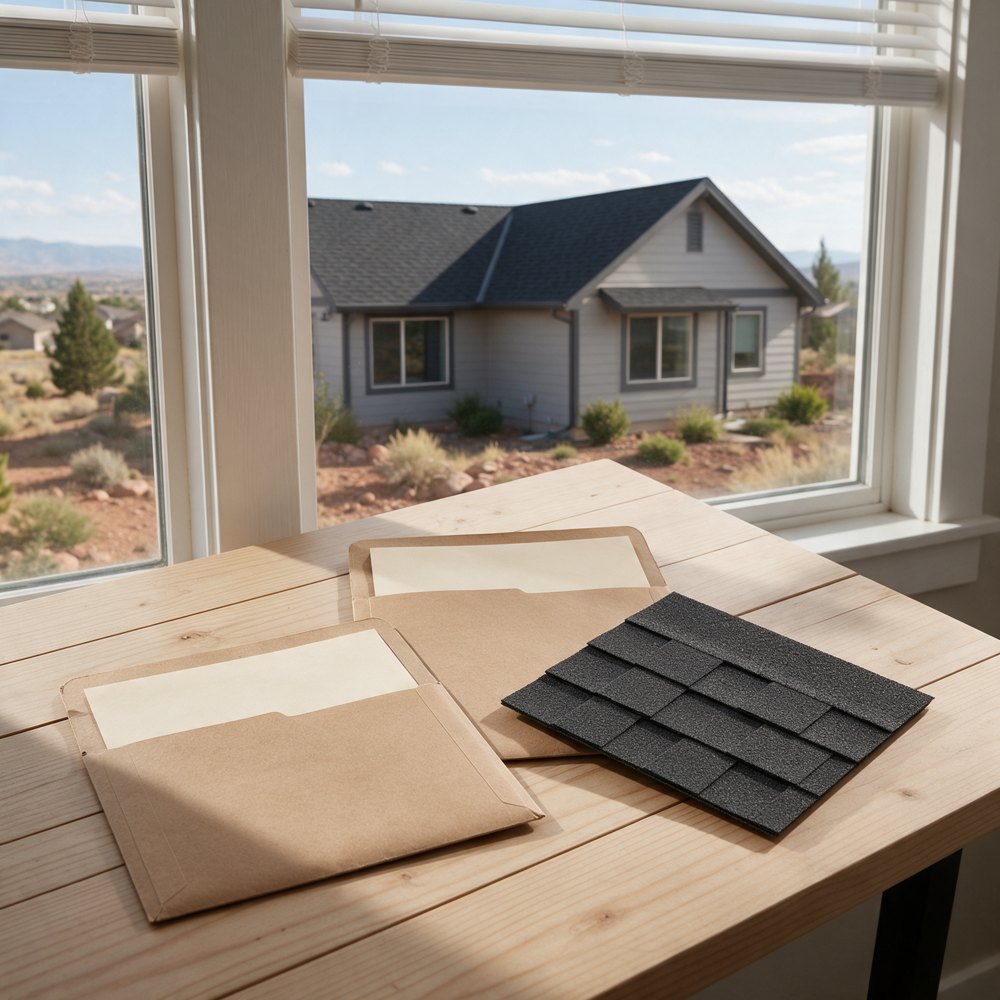
A manufacturer warranty addresses the coverage promised by the roofing-product manufacturer. A labor or workmanship warranty addresses the contractor’s installation responsibilities under its written terms. All Star Roofing offers a 10-year labor warranty. That is separate from the manufacturer’s warranty on the shingles or other selected roof products.
Those distinctions sound simple until a proposal uses phrases such as “lifetime roof,” “full coverage,” or “premium system.” The length printed at the top of a warranty does not tell you everything about what happens if the roof develops a problem. Covered causes, labor, accessories, exclusions, registration, transfer rules, and the claims process matter too.
Before choosing a replacement roof in Orem, Provo, South Jordan, or another Wasatch Front service area, ask for the actual warranty documents. A clear comparison is more useful than the longest headline.
There are different reasons a roof can develop a problem
A roof is a system exposed to weather, movement, maintenance, and work by other trades. A leak can result from an installation defect, a manufacturing defect, storm damage, a puncture, deterioration, a change made later, or an issue outside the roofing scope. More than one condition can contribute.
That is why “the roof leaked” does not automatically identify the responsible warranty. The cause needs to be investigated. A manufacturer may evaluate whether its product is defective, while a contractor evaluates whether installation work falls under its labor commitment.
Start by reporting the symptom promptly and keeping records. Describe when it happens, where water appears, and whether any work or weather event preceded it. Do not assume the source is directly above the stain or that a particular warranty applies before the roof has been assessed.
| Coverage type | Main question | What to read carefully |
|---|---|---|
| Manufacturer product warranty | Is there a covered defect in the specified product? | Covered materials, remedy, prorating, labor, and exclusions |
| Contractor labor warranty | Does the condition fall within the contractor’s installation coverage? | Covered work, term, exclusions, notice, and remedy |
| Enhanced manufacturer system coverage | Does the installed project qualify for the specific program? | Eligibility, components, registration, inspection, and actual issued terms |
| Homeowners insurance | Does the policy cover the cause of loss? | Deductibles, exclusions, valuation, and carrier determination |
What a manufacturer warranty may cover
A standard product warranty commonly focuses on manufacturing defects, but the exact document controls. It may distinguish between the product itself and the cost to remove or replace it. It may also apply different terms during an initial period and later years.
“Lifetime” needs a definition. It can depend on the owner, the property, the product, and the warranty’s stated conditions. It should not be interpreted as a promise that the complete roof will perform indefinitely or that every future repair will be paid in full.
Prorating is another important detail. A remedy can change as the product ages. A long stated term may therefore provide a different financial result in a later year than a homeowner expects from the headline alone.
Read the manufacturer documents for the exact selected product. For example, GAF’s residential warranty resources show that different coverage options exist. Use the exact program named in your proposal when comparing those documents.
What All Star Roofing’s 10-year labor warranty means in the comparison
All Star Roofing offers a 10-year labor warranty. Ask for the written terms with the project documents so you understand the covered installation work, the start date, reporting requirements, exclusions, and available remedy.
Do not expand that statement into an unsupported guarantee. It does not, by itself, establish that every leak from any cause is covered, that storm damage is included, or that all materials and consequential interior repairs are paid. Those questions belong in the actual agreement and any other applicable coverage.
Also keep company experience separate from warranty duration. Years of roofing experience are not the number of years promised under the labor warranty. A proposal should use consistent language so the owner does not confuse the two.
If you are comparing contractors, request the same information from each one. A shorter clearly written commitment can be easier to evaluate than a longer verbal promise with no document explaining its scope.
Enhanced warranties require more than choosing a brand
Some manufacturers offer expanded coverage when a project satisfies specific conditions. Those can involve qualifying components, installation requirements, contractor participation, registration, fees, or inspection. The requirements vary, and availability should be confirmed before you count the coverage as part of the purchase.
Ask the estimator to identify the exact program by name and provide a sample document. Then ask what must happen after installation for the warranty to be issued. A brochure describing an available program is different from evidence that your roof has enrolled and qualified.
Be cautious about comparing bids where one lists an enhanced warranty and another lists a standard product warranty without explaining the difference. The price may reflect different materials, accessories, administrative requirements, or coverage. You need enough detail to decide whether that difference matters to you.
At closeout, verify that you received the promised document or confirmation. Store it with the invoice and product information. If registration is the contractor’s responsibility, make that assignment clear in writing rather than assuming someone else completed it.
Weather performance claims and warranty coverage are different
A shingle can have a documented wind or impact classification without promising that every windstorm or hailstorm is covered by its warranty. Test results describe specified performance under stated conditions. Warranty documents describe a contractual remedy under their terms.
This is especially relevant when comparing impact-resistant shingles. A higher class can be useful product information, but it does not mean “hailproof,” guarantee insurance savings, or eliminate a storm deductible. Ask the manufacturer and insurer separate questions rather than blending their answers.
Fire classification has the same distinction. A classified roof assembly is not fireproof, and the classification does not establish every warranty obligation after an exposure. The exact assembly, documentation, and cause of damage matter.
For the roof itself, start with the selected asphalt shingle system or metal roofing option, then review the accompanying coverage. Avoid using a warranty as a substitute for a suitable material and complete installation scope.
Questions about leaks, interior damage, and other costs
Homeowners reasonably want to know who pays if water enters the house. The answer depends on the cause and the documents involved. Roof repair, product replacement, tear-off, disposal, interior finishes, personal property, and other expenses may be treated differently.
Ask specifically which costs the warranty addresses. Does the remedy cover a replacement product only? Is labor included during a limited period? Are accessory materials addressed? Are there limits or exclusions for consequential damage? A general statement that the roof is “covered” leaves too much unresolved.
If insurance may be involved, the carrier determines policy coverage. All Star Roofing can inspect the roof and document relevant conditions, but a contractor warranty does not bind the insurer. The Utah Insurance Department’s home-claims resources provide general information for the insurance side of that discussion.
Report active leaks promptly and take reasonable steps to protect the property from safe locations. Keep photographs, communications, invoices, and any repair findings. Do not delay reporting while trying to decide which party will ultimately pay.
Maintenance and later work deserve attention
Roof warranties can contain conditions concerning maintenance, notification, access, and changes to the roof. Read them before adding equipment or authorizing another trade to make penetrations. A later installation may require compatible details and coordination to preserve applicable coverage.
Solar attachments, satellite mounts, new vents, and HVAC work are examples worth discussing. That does not mean any later work automatically voids every warranty. The effect depends on the terms and the relationship between the change and the problem. Avoid both blanket assurances and blanket denials.
Keep a record of inspections and repairs. Note who performed the work, what changed, and which products were used. If a manufacturer or contractor needs to review a condition later, those records can help establish the roof’s history.
For a commercial property, maintenance and access responsibilities may be more involved because several trades regularly use the roof. Ask for commercial-system documents rather than relying on a residential-shingle explanation.
If you sell the house
Transfer rules vary. A warranty may have a deadline, limit the number of transfers, require notice or a fee, or change coverage for a later owner. Do not tell a buyer that the warranty transfers automatically unless the document confirms it and any required steps have been completed.
Before listing the home, gather the roof installation date, contract, paid invoice, product information, contractor labor warranty, and manufacturer documents. Ask the relevant provider how a transfer works and retain proof of any notice or registration.
A well-organized roof file is useful even when the coverage is limited. It lets the buyer evaluate the age and scope of the installation without relying on vague descriptions such as “newer roof with a lifetime warranty.”
If a sale is approaching, our guide to roof inspections for Utah buyers and sellers explains where an inspection fits alongside the roof records you provide.
What to ask before accepting a roof estimate
Request a written answer to these questions while comparing proposals:
- Which manufacturer warranty applies to the exact proposed product?
- What work is covered by the contractor’s labor warranty?
- Which costs are included in a covered remedy, and what is excluded?
- Does coverage change or prorate over time?
- Who handles registration, fees, inspections, and closeout documents?
- What notice is required if a problem develops?
- How do maintenance, later alterations, and a home sale affect the terms?
Keep the answers with the roof replacement scope. The two should agree. A roof’s flashing, decking, ventilation, and accessory work still matter even when the warranty language sounds reassuring.
If your existing roof has a problem, request an inspection before assuming replacement is required. If you are comparing a new roof, contact All Star Roofing or call (801) 381-0727 for an estimate and a clear explanation of the 10-year labor warranty alongside the proposed manufacturer’s coverage.