

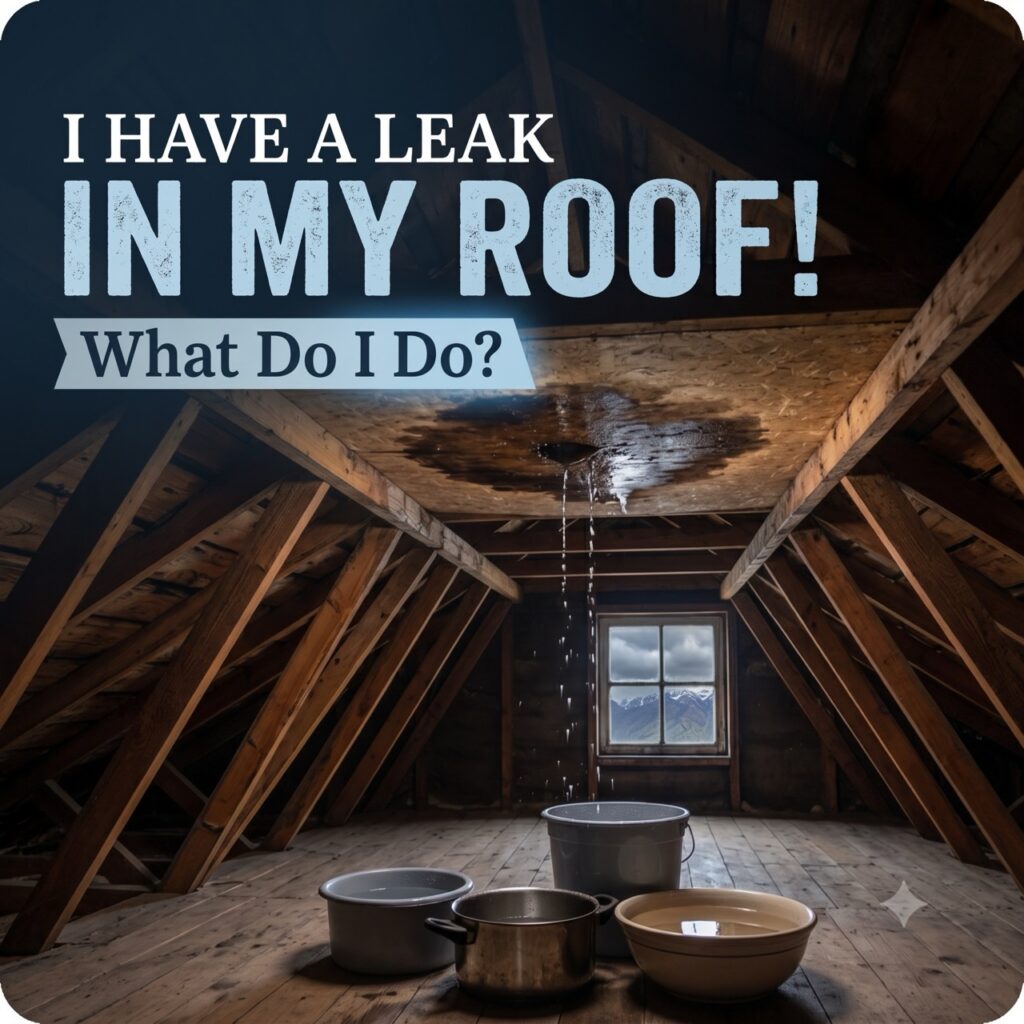
It’s a rainy day, you’re inside relaxing, and you start to hear a sound, like the dripping of water. You get up to check out the sound and your heart sinks… The roof is leaking.
A roof leak is one of the most stressful problems a homeowner can face. And the longer it’s there without getting fixed, the more damage gets done. The one thing you absolutely DON’T want to do is ignore it. Water damage spreads fast through insulation, ceilings, and walls. You don’t want to end up with mold or structural damage.
Knowing what to do when a leak appears can help mitigate water damage, spend less on repairs, and keep the problem maintained while pursuing a proper repair. When these situations arise, you want to ensure your home is protected while you identify the core problem and get the right solution. That’s what we are here for today.
We are going to review a number of possible roof-leakage and water damage scenarios, and give you immediate solutions to give you protection, prevention of further damage, and peace of mind.
Scenario One: Water Coming From The Ceiling/Roof
If you notice:
- Water dripping from the ceiling
- Stains on the wall or ceiling (often yellow or brown)
- Paint Peeling
- Drywall Bubbling
- Attic Insulation Feels Damp
- Moisture collection after rainfall
- Water pooling near windows
Then you most likely have a roof leak. The logical first thought many homeowners will have is that the leak must be right above where the water is dripping. However, that is not always the case. Water can flow from the initial leak along decking, beams, insulation, and other parts of the structure to the spot you initially find it. The first goal when you find yourself in this scenario is to stop further damage
Solution: Protecting Your Home From Further Damage
As soon as you find a leak, don’t wait, start making moves to protect your home.
Grab some buckets/containers and towels and place them under the drip area to collect the water and prevent floor/furniture damage. Take note of what household items are around the drip area. You’ll want to relocate valuables, electronics and furniture to a safe distance.
Another important factor to take note of is how close any electrical fixtures are to the water. This includes things like outlets, ceiling lights, wiring, etc. Safety should be your first priority here, do not touch any electrical components that are wet. If you can safely do so, turn off power to the affected area.
If you notice a bulge forming in the ceiling, this means the water is collecting and the ceiling may collapse. If it is a small bulge that is just forming, and you can do so safely, try releasing some of the trapped water in a controlled manner. Be ready with buckets/containers to catch the released water. You want to be sure you can handle the released water properly so you don’t create additional damage or risks.
The goal in this first step is simple yet crucial… You want to contain the water while setting up a proper repair.
Scenario Two: Leak Worsens During Rain
If you have a leak that gets worse during rain or a storm, your instinct may be to try to find the leak on the roof. This can be tempting to the pressure of an active leak that is getting worse, especially if the rain doesn’t seem like its going to stop soon. However, you do not want to do this. Going onto the roof during the rain is incredibly dangerous. The worse the wind and rain are, the higher the risk. As worrying as a leak can be, nothing is worth your safety.
So, what do you do in this scenario?
Solution: Use Temporary Protection Under Safe Conditions
Once again, until conditions are safe and the roof is not wet, do not go on the roof. Instead start with:
- Place buckets/containers under the leaks to content the water
- Relocate at-risk interior belongings
- Clear out the affected areas
- Take photos of the damage
- Contact a roofing professional
Once conditions are safe, and you are waiting for a roofing contractor to make the repairs, you’ll want to use temporary protection in case theres another storm on the way. When the roof is no longer wet, use a tarp to cover the damaged area. This is not a permanent solution, it’s just a temporary bandaid to prevent additional water from entering the home while you wait for a real repair.
Scenario Three: I Can’t Find The Source of The Leak!
Sometimes finding a leak on the roof is easy. Other times it can be like finding a needle in a haystack. Sometimes there are multiple spots on the roof that can look damaged, and other times water doesn’t even enter from the visibly damaged area! Let’s get a quick overview of possible leak sources:
- Missing/damaged shingles
- Cracks in flashing (usually around chimneys or vents)
- Damage in roof valleys
- Poor skylight sealing
- Water backup from clogged gutters
- Aging roof materials
These aren’t all the possible sources, but they are some of the most common. So now that we know the possible sources, let’s go over where to begin when trying to find it!
Solution: Work From the Inside Out
The first step is to check out the attic if you can. Here’s what to look for:
- Staining on the wood
- Wet/damp insulation
- Puddles/trails of water
- Mold
- Mildew
- Sunlight
- Sunlighting shining through
A pro-tip for searching through the attic is to bring a flashlight. This will make it easier to find the signs that will point you to the source of the leak. Keep in mind the condition of your attic. Sometimes there may be certain safety hazards in the attic like nails or uneven flooring. Be safe while exploring the attic!
Scenario Four: I Can’t Decide Between Roof Repair or Replacement
It’s not always necessary to get an entire roof replacement. Usually, leaks are repairable, especially if you’ve taken measures to limit the damage. But it’s important to be realistic, and sometimes a leak is a symptom of a larger problem.
Consider a repair if:
- Only a small amount of shingles are damaged
- Water is getting through the flashing
- Waiter is getting through a vent seal
- The damage has been isolated to one area
Consider a replacement if:
- You are approaching the end of your roof’s expected lifespan
- Multiple leaks are found
- You find deteriorated roofing materials
- Storm damage is widespread
- You’ve already done multiple repairs
Solution: Consult a Trusted Professional
If you are still unsure with which route to take, the best choice is to consult a professional! An expert opinion from a trusted contractor is the easiest way to be sure you’re making the right decision. Here’s what a proper evaluation will take into account:
- Age of the roof
- Current roof condition
- Severity of damage
- Amount of previous repairs
- Structural concerns
- Long-term cost
A repair may be cheaper, but it doesn’t necessarily mean it’s always the right option. If you go with a repair when you need a replacement, you’ll end up spending more in the long term. Or if you go with a replacement when you need a repair, you are unnecessarily taking on a hefty expense. There’s no one size fits all solution, so if you’re not sure the best choice is to consult a professional!
Scenario Five: I Need Roofing Work On a Budget
Aside from the damage caused, roof leaks are a stressful scenario because the final bill can vary based on a number of factors. These factors include:
- The source of the leak
- Design of the roof
- Materials needed
- Extent of damage
- Labor
- Interior repairment
Some repairs are simple, and therefore less expensive, such as a small flashing repair. Something like water damage behind the wall is going to be more costly.
Solution: Get a Detailed Inspection and Estimate
Unless you have experience as a roofing contractor, determining the cost on your own won’t be accurate. It’s best to find a trusted contractor and get an estimate. After they give you the estimate, you’ll want to verify a few things to make sure the price is justified:
- What caused the leak?
- What repairs need to be done?
- What type of materials will be used?
- Was there any interior damage?
- What is covered in the warranty?
- If any additional problems were discovered?
If a contractor pressures you into making a quick decision instead of clearly answering these questions and explaining the problem, that’s a red flag. A trusted contractor will be able to explain exactly what needs to be done and why, and why that justifies the price.
Scenario Six: My Temporary Fix Isn’t Helping
After homeowners discover a leak, the first instinct is to find an instant solution. Whether it’s from a youtube video or your handyman uncle, these solutions are meant to be temporary. When done correctly these solutions can definitely prevent additional damage. But if you got the wrong advice and incorrectly applied a DIY repair, the problem could get worse. Some of the common mistakes we see from homeowners are:
- Applying sealant before verifying the correct leak source
- Covering damaged areas withou fixing the underlying cause
- Unnecessary walking on a damaged roof
- Ignoring moisture buildup in the attic
- Procrastinating on scheduling a professional repair
A roof is a whole system, simply patching up the surface level might leave you blind to the underlying cause, leading to further damage.
Solution: Address The Issue at Its Root
Your priority in this scenario is to get a full understanding of the issue so you can apply the correct solution. Here are the proper solutions to apply based on the issue:
- If the problem is only present at the surface level, replacing damaged shingles is the right move.
- If water is entering around roof openings, the flashing should be repaired.
- If you notice water buildup, you need to improve the drainage.
- If you are dealing with moisture in the attic, you need improved ventilation.
In order to apply the right solution, you first need to understand the problem. Then, you can create a plan to stop the leak and protect your home in the long run.
Scenario Seven: I Need To Properly Maintain My Roof After a Repair
Once you get the repair completed, every homeowner should take the time to maintain their roof properly to get the most out of their new roof. If you don’t take the proper steps, you could be dealing with repairs and leaks again sooner than you need to!
Solution: Create A Maintenance Schedule
In order to extend the lifespan of your roof, a good homeowner should:
- Clean Gutters Regularly: This prevents water backup from entering your home.
- Check On Your Roof: After a severe storm or weather event like hail, you’ll want to take a look at the roof (once conditions are safe) to see if there is any noticeable damage.
- Inspect the Attic: You won’t know if there is a ventilation problem causing moisture damage in the attic if you never go up there! Take the time to visit the attic once in a while to make sure the ventilation is functioning properly.
- Schedule a Professional: Once enough time has passed it’s not a bad idea to get a professional to inspect the roof, as an expert will be able to identify potential issues easier and earlier than the average homeowner.
Overview: Your First Steps When Finding a Leak
In the very first moments of discovering a leak, your priority is to protect your home and prevent additional damage. After that you can move on to fixing the root cause by contacting a professional. Heres an overview of the process:
- Move your personal items away from the affected area to keep them protected
- Control the active water as much as possible through buckets, containers, and towels.
- Wait until roof conditions are safe, and apply a temporary fix if possible, such as a tarp.
- Document the damage done.
- Contact a trusted, experienced professional for an inspection, estimate, and repair.
As important as it is to act quickly when you discover a leak, but it is just as important to make informed decisions to prevent additional damage or unnecesary cost. You can protect your home and belongings by understanding the root cause, applying the right solution, and avoiding the common mistakes outlined in this article. Discovering a leak is never fun, but with the advice here, it will be much less stressful!