

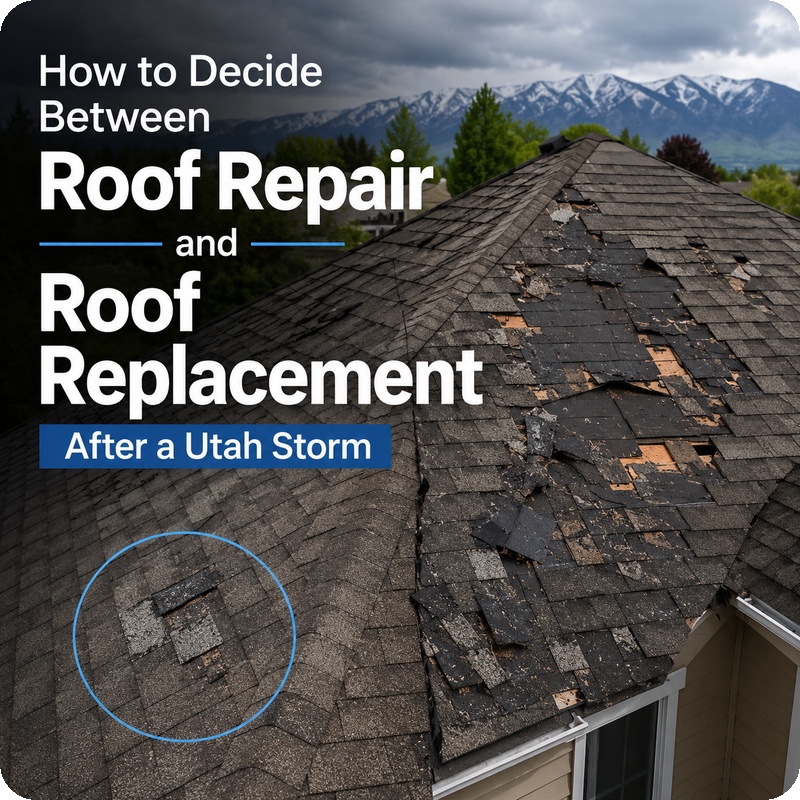
How to Decide Between Roof Repair and Roof Replacement After a Utah Storm
After a Utah storm, a roof can often be repaired when damage is limited and the system still has healthy life left. Replacement makes more sense when damage is widespread, the roof is already aging, or repairs would only delay bigger problems. Frame the problem around uncertainty after a storm: homeowners want to avoid both overreacting and waiting too long.
This guide is written for homeowners weighing scope after storm damage in Northern Utah, with practical next steps, climate context, and a clear path toward a professional inspection when that is the smartest move.
Quick Answer
After a Utah storm, a roof can often be repaired when damage is limited and the system still has healthy life left. Replacement makes more sense when damage is widespread, the roof is already aging, or repairs would only delay bigger problems.
In most cases, the right next step depends on scope, timing, and the condition of the surrounding roof system. That is why the clearest answer usually comes from a documented inspection instead of a guess from the driveway.
Key Takeaways
- Document what changed, protect the home if water is getting in, and schedule an inspection before the next storm makes the picture worse.
- Keep insurance conversations grounded in documentation and policy details instead of promises about what will be covered.
- Use repair-versus-replace logic to explain the next step clearly and calmly.
When storm damage can usually be repaired
In Northern Utah, storm damage can still be a repair issue when the roof system is mostly healthy and the damage is limited to a few areas. That usually means the storm affected part of the roof, not the whole system, and the surrounding materials still have enough life left to justify a focused fix. Readers who are still comparing service options can review residential roofing services to see how these decisions connect to real project scope.
The key is to look at whether the repair actually solves the problem or only buys a little time. If the shingles, flashing, and nearby components still have good life left, a repair can be the practical and cost-conscious move.
Limited shingle or flashing issues
Repairs make the most sense when the storm damage is limited to a section of shingles, a run of ridge cap, a flashing detail, or another isolated area that can be corrected without chasing failure across the rest of the roof. In those cases, the scope is easier to define and the roof can often keep performing well afterward.
Signs the roof still has healthy service life left
A repair becomes easier to justify when the roof is not already near the end of its life, past repairs have held up well, and the damaged area is not part of a larger pattern of granule loss, sagging, repeated leaks, or poor ventilation. A good inspection should separate isolated damage from a roof that is already wearing out.
When replacement becomes the smarter call
In Northern Utah, snow load, hail, wind, freeze-thaw cycles, and strong summer sun all change how roofing decisions should be made. Replacement planning gets easier when the scope is explained honestly. Hidden decking, flashing details, ventilation issues, and tear-off complexity can all change what a project really involves, which is why the best estimate is the one that matches the roof in front of you instead of selling a simple headline number. For local context, All Star Roofing’s Orem service page reinforces how Northern Utah weather patterns shape real roofing decisions.
Replacement is usually the better call when repairing one part of the roof still leaves a homeowner exposed to the next leak, the next storm, or the next expensive patch. At that point, the question shifts from “Can this be repaired?” to “Is repair still the responsible long-term choice?”
Widespread damage across multiple slopes
Replacement becomes more practical when problems are spread across multiple areas, the roof is already aging, or the hidden condition of the system makes repeated repairs harder to justify. The question is usually not whether one more patch is possible, but whether it is still smart.
Age, prior repairs, and hidden system wear
If the roof has already had several repairs, is nearing the end of its expected life, or shows signs of broader wear in the decking, flashing, ventilation, or underlayment, replacement usually gives the homeowner a cleaner and more durable outcome than another limited fix.
What an inspection should clarify before you decide
In Northern Utah, snow load, hail, wind, freeze-thaw cycles, and strong summer sun all change how roofing decisions should be made. A good inspection should replace guesswork with a clear written picture of what is happening. That usually means identifying where water may be getting in, how broad the damage is, how much healthy roof life is left, and whether repair, maintenance, or replacement makes the most sense.
Inspection conversations are easier when the homeowner knows what should be documented, what may still need confirmation, and how the contractor will explain repair, maintenance, or replacement recommendations after the visit.
Repair-versus-replace criteria a roofer should explain
A roofer should be able to explain where the damage is, how broad it is, how much life is left in the surrounding roof, and what risks remain if you choose repair over replacement. If that explanation stays vague, it is harder to trust the recommendation.
How to compare the long-term outcome, not just the first bill
The lowest immediate number is not always the lower-cost decision. Homeowners should compare how long the fix is likely to last, whether more repairs are likely soon, and whether the recommended scope actually resolves the storm damage in a durable way.
How All Star Roofing can help homeowners compare repair and replacement options
For this topic, the most helpful service conversation usually starts after the homeowner understands the issue, the likely scope, and the practical next step. That is where Storm & Hail Damage Roofing, a documented inspection, and clear written recommendations become useful. If the reader wants to keep moving, the best internal paths here are usually the contact page, service coverage in Orem, and customer reviews.
If you want a clearer answer for your home, call (801) 381-0727 or request a free inspection or estimate. A documented roof review is often the fastest way to move from uncertainty to a practical next step.
Frequently Asked Questions
Can a storm-damaged roof be repaired in sections?
Yes, a storm-damaged roof can often be repaired in sections when the damage is limited and the rest of the roof is still in solid condition. A professional inspection is what confirms whether the damage is truly isolated or part of a broader problem.
Does age matter when choosing repair versus replacement?
Yes. Age matters because the same storm damage means something different on a newer roof than it does on an older one. If the roof is already near the end of its life, replacement may be the smarter investment even when a repair is technically possible.
Will an inspection usually show hidden damage?
An inspection can often uncover warning signs that are easy to miss from the ground, including flashing problems, soft decking, ventilation issues, or storm-related damage patterns across multiple slopes. It may not answer every question instantly, but it usually gives the homeowner a much clearer decision point.
Final Thoughts
Repair is often the right move when the storm damage is limited and the roof still has healthy life left. Replacement makes more sense when the damage is broad, the roof is already aging, or another repair would only delay the bigger decision.
If you want a clearer answer for your home, call (801) 381-0727 or request a free inspection or estimate. A documented roof review is often the fastest way to move from uncertainty to a practical next step. Readers who want a broader sense of the company can also review All Star Roofing’s services and project gallery examples.