

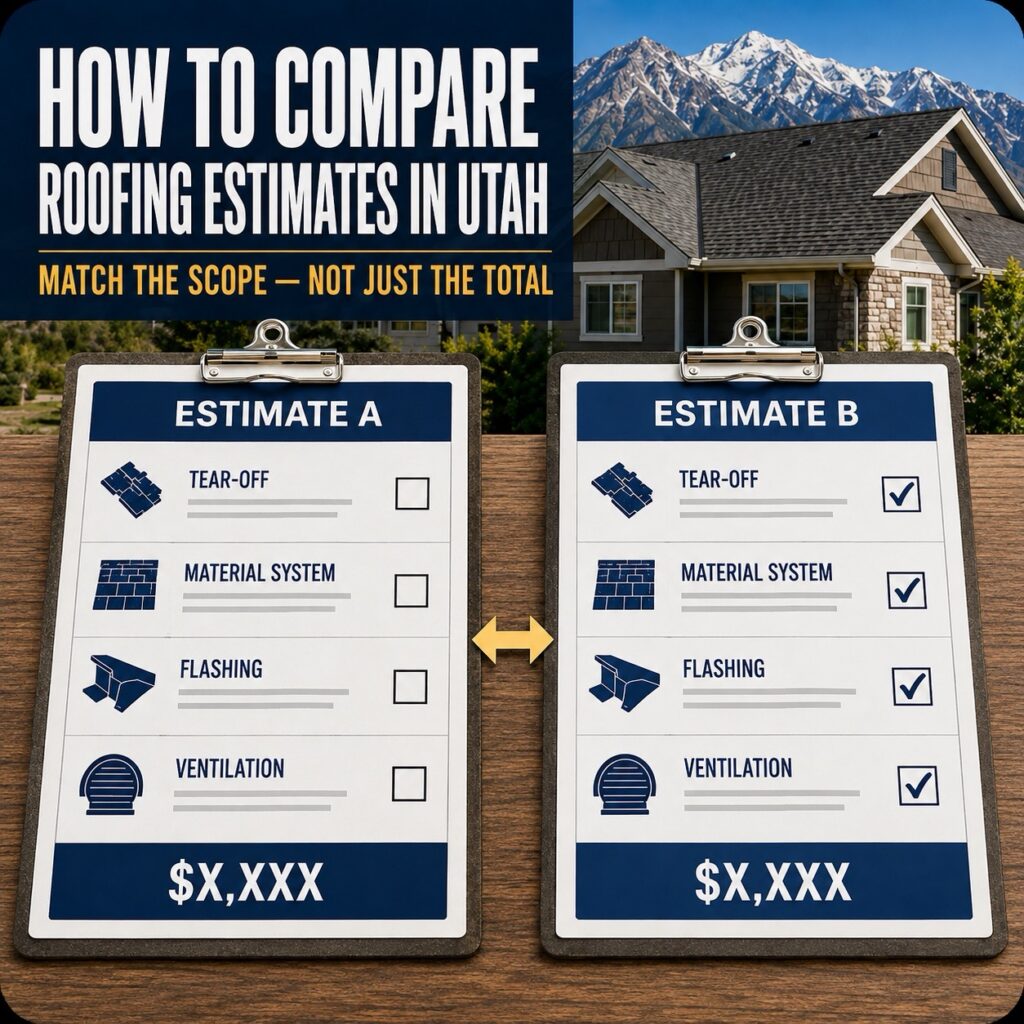
Quick answer: Compare roofing estimates by matching the written scope, not just the total. Each proposal should clearly identify the roof areas included, removal plan, material system, underlayment, flashing, ventilation, decking terms, cleanup, schedule assumptions, payment process, warranties, and how changes will be approved.
Two prices can look far apart because the contractors are not proposing the same roof. One may include full tear-off, new flashing, ventilation corrections, and detailed cleanup while another leaves those items vague. A fair comparison turns each proposal into the same list of questions.
Key Takeaways
Require a written proposal with enough detail to understand what is included and excluded.
Compare material systems and installation details, not brand names alone.
Ask how hidden decking damage and other changes will be documented and priced.
Verify business identity, licensing where applicable, insurance, references, supervision, and warranty terms.
What Basic Information Should Every Estimate Include?
The proposal should identify the property, contractor, date, and areas of work. It should say whether the project is a repair, partial replacement, or full replacement and identify any structures that are excluded, such as a detached garage, porch, shed, or low-slope section.
Look for a clear description of access, staging, and property protection. The proposal should also explain expected scheduling, weather delays, payment milestones, and who will supervise the work. If a detail is important to your decision, get it in writing before signing.
How Should Tear-Off and Disposal Be Described?
The estimate should state whether existing roofing will be removed, how many known layers are included, and what happens if conditions differ after work begins. It should describe disposal, dumpster or trailer placement, and cleanup expectations.
Tear-off exposes the roof deck for review. Ask how the contractor will document soft, wet, or damaged decking and obtain approval before additional work. A unit price or defined pricing method for decking can make the change process more predictable, even when the exact quantity cannot be known in advance.
What Roofing Materials and Components Should Be Listed?
A complete roof is more than the visible shingles or panels. The proposal should identify the selected covering and important system components, which may include:
Underlayment and ice-and-water protection where part of the design
Drip edge and roof-edge metal
Valley treatment
Chimney, wall, skylight, and penetration flashing
Pipe boots and other accessories
Intake and exhaust ventilation work
Ridge, hip, and starter materials
Fastening method appropriate to the selected system
If one estimate says only “new roof” and another lists the system in detail, ask the first contractor to clarify. You should be able to see whether the bids are actually equivalent.
Why Do Roofing Estimates Differ?
Price can change with roof size, pitch, height, complexity, material, access, tear-off layers, deck condition, flashing, ventilation, disposal, and project timing. A roof with many walls, valleys, penetrations, or steep sections requires different labor and detailing than a simple roof with the same square footage.
Contractors may also measure differently or make different assumptions about hidden conditions. One proposal may include replacement of existing flashing while another plans to reuse it. One may include a low-slope membrane section while another excludes it. The useful response is to identify the scope difference rather than assume one number is automatically right.
All Star Roofing offers an instant roof estimate as a starting range. An on-site inspection is still needed to confirm the roof’s layout, condition, and project scope.
How Should You Compare Asphalt and Metal Proposals?
Do not compare an asphalt proposal with a metal proposal as if the only difference is price. The assemblies, details, labor, accessories, appearance, and long-term goals can differ. Confirm the specific system, substrate requirements, underlayment, flashing, trim, penetrations, and snow-shedding considerations.
If you are still choosing a material, review All Star Roofing’s metal roofing options alongside its broader residential roofing services. The right proposal should fit the house and the homeowner’s priorities.
What Should You Verify About the Contractor?
Confirm the contractor’s legal business identity, permanent contact information, Utah licensing as applicable, and current liability and workers’ compensation coverage. Ask for relevant references and examples of comparable work. Understand who supervises the crew and how quality control is handled.
Read both workmanship and manufacturer warranty documents. Note what each covers, who provides it, how a claim is made, and which actions or maintenance failures can affect coverage. Warranty terms can change and can differ by product, so confirm the current terms in the signed proposal rather than relying on a marketing summary.
What Questions Should You Ask Before Signing?
Are all roof sections and structures included?
Will the existing roof be removed, and how many layers are included?
How will damaged decking be documented, approved, and priced?
Which flashing will be replaced, and which may be reused?
Is ventilation being changed or simply replaced in kind?
Who handles permits and inspections when required?
How will landscaping, siding, windows, and driveways be protected?
What cleanup and magnetic nail collection are included?
What is the payment schedule and change-order process?
Which warranty documents will be provided at completion?
Frequently Asked Questions
Should I always get three roofing estimates?
Multiple detailed proposals can help you understand the market and scope. The important part is comparing equivalent work and qualified contractors.
Is the lowest estimate a bad choice?
Not automatically. Ask why it is lower and confirm that important materials, details, protection, and cleanup are included.
Can a contractor know the exact decking cost before tear-off?
Not always. Hidden damage may only become visible after removal, so the proposal should explain the unit price or approval process.
Should an estimate include a start date?
It should explain expected scheduling and factors that may change it, including weather, material availability, and discoveries during tear-off.
Does insurance choose my roofing contractor?
Contractor selection and policy rules vary. Review your policy and carrier communications, and choose a qualified contractor based on a clear construction scope.
Start With a Roof-Specific Scope
For a clear inspection and written options, schedule a free inspection with All Star Roofing or call (801) 381-0727.