

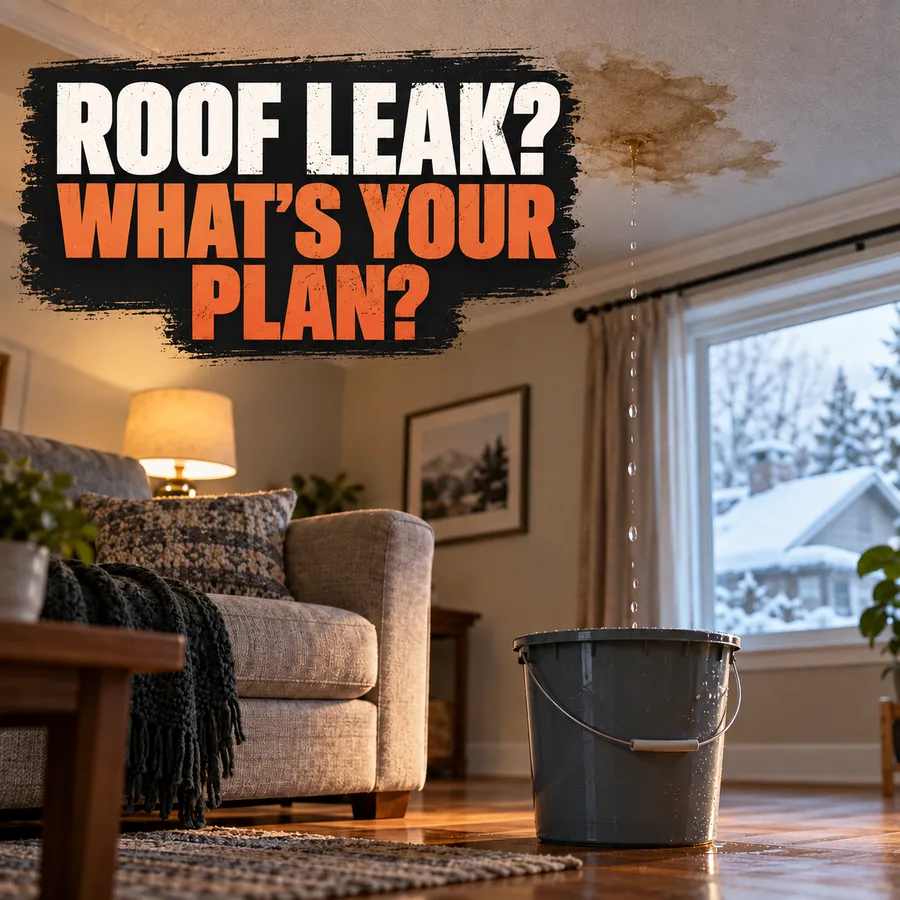
Quick answer: A commercial roof leak response plan should define who receives the call, how occupants and equipment are protected, who documents the event, which vendors respond, and who controls roof access. Build the plan before winter so a night or weekend snowmelt leak does not become an improvised safety decision.
The plan should fit the building, tenants, hours, electrical systems, inventory, and roof access. A warehouse, clinic, office, and restaurant will not share the same interior priorities.
Staff can observe and report; they should not be expected to diagnose the roof or walk a wet, snowy, or icy surface.
Key Takeaways
- Place life safety and electrical hazards ahead of property cleanup.
- Maintain current contacts for roofing, plumbing, electrical, HVAC, restoration, insurance, and building management.
- Use a simple incident form with time, weather, location, photos, and actions taken.
- Require authorization and logging for rooftop access by every trade.
Who should own the response plan?
Assign a primary coordinator and backup with authority to protect the area, contact vendors, and communicate with tenants. The plan should state who can approve temporary work and who contacts the property owner or insurer.
Post the essential numbers where after-hours staff can find them, but store policy and vendor records securely. Review contacts before winter and after staffing or management changes.
What should staff do first when water appears?
Keep people away from slippery floors, bulging ceiling material, wet electrical fixtures, damaged equipment, and any area that appears structurally unstable. Use the building’s emergency procedures and call the appropriate emergency or qualified trade when a hazard is present.
When safe, protect movable property and collect water without disturbing evidence. Staff should note the exact time, weather, room, ceiling grid, equipment status, and any recent rooftop work.
What belongs in the leak documentation kit?
Prepare a contact sheet, floor and roof plans, camera or charged device, caution tape or barriers, incident forms, labels, and a list of shutoff and electrical-panel contacts. Interior supplies should never encourage untrained staff to access the roof.
Photograph the wide room context and close details. Keep receipts and vendor reports, and preserve any removed material when the contractor or insurer requests it.
- Date and time discovered
- Weather and recent temperature changes
- Exact interior location
- Actions taken and by whom
- Recent roof access or service work
How should vendors be coordinated?
The roofer traces exterior and assembly conditions. An electrician addresses energized or wet electrical equipment, an HVAC contractor evaluates mechanical sources, a plumber rules out piping, and a restoration provider manages affected materials as appropriate.
Give one coordinator responsibility for sharing the same incident facts with every trade. Conflicting assumptions are less likely when each vendor sees the timeline, photos, plans, and prior repair history.
What should happen after the immediate leak stops?
Do not close the incident simply because dripping ended. Obtain a written finding, permanent repair plan, moisture or interior follow-up when needed, and a date to verify the work.
Update the roof file and access log, then review whether drainage, rooftop work controls, snow planning, or preventive maintenance should change. The debrief turns one leak into better future response.
Frequently Asked Questions
Should staff put a tarp on a commercial roof?
No untrained employee should access a wet, snowy, or damaged roof. Exterior temporary protection belongs with qualified personnel and an approved safety plan.
Who decides whether the source is roofing or plumbing?
Qualified trades should compare evidence. Interior location alone cannot reliably identify the source.
Should the insurer be called immediately?
Follow the policy and reporting requirements. Coverage decisions belong to the carrier, and urgent life-safety or mitigation steps should not wait for informal assumptions.
What if the leak occurs after HVAC service?
Preserve the timeline and access record, then have the roof and equipment area evaluated. Do not assume fault before the cause is documented.
How often should the response plan be reviewed?
Review it before winter, after staffing or vendor changes, and after each incident or exercise.
Get a Clear Roof Recommendation
For related service information and next steps, explore commercial roof repair, commercial roof maintenance, commercial roofing services, and free roof inspection.
All Star Roofing is a family-owned, licensed and insured roofing company based in Orem with 30+ years of roofing experience. Call (801) 381-0727 or schedule a free inspection for a practical recommendation based on the actual roof and current conditions.