

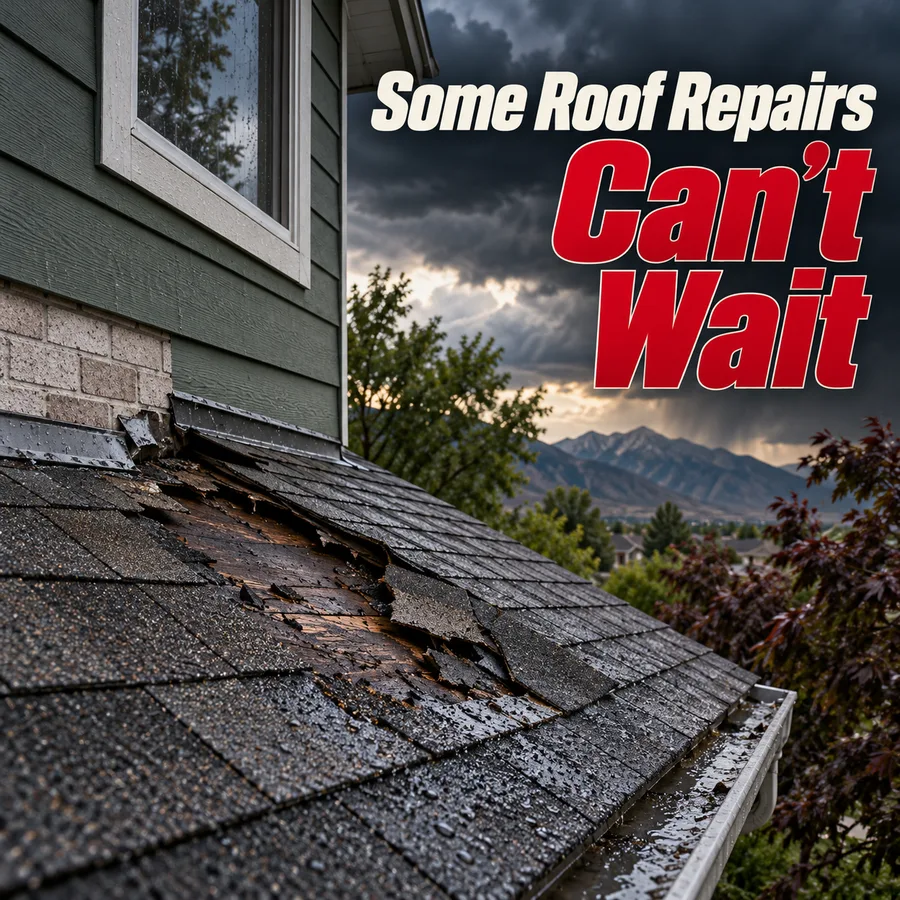
Quick answer: Repair timing should follow the condition, not a universal number of days. Active water entry, exposed deck, loose material, unsafe components, and openings likely to admit the next storm need prompt action, while stable maintenance items may be scheduled around weather, materials, and access.
This question is best answered by connecting the visible condition to the surrounding roof system, the building history, and Northern Utah weather. Use roof repair services to understand the relevant service context, then base the final decision on an on-site inspection and a written scope.
Key Takeaways
- The report should label emergency, near-term, and monitor items with reasons.
- Weather and safe access can delay permanent work even when mitigation is urgent.
- Interior drying or electrical response may need to occur before the exterior repair is complete.
- A temporary measure needs an inspection date and a permanent follow-up plan.
Which Findings Need Prompt Action?
Active leaks, open penetrations, missing material with exposed underlayers, displaced flashing, unstable debris, and moisture near electrical components deserve rapid attention. Sagging or structural movement requires a qualified structural or emergency response rather than routine scheduling.
Prompt does not mean unsafe. Snow, ice, lightning, high wind, wet surfaces, or darkness may require the crew to stabilize from a safe location and return when conditions allow.
What Can Sometimes Be Planned?
Aged sealant at a secondary detail, minor surface wear, maintenance cleaning, or a stable condition with no moisture evidence may allow normal scheduling. The inspector should explain what could change the priority and how the owner should monitor it.
Material availability, wall-trade coordination, permits, and weather can affect the date. A clear plan includes both the target window and what to do if conditions worsen first.
How Should Temporary Work Be Managed?
Temporary covering or sealing should be documented with photographs, date, material, location, installer, and limits. It should not conceal unsafe conditions or be represented as a permanent repair.
Set a follow-up inspection or replacement date and keep the area on the property maintenance list. If an insurance claim is involved, retain receipts and follow carrier instructions before permanent work when practical.
What Should You Do Next?
- Ask the inspector to assign a reasoned priority to every finding.
- Protect occupants and contents and address electrical or structural concerns immediately.
- Schedule permanent work for the earliest safe, suitable conditions.
- Monitor temporary measures and document any change before the repair date.
For a condition-specific recommendation, review free roof inspection. Keep photographs, dates, estimates, product information, and repair records together so later decisions use the same facts.
What Should a Professional Review?
- Active entry and exposed materials
- Structural or electrical warning signs
- Forecast and safe roof access
- Material and trade coordination
- Temporary work and monitoring plan
A useful inspection separates the likely entry point or defect from contributing conditions. It should also identify when structural, electrical, mechanical, masonry, energy, design, or insurance questions belong with another qualified professional.
What Should You Avoid?
Avoid delaying an active leak because it stopped during dry weather or pressuring a crew to work on an unsafe roof to meet an arbitrary deadline.
Ground-level photographs and safely accessible interior observations are useful. Leave roof access, destructive testing, temporary coverings, and repairs to trained personnel, especially when surfaces are wet, icy, steep, or storm-damaged.
Frequently Asked Questions
Is every roof leak an emergency?
Every leak deserves prompt attention, but immediate response level depends on water volume, safety, weather, and the affected area.
Can a repair wait until spring?
Only when a professional finds the condition stable enough and provides a monitoring or temporary-protection plan.
What if permanent repair is unsafe today?
Protect people and contents, use qualified temporary mitigation when feasible, and schedule permanent work for suitable conditions.
Should temporary repairs be inspected?
Yes. They have limits and should be tracked until a permanent repair is completed.
Does insurance determine the repair date?
Policy and claim procedures may affect documentation, but safety and reasonable mitigation remain important. Confirm requirements with the carrier.
Get a Clear Roof Recommendation
The right answer depends on the actual roof, not one symptom viewed in isolation. Explore schedule a free inspection, or call All Star Roofing at (801) 381-0727 to schedule a free inspection or estimate. All Star Roofing is a family-owned, licensed and insured roofing company based in Orem with 30+ years of roofing experience. Insurance coverage decisions remain with the carrier, and project timing depends on weather, scope, materials, and scheduling.