

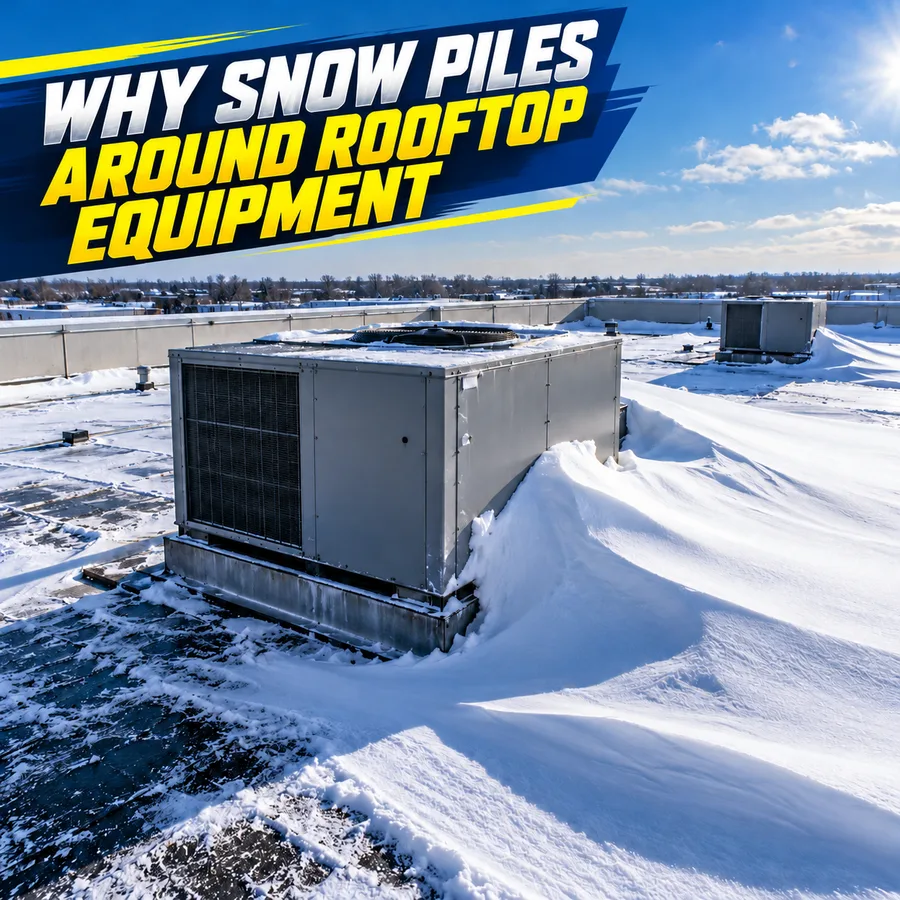
Quick answer: Rooftop units, ducts, screens, curbs, parapets, and changes in roof height interrupt wind and can create localized snow drifts. Those drifts may add concentrated load, block drainage, bury access paths, and hold moisture against flashings, so the roof plan should identify and monitor likely accumulation zones.
A roof can look mostly clear while a sheltered pocket carries much deeper snow. Monitoring should follow geometry and exposure rather than relying on one measurement at the hatch.
Roofers can evaluate membranes and flashings, but structural load capacity belongs with a qualified design professional. HVAC service and snow removal also need coordinated access controls.
Key Takeaways
- Map units, screens, curbs, higher walls, drains, scuppers, and overflow paths.
- Watch the leeward side of obstructions and lower roofs beside taller walls.
- Keep required service and emergency access from becoming an improvised walking path through drifts.
- Do not move snow in a way that overloads another roof area or blocks drainage.
Why does equipment create snow drifts?
As wind moves around an obstruction, its speed and pressure change. Snow can be scoured from exposed areas and deposited in a sheltered wake. The location shifts with wind direction, unit shape, screens, nearby buildings, and roof geometry.
Repeated storms can build layers with different densities. A drift may also collect meltwater or ice near a curb even when the open field of the roof drains normally.
Which locations should a facility team monitor?
Identify leeward sides of large units and screens, roof steps, expansion joints, valleys on sloped commercial roofs, lower roofs below taller walls, and areas between equipment and parapets. Mark drains, scuppers, and overflow openings that could disappear beneath snow.
Use ground, interior, camera, or safely controlled roof observations under the facility’s access plan. Staff should not walk onto a snow-covered roof merely to collect measurements.
- Mechanical-unit curbs and corners
- Screen walls and parapets
- Roof-height changes
- Drainage and overflow paths
How can drifting affect the roof assembly?
Concentrated snow adds load and may press against flashing or membrane details. Repeated melt and refreeze can wet the same curb or penetration. Service technicians may create a packed path or damage a buried membrane while trying to reach equipment.
The roof covering is only one concern. Equipment supports, gas and electrical lines, condensate systems, ductwork, and access hatches must remain safe and serviceable.
What should a pre-winter plan include?
Update the roof plan, confirm who monitors forecasts and conditions, define distress triggers, identify the structural engineer and snow-removal contractor, and establish protected ground zones. Coordinate with HVAC providers so routine visits do not bypass roof-access rules.
Photograph curbs, flashings, drains, and paths before snowfall. Record existing repairs and fragile areas so a winter crew is not discovering them under snow.
When should professionals be called?
Structural warning signs, unusual drift growth, blocked emergency drainage, water entry, or unsafe equipment access call for prompt escalation. The structural professional addresses capacity; the roofer addresses membrane, flashing, and drainage damage; the mechanical contractor addresses equipment.
All Star Roofing can help document visible roof conditions and maintenance needs as part of that coordinated response. Avoid asking any one trade to certify areas outside its scope.
Frequently Asked Questions
Does every rooftop unit create the same drift?
No. Wind direction, unit shape, screens, nearby walls, roof height, and local exposure all affect deposition.
Can snow block a roof drain?
Yes. Snow, ice, and debris can obstruct drainage or hide the opening, which is why drains and overflows should be mapped and monitored.
Should maintenance staff shovel around HVAC units?
Only under a trained, site-specific safety and load-management plan. Hidden roof edges, skylights, lines, and membrane damage are serious concerns.
Who decides whether a drift is structurally unsafe?
A qualified structural professional should evaluate load capacity and distress concerns.
Can equipment flashing leak only during snowmelt?
Yes. Snow can remain against a curb and release water slowly during thaw, exposing a detail differently from ordinary rain.
Get a Clear Roof Recommendation
For related service information and next steps, explore commercial roof maintenance, commercial roofing services, commercial roof repair, and free roof inspection.
All Star Roofing is a family-owned, licensed and insured roofing company based in Orem with 30+ years of roofing experience. Call (801) 381-0727 or schedule a free inspection for a practical recommendation based on the actual roof and current conditions.