

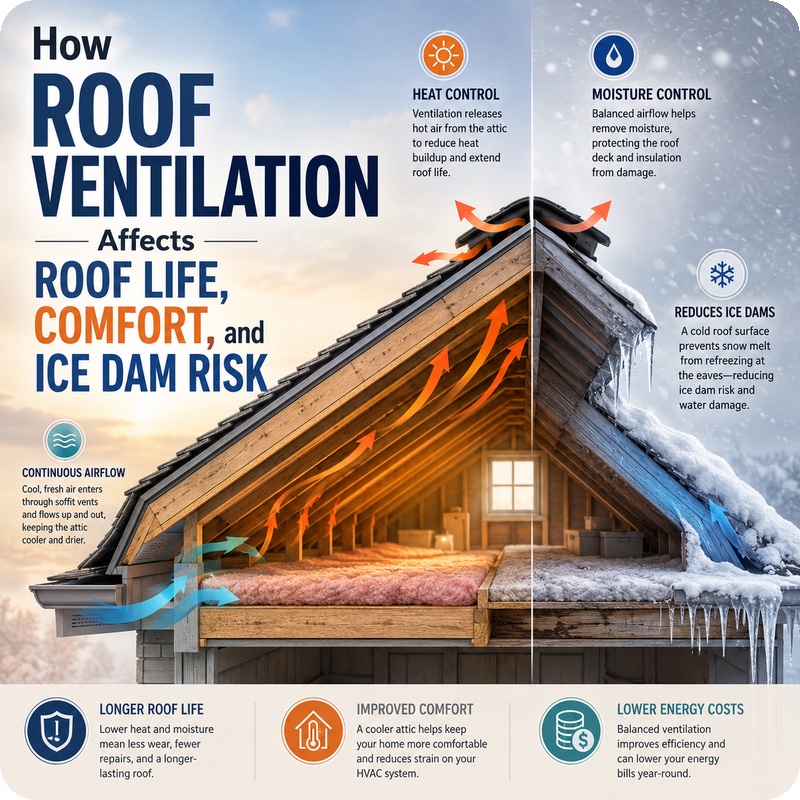
How Roof Ventilation Affects Roof Life, Comfort, and Ice Dam Risk
Roof ventilation matters because it helps control heat and moisture, protects roof materials, supports attic comfort, and can reduce conditions that contribute to ice dams. Lead with the practical link readers care about: ventilation affects roof life, comfort, and winter problems.
This guide is written for homeowners with heat, moisture, or recurring winter issues in Northern Utah, with practical next steps, climate context, and a clear path toward a professional inspection when that is the smartest move.
Quick Answer
Roof ventilation matters because it helps control heat and moisture, protects roof materials, supports attic comfort, and can reduce conditions that contribute to ice dams.
In most cases, the right next step depends on scope, timing, and the condition of the surrounding roof system. That is why the clearest answer usually comes from a documented inspection instead of a guess from the driveway.
Key Takeaways
- Lead with the answer and keep the next steps easy to scan.
- Use Northern Utah weather context only where it actually helps the reader decide.
- Keep service mentions tied to the problem the homeowner is trying to solve.
What roof ventilation actually does
In Northern Utah, snow load, hail, wind, freeze-thaw cycles, and strong summer sun all change how roofing decisions should be made. Ventilation matters because trapped heat and moisture do real damage over time. Homeowners usually feel it as upstairs heat, winter roof trouble, stale attic air, or premature material wear. Once that connection is clear, the topic becomes practical instead of technical. Readers who are still comparing service options can review residential roofing services to see how these decisions connect to real project scope.
Most readers do not need a ventilation lecture. They need to understand how air flow, attic heat, and moisture connect to the comfort problems and roof issues they actually notice at home.
Heat and moisture control in plain language
Ventilation conversations should connect attic heat and moisture to real symptoms the homeowner notices, like uneven snow melt, hot upper floors, recurring condensation, or premature material wear. That keeps the topic practical instead of abstract.
How ventilation supports roof-system health
Ventilation conversations should connect attic heat and moisture to real symptoms the homeowner notices, like uneven snow melt, hot upper floors, recurring condensation, or premature material wear. That keeps the topic practical instead of abstract.
Signs ventilation may not be doing its job
In Northern Utah, snow load, hail, wind, freeze-thaw cycles, and strong summer sun all change how roofing decisions should be made. Roof problems rarely announce themselves in a clean, obvious way. Most homeowners are trying to sort out whether they are looking at a minor issue, a bigger pattern, or damage that will become more expensive after the next storm. That is why the most useful signs are the ones that help separate surface symptoms from system-wide trouble. For local context, All Star Roofing’s Orem service page reinforces how Northern Utah weather patterns shape real roofing decisions.
A sign only helps if the homeowner understands why it matters. A stain, bruise, overflow point, or open seam becomes much more useful once it is tied to leak risk, shortened roof life, or a wider repair scope.
Summer heat, moisture, and uneven wear clues
Ventilation conversations should connect attic heat and moisture to real symptoms the homeowner notices, like uneven snow melt, hot upper floors, recurring condensation, or premature material wear. That keeps the topic practical instead of abstract.
Ice dam and condensation patterns homeowners may notice
This is where the article should give the reader a specific lens for evaluating the issue, using plain language, realistic next steps, and the kind of detail that actually helps someone decide what to do next.
When ventilation should be reviewed during roof work
In Northern Utah, snow load, hail, wind, freeze-thaw cycles, and strong summer sun all change how roofing decisions should be made. Ventilation matters because trapped heat and moisture do real damage over time. Homeowners usually feel it as upstairs heat, winter roof trouble, stale attic air, or premature material wear. Once that connection is clear, the topic becomes practical instead of technical.
Most readers do not need a ventilation lecture. They need to understand how air flow, attic heat, and moisture connect to the comfort problems and roof issues they actually notice at home.
Replacement projects and attic performance
Interior signs often show up as stains, damp insulation, bubbling paint, musty odors, or moisture near penetrations and exterior walls. These clues matter because the visible ceiling stain is not always directly below the roof entry point.
Why ventilation is part of the bigger roof system
Ventilation conversations should connect attic heat and moisture to real symptoms the homeowner notices, like uneven snow melt, hot upper floors, recurring condensation, or premature material wear. That keeps the topic practical instead of abstract.
How inspections and replacement planning can uncover ventilation issues
For this topic, the most helpful service conversation usually starts after the homeowner understands the issue, the likely scope, and the practical next step. That is where Asphalt Shingle Roofing, a documented inspection, and clear written recommendations become useful. If the reader wants to keep moving, the best internal paths here are usually the contact page, service coverage in Orem, and customer reviews.
If you want a clearer answer for your home, call (801) 381-0727 or request a free inspection or estimate. A documented roof review is often the fastest way to move from uncertainty to a practical next step.
Frequently Asked Questions
What are signs of poor ventilation?
The shortest useful answer is usually the best one: resolve the practical question first, then point the reader toward inspection or decision support when the condition of the roof still matters.
Can ventilation affect summer comfort?
The shortest useful answer is usually the best one: resolve the practical question first, then point the reader toward inspection or decision support when the condition of the roof still matters.
How does ventilation connect to ice dams?
The shortest useful answer is usually the best one: resolve the practical question first, then point the reader toward inspection or decision support when the condition of the roof still matters.
Final Thoughts
Most roofing decisions get easier once the problem is clearly defined. A solid inspection and a written scope usually tell you more than guesswork ever will.
If you want a clearer answer for your home, call (801) 381-0727 or request a free inspection or estimate. A documented roof review is often the fastest way to move from uncertainty to a practical next step. Readers who want a broader sense of the company can also review All Star Roofing’s services and project gallery examples.