
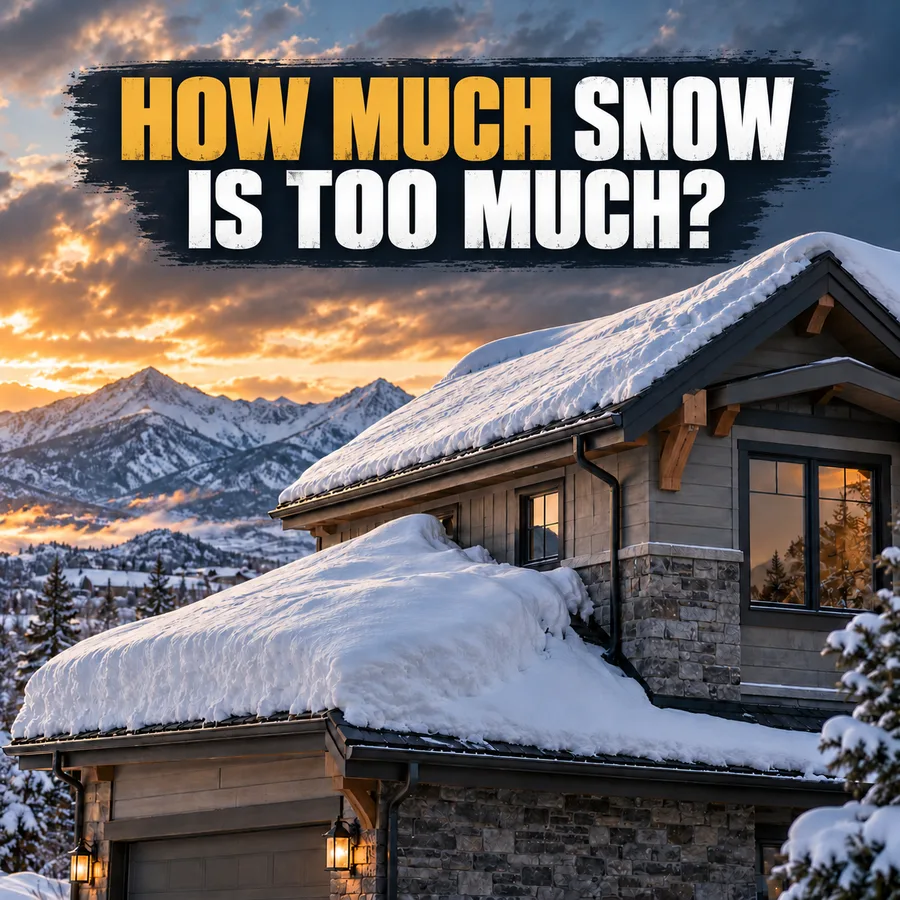
Quick answer: There is no reliable one-size-fits-all snow depth for a Utah roof. Capacity depends on the building’s design, elevation, roof shape, condition, alterations, drifting, and the water content of the snow. Wet snow and ice can weigh far more than the same depth of dry powder.
Snow-load decisions are structural decisions, not estimates based only on inches. Utah requirements also vary by location and elevation.
The safest homeowner role is to monitor from inside and from the ground, keep exits away from sliding snow, and respond quickly to signs of distress.
Key Takeaways
- Do not use a statewide pounds-per-square-foot assumption for an individual building.
- Drifts at parapets, roof steps, valleys, and rooftop equipment can create concentrated loads.
- Changes in ceilings, framing, sprinkler lines, or door operation can signal structural movement.
- Snow-removal work needs a plan that protects workers and avoids unbalancing the roof.
Why is snow depth a poor measure of roof load?
A foot of light powder and a foot of wet, settled snow do not place the same load on a structure. Rain-on-snow events, refreezing, repeated storms, and drifting can increase weight even when the visible depth changes little.
Roof pitch and heat loss affect whether snow stays, slides, or settles. Low-slope areas and sheltered zones may retain material while exposed slopes clear. Only the building’s design criteria and actual conditions can establish what is acceptable.
Why do location and elevation matter in Utah?
Utah snow conditions vary sharply between valley communities, benches, canyons, and mountain sites. Local design criteria may use elevation and site-specific information rather than a single statewide number.
A house addition, patio cover, detached structure, or older alteration may not share the main building’s original design. If records are incomplete or the structure has been modified, a qualified design professional may need to review it.
Where can dangerous snow concentrations develop?
Wind and roof geometry can create drifts beside parapets, at changes in roof height, below taller walls, around mechanical equipment, and in valleys. Sliding snow from an upper roof can also accumulate on a lower roof.
These concentrations matter because the load is not spread evenly. They can also block drains and overflow paths on commercial roofs, creating a combined snow-and-water concern.
- Roof steps and adjoining taller walls
- Parapets and screen walls
- Valleys and lower roofs
- Rooftop equipment and drifting zones
What warning signs require immediate attention?
FEMA lists conditions such as sagging roof members or ceiling materials, popping or creaking sounds, bowed framing, cracks in walls or masonry, displaced sprinkler lines, and doors or windows that suddenly bind. These signs do not tell a homeowner to investigate from the roof; they indicate the need to protect people and obtain qualified help.
Move occupants away from the affected area and call emergency services when there is an immediate danger. A structural engineer or appropriate building professional should address load capacity and structural stability.
How should snow be removed when necessary?
Removal should be planned to avoid falls, hidden skylights, buried roof edges, electrical hazards, falling snow, and abrupt unbalanced loading. Commercial sites also need protected ground zones and coordination with occupants.
A roofing contractor can address covering damage and leaks, but structural capacity belongs with a qualified structural professional. Treat those roles as complementary rather than expecting a visual roof inspection to certify load capacity.
Frequently Asked Questions
Is there a safe number of inches of snow for every roof?
No. Snow density, drifting, design, condition, elevation, and roof shape vary too much for one depth rule.
Is wet snow heavier than powder?
Generally, snow with more liquid water content places more weight per unit of depth, which is why depth alone is not enough.
Can a roofer certify my roof’s snow-load capacity?
A roofer can assess roofing conditions, but structural capacity should be evaluated by a qualified structural professional using the building and site information.
Should I go into the attic to look for damage?
Only use a safely accessible area with stable footing. If the building is making unusual sounds or visibly moving, leave the affected area rather than entering it.
Can removing snow make loading worse?
Poorly sequenced removal can create uneven loading or release sliding snow. Use trained professionals with a site-specific plan.
Get a Clear Roof Recommendation
For related service information and next steps, explore roof inspections, commercial roofing services, residential roofing services, and free roof inspection.
All Star Roofing is a family-owned, licensed and insured roofing company based in Orem with 30+ years of roofing experience. Call (801) 381-0727 or schedule a free inspection for a practical recommendation based on the actual roof and current conditions.