

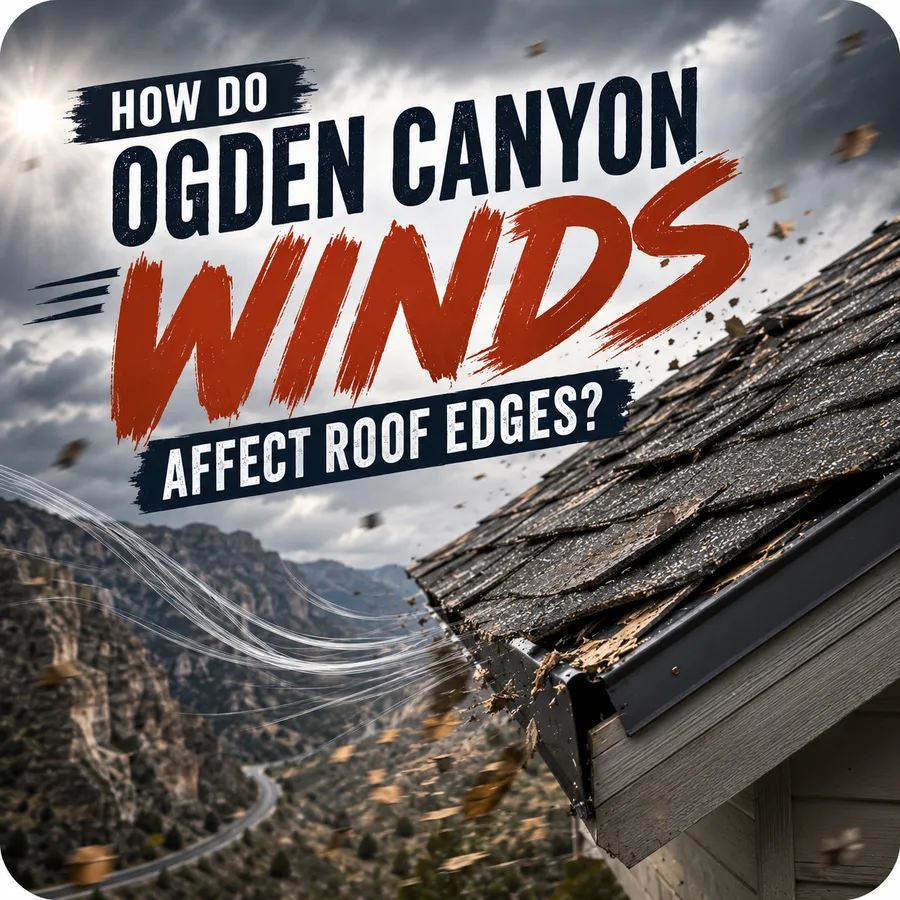
Quick answer: Strong localized winds can create uplift pressure at eaves, rakes, corners, ridges, parapets, and roof transitions. Damage often begins at edges or previously weakened areas before it becomes obvious across the field.
Good decisions separate visible symptoms from the underlying cause. The company’s roof repair services page explains the related service context before an on-site recommendation.
Key takeaways
- Strong localized winds can create uplift pressure at eaves, rakes, corners, ridges, parapets, and roof transitions. Damage often begins at edges or previously weakened areas before it becomes obvious across the field.
- Canyon and bench topography can make wind exposure highly site-specific. A nearby weather report does not replace inspection of the actual roof and its surroundings.
- Best next step: Schedule an inspection before the next storm.
What factors matter most?
Edge metal
Loose, poorly secured, or damaged perimeter metal can become an initial failure point. Look for evidence on this roof rather than assuming the same condition exists across every slope or area.
Shingle tabs and ridges
Lifted, creased, or missing pieces may expose underlayment and fasteners. Product instructions and the actual substrate help determine the appropriate response.
Metal panels
Seams, clips, fasteners, and perimeter details must work as a system. Evaluate it with the surrounding assembly because water and movement rarely stop at one component.
Low-slope perimeters
Membrane terminations and edge securement are critical. Its importance depends on location, adjacent details, exposure, and the condition of the rest of the roof.
Debris
Branches and loose site materials can create impact and puncture damage. A useful scope states how this detail connects to drainage, attachment, flashing, or maintenance.
How do Utah conditions change the answer?
Canyon and bench topography can make wind exposure highly site-specific. A nearby weather report does not replace inspection of the actual roof and its surroundings.
Utah’s seasons test roof components in different ways. Dry-weather, winter, and post-storm observations may each reveal a different part of the problem. Use product-specific requirements and local observations rather than a single statewide lifespan or performance promise.
What should you do next?
- Check the yard and ground for roof pieces after a wind event. Write the result down so later estimates and inspections can use the same facts.
- Photograph visible lifted or displaced materials from a safe location. The goal is to compare a complete scope instead of relying on a product name or a quick visual guess.
- Protect interior areas if water is entering. Where safety, structure, code, or electrical work is involved, use the appropriately qualified professional.
- Schedule an inspection before the next storm. Keep photos, product data, and written recommendations with the property records.
When the visible evidence is unclear, start with storm damage and insurance support. The next step should explain observed conditions, separate urgent work from maintenance, and result in a clear written recommendation.
What should a professional review?
- Site elevation and exposure
- Roof geometry and drainage
- Snow, wind, sun, and temperature patterns
- Covering, underlayment, and flashing
- Attic or building-enclosure conditions
A useful inspection connects exterior evidence with interior symptoms and the building’s history. It should also identify when another qualified professional is needed for structural, electrical, mechanical, design, policy, or legal questions.
What should you avoid?
Avoid climbing onto a wind-damaged roof or assuming that no missing material means no damage.
Safety limits the do-it-yourself portion of this work. Avoid walking on a damaged or slippery roof and keep people clear of active snow- or debris-shedding areas.
Frequently asked questions
Can wind damage shingles without removing them?
Yes. Tabs can lift, crease, or break seals while remaining in place.
Why are corners vulnerable?
Airflow and pressure can concentrate around roof perimeters and geometry changes.
Does insurance cover wind damage?
Coverage depends on the policy, cause, condition, deductible, and carrier findings.
Can an edge-only repair be enough?
Sometimes, if damage is isolated and the surrounding system remains repairable.
What should a contractor document?
Damage location, component, extent, likely repair method, and relevant photos.
Get a clear roof recommendation
The right answer depends on the actual roof, not only its age or material. Learn about free roof inspection, or call All Star Roofing at (801) 381-0727 to schedule a free inspection or estimate. Coverage decisions remain with the insurance carrier, and project timing depends on weather, scope, materials, and scheduling.