

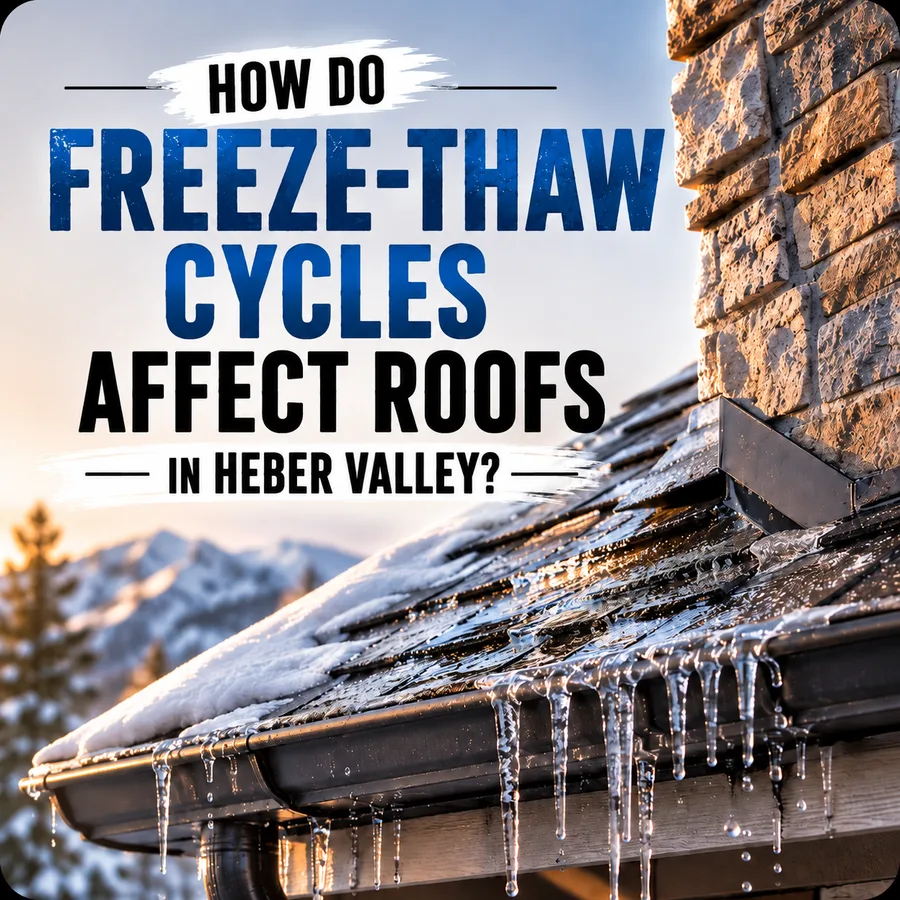
Quick answer: Freeze-thaw cycles move water through small openings, refreeze it at cold edges or within drainage paths, and repeatedly stress flashings, sealants, masonry transitions, and roof accessories. The cycle often exposes details rather than causing one uniform roof problem.
The practical answer comes from the whole assembly, exposure, and property goals. Use roof repair services to frame the questions a written scope should answer.
Key takeaways
- Freeze-thaw cycles move water through small openings, refreeze it at cold edges or within drainage paths, and repeatedly stress flashings, sealants, masonry transitions, and roof accessories. The cycle often exposes details rather than causing one uniform roof problem.
- Sunny winter days followed by cold nights create repeated transitions between melt and refreeze. Shaded north-facing areas may behave differently from exposed slopes.
- Best next step: Review attic air sealing and ventilation when melt patterns are uneven.
What factors matter most?
Flashings
Small openings at walls, chimneys, and penetrations can admit meltwater. Its importance depends on location, adjacent details, exposure, and the condition of the rest of the roof.
Valleys and eaves
Snow and ice concentrate where water slows or changes direction. A useful scope states how this detail connects to drainage, attachment, flashing, or maintenance.
Gutters and downspouts
Frozen or obstructed drainage can redirect meltwater. Look for evidence on this roof rather than assuming the same condition exists across every slope or area.
Low-slope transitions
Water may linger where steep and low-slope roofs meet. Product instructions and the actual substrate help determine the appropriate response.
Interior moisture
Condensation can mimic a roof leak and needs a different diagnosis. Evaluate it with the surrounding assembly because water and movement rarely stop at one component.
How do Utah conditions change the answer?
Sunny winter days followed by cold nights create repeated transitions between melt and refreeze. Shaded north-facing areas may behave differently from exposed slopes.
Local exposure matters as much as the city name. Two nearby roofs can experience different wind, sun, snow retention, and drying patterns. Use product-specific requirements and local observations rather than a single statewide lifespan or performance promise.
What should you do next?
- Track whether staining follows rain, snowmelt, or indoor humidity. Write the result down so later estimates and inspections can use the same facts.
- Inspect vulnerable transitions before winter. The goal is to compare a complete scope instead of relying on a product name or a quick visual guess.
- Correct drainage and flashing defects with compatible materials. Where safety, structure, code, or electrical work is involved, use the appropriately qualified professional.
- Review attic air sealing and ventilation when melt patterns are uneven. Keep photos, product data, and written recommendations with the property records.
To connect the guidance to an actual building, see free roof inspection. The next step should explain observed conditions, separate urgent work from maintenance, and result in a clear written recommendation.
What should a professional review?
- Site elevation and exposure
- Roof geometry and drainage
- Snow, wind, sun, and temperature patterns
- Covering, underlayment, and flashing
- Attic or building-enclosure conditions
A useful inspection connects exterior evidence with interior symptoms and the building’s history. It should also identify when another qualified professional is needed for structural, electrical, mechanical, design, policy, or legal questions.
What should you avoid?
Avoid assuming every winter stain is an ice dam or treating symptoms with surface sealant before locating the water path.
Ground-level photos and interior observations are useful records. Leave close roof access to trained personnel, especially after wind, rain, snow, or ice.
Frequently asked questions
Can freezing water lift roofing materials?
Repeated freezing can enlarge vulnerable openings, but the actual effect depends on the material and detail.
Why does a leak happen only during snowmelt?
Meltwater may reach a transition differently from rainfall or back up behind ice.
Are north slopes safer?
They can retain snow longer and stay colder, creating a different set of risks.
Can gutters freeze even when the roof is clear?
Yes. Shaded drainage components can remain below freezing.
What does an inspection check?
It reviews covering, flashings, valleys, penetrations, drainage, attic clues, and prior repair areas.
Get a clear roof recommendation
The right answer depends on the actual roof, not only its age or material. Learn about Utah roofing resources, or call All Star Roofing at (801) 381-0727 to schedule a free inspection or estimate. Coverage decisions remain with the insurance carrier, and project timing depends on weather, scope, materials, and scheduling.