

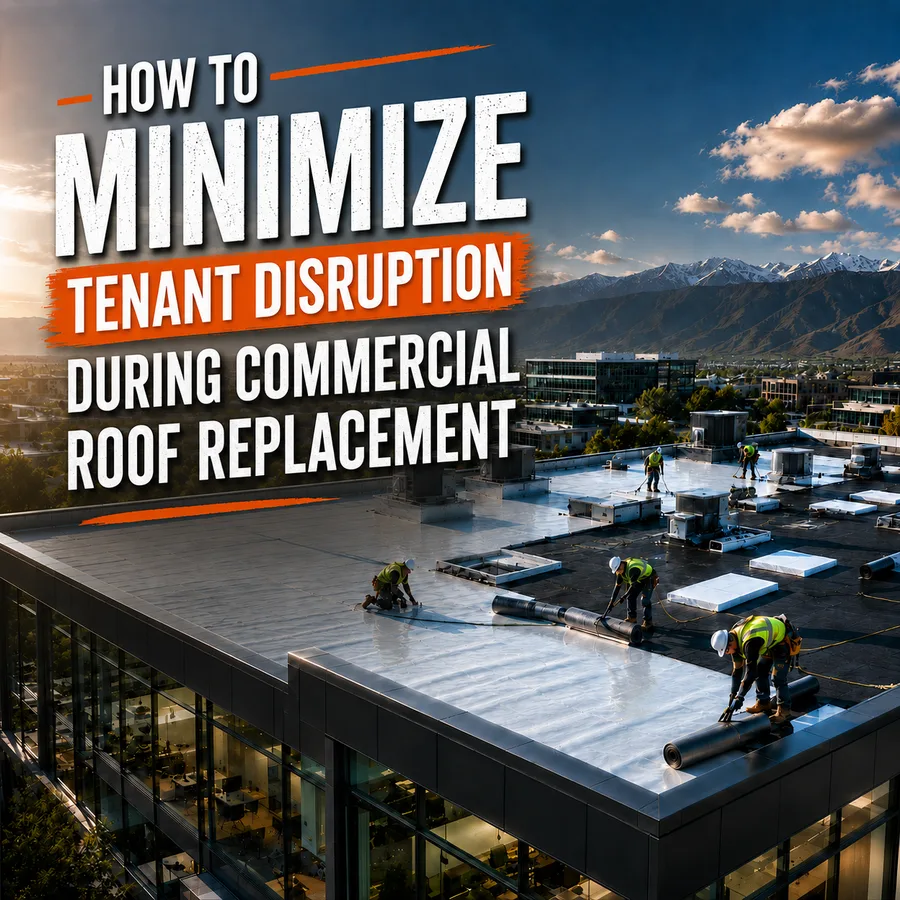
Quick answer: Tenant disruption can be reduced through phased work, advance notices, protected access, odor and noise planning, interior monitoring, delivery coordination, and a clear daily shutdown plan. The roof scope and operations plan should be built together.
Treat this as a system decision, not a single-component choice. A written scope should connect the findings to the applicable commercial roof replacement options.
Key takeaways
- Tenant disruption can be reduced through phased work, advance notices, protected access, odor and noise planning, interior monitoring, delivery coordination, and a clear daily shutdown plan. The roof scope and operations plan should be built together.
- Utah wind and fast weather changes make material staging and end-of-day protection especially important. Heat or cold may also affect building operations and installation windows.
- Best next step: Use daily check-ins and a documented emergency contact process.
What factors matter most?
Phasing
Divide work by roof area, tenant sensitivity, weather exposure, and daily dry-in capacity. Product instructions and the actual substrate help determine the appropriate response.
Communication
Give tenants one contact and specific updates about noise, access, odor, and schedule changes. Evaluate it with the surrounding assembly because water and movement rarely stop at one component.
Interior protection
Identify sensitive inventory, ceilings, equipment, and public areas before tear-off. Its importance depends on location, adjacent details, exposure, and the condition of the rest of the roof.
Logistics
Plan cranes, dumpsters, deliveries, parking, and emergency routes. A useful scope states how this detail connects to drainage, attachment, flashing, or maintenance.
Daily closeout
Confirm weather protection, debris removal, access control, and next-day handoff. Look for evidence on this roof rather than assuming the same condition exists across every slope or area.
How do Utah conditions change the answer?
Utah wind and fast weather changes make material staging and end-of-day protection especially important. Heat or cold may also affect building operations and installation windows.
The useful question is not whether Utah weather is hard on roofs in general, but which exposures are acting on this roof and how the assembly manages them. Use product-specific requirements and local observations rather than a single statewide lifespan or performance promise.
What should you do next?
- Map tenants, sensitive areas, and business-critical times. Write the result down so later estimates and inspections can use the same facts.
- Hold a preconstruction meeting with roofing, facilities, and operations teams. The goal is to compare a complete scope instead of relying on a product name or a quick visual guess.
- Issue a rolling look-ahead schedule. Where safety, structure, code, or electrical work is involved, use the appropriately qualified professional.
- Use daily check-ins and a documented emergency contact process. Keep photos, product data, and written recommendations with the property records.
To turn these questions into a written scope, use commercial roofing services. The next step should explain observed conditions, separate urgent work from maintenance, and result in a clear written recommendation.
What should a professional review?
- Membrane or panel field
- Seams, flashings, curbs, and penetrations
- Drainage and recurring ponding
- Insulation or deck moisture indicators
- Access history, repairs, and rooftop equipment
A useful inspection connects exterior evidence with interior symptoms and the building’s history. It should also identify when another qualified professional is needed for structural, electrical, mechanical, design, policy, or legal questions.
What should you avoid?
Avoid promising zero noise, odor, dust, or schedule change; set realistic controls and escalation paths.
A safe inspection plan matters as much as a thorough one. Homeowners and untrained staff should not climb onto an uncertain roof to confirm a suspected defect.
Frequently asked questions
Can a business stay open?
Often, with planning, but feasibility depends on roof type, access, interior sensitivity, and safety.
How much notice should tenants get?
Use lease requirements and a practical notice plan, with updates as weather changes.
What work is loudest?
Fastening, tear-off, equipment movement, and deck repairs can create significant noise.
How are leaks prevented during construction?
Limit open areas, monitor weather, stage temporary protection, and complete daily dry-in.
Who handles complaints?
Assign one owner-side contact and one contractor contact with clear authority to respond.
Get a clear roof recommendation
The right answer depends on the actual roof, not only its age or material. Learn about instant roof estimate, or call All Star Roofing at (801) 381-0727 to schedule a free inspection or estimate. Coverage decisions remain with the insurance carrier, and project timing depends on weather, scope, materials, and scheduling.