

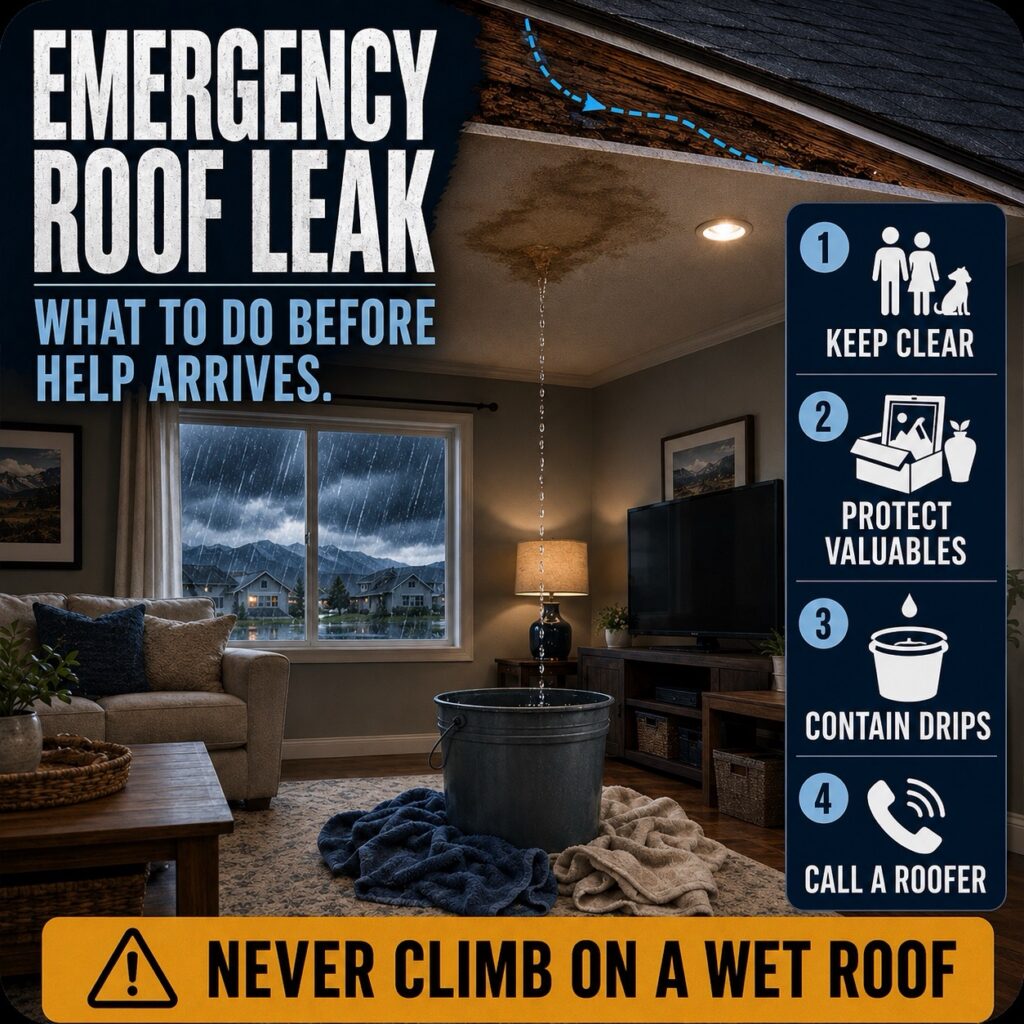
Quick answer: During an active roof leak, move people and valuables away from the affected area, avoid water near electrical fixtures or wiring, contain drips only when it is safe, document what you see, and call a roofing professional. Do not climb onto a wet, icy, windy, or storm-damaged roof.
The first goal is safety, not finding the exact hole. Water can travel inside the roof and appear far from its entry point, and damaged ceilings can release water or material without warning. A calm sequence protects occupants and gives the roofer better information.
Emergency Steps at a Glance
- Keep people and pets away from sagging ceilings, wet fixtures, and falling debris.
- Move furniture, electronics, and valuables if you can do so safely.
- Place a container under a simple drip only when the ceiling is stable and the area is free of electrical hazards.
- Photograph the room, stain, drip pattern, and storm conditions from a safe location.
- Call a roofer and describe whether water is active, spreading, or near electricity.
When Is a Roof Leak an Immediate Safety Concern?
Stay out of the area if the ceiling is bulging, sagging, cracking, or releasing debris. Saturated drywall can become heavy and may fall. Do not stand underneath it or attempt to open it. Keep children and pets away until a qualified professional evaluates the area.
Water near a light fixture, outlet, appliance, electrical panel, or exposed wiring requires special caution. Do not touch wet electrical components or operate switches in the affected area. Contact emergency services or a qualified electrician when electrical safety is in doubt.
If the building shows structural movement, a partial roof collapse, a gas odor, fire, or another life-safety hazard, leave the area and call the appropriate emergency service.
How Can You Limit Interior Damage Safely?
If the leak is a small drip below a stable ceiling and there is no electrical hazard, place a bucket or watertight container beneath it. Put towels around the container to reduce splash. Move nearby rugs, furniture, and electronics to a dry area.
Do not enter an attic with wet insulation, limited footing, or active electrical concerns. Insulation can hide joists and become much heavier when saturated. If you can observe the attic safely from a stable access point, photographs may help, but do not walk into the space to chase the leak.
Should You Put a Tarp on the Roof?
A temporary covering can reduce further water entry in some situations, but installing one requires roof access, secure attachment, and an understanding of the damaged area. Wet surfaces, wind, lightning, hail, snow, and hidden deck damage make that work hazardous.
For most homeowners, the safer choice is to call a qualified roofer. Temporary exterior protection is not the permanent repair and should not cover damage so completely that it cannot be documented. All Star Roofing can discuss immediate needs when you contact the team.
What Should You Document?
Take photographs or short video of the interior damage, the path of water, affected belongings, and any visible exterior damage that can be seen from the ground. Record the date, approximate time, and weather. Note whether the leak began during wind-driven rain, hail, ordinary rain, or snowmelt.
Keep receipts for reasonable emergency mitigation and protect any prior roof records. If you contact an insurer, follow the policy and carrier instructions. All Star Roofing can document visible roofing damage and explain repair or replacement options, but coverage decisions belong to the insurance carrier. Learn more about storm damage roofing support.
What Information Should You Give the Roofer?
Property address and best contact number
Whether water is entering now
Whether the water is near electricity or a sagging ceiling
Room and approximate roof area involved
Storm type and when the leak began
Known roof age, material, and prior repairs if available
Photos taken from safe locations
This helps the roofer prioritize the response and arrive prepared. Check All Star Roofing’s Northern Utah service area when arranging help.
What Happens During an Emergency Roof Evaluation?
The roofer will first assess whether the property and roof can be accessed safely. The inspection may include interior moisture patterns, roof covering, flashing, penetrations, storm damage, and possible entry points. If conditions prevent a permanent repair, the immediate recommendation may focus on temporary protection and a return visit.
Once the source and scope are clearer, you should receive repair or replacement options. A localized leak may need a focused repair. Widespread storm damage, deteriorated materials, or unsafe decking may require a larger plan. All Star Roofing’s residential roofing services cover both repair and replacement paths.
Frequently Asked Questions
Can I wait until the rain stops to call?
You can call while the leak is active. The roofer may not be able to access the roof immediately, but early information helps with triage and scheduling.
Should I poke a hole in a bulging ceiling?
No. Keep clear of the area and contact a qualified professional. A water-filled ceiling can fail suddenly, and nearby electrical systems may be affected.
Does one leak mean I need a new roof?
No. The answer depends on the source, surrounding roof condition, extent of damage, and repair history.
Will homeowners insurance cover the leak?
Coverage depends on the policy, cause, exclusions, deductible, maintenance history, and carrier findings. A roofer cannot guarantee approval.
Can a roofer find a leak during dry weather?
Often, yes. Interior patterns, visible defects, storm evidence, and controlled testing may help identify the source after the weather clears.
Call for Clear Emergency Roof Guidance
All Star Roofing is licensed and insured in Utah and brings 30+ years of roofing experience. For an active leak, call (801) 381-0727 and explain the immediate safety conditions.