

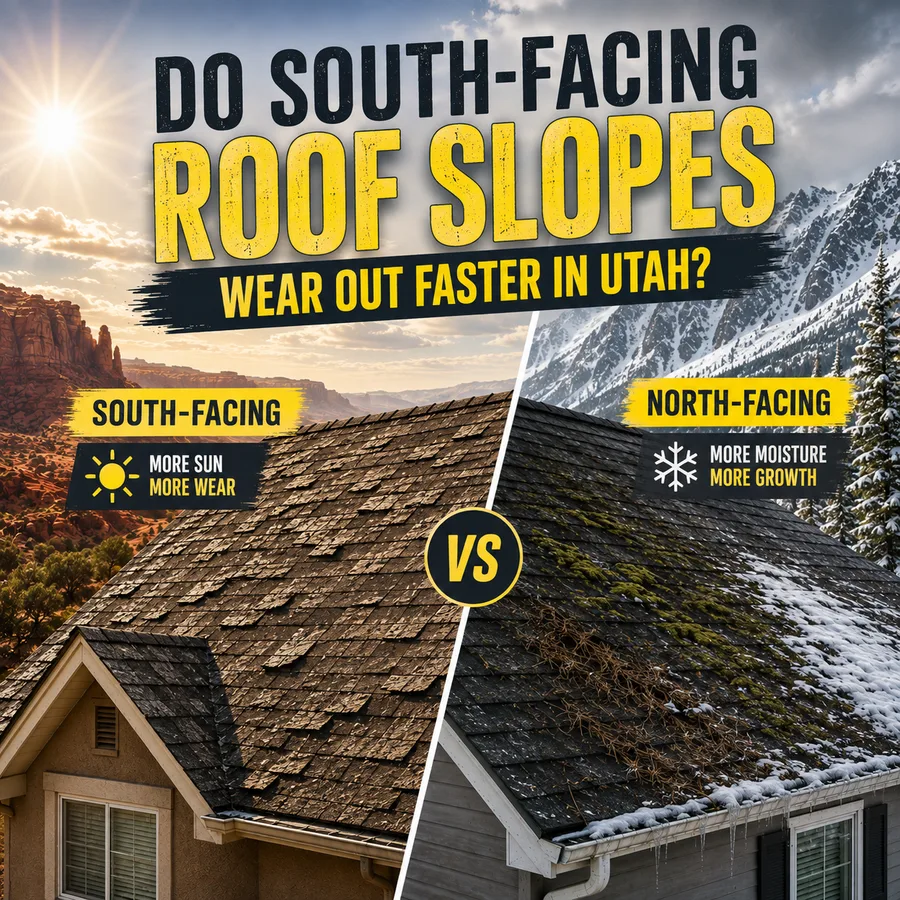
Quick answer: South- and west-facing slopes often receive more intense sun and may show faster color change, granule loss, sealant aging, or thermal stress, but orientation is only one factor. Shade, wind, slope, material, ventilation, and workmanship also matter.
The practical answer comes from the whole assembly, exposure, and property goals. Use free roof inspection to frame the questions a written scope should answer.
Key takeaways
- South- and west-facing slopes often receive more intense sun and may show faster color change, granule loss, sealant aging, or thermal stress, but orientation is only one factor. Shade, wind, slope, material, ventilation, and workmanship also matter.
- Utah combines high-elevation sun, clear days, temperature swings, and winter snow, creating visible differences between orientations on some roofs.
- Best next step: Ask whether matching materials remain available.
What factors matter most?
Sun exposure
Longer and stronger solar exposure can accelerate ultraviolet and heat-related weathering. Its importance depends on location, adjacent details, exposure, and the condition of the rest of the roof.
Snow patterns
Sunny slopes may melt sooner while shaded areas retain snow and moisture longer. A useful scope states how this detail connects to drainage, attachment, flashing, or maintenance.
Material differences
Asphalt, metal finishes, membranes, and sealants age in different ways. Look for evidence on this roof rather than assuming the same condition exists across every slope or area.
Roof geometry
Dormers, valleys, and walls create local shade and runoff patterns. Product instructions and the actual substrate help determine the appropriate response.
Prior repairs
A slope may differ because of storm history or materials from another production run. Evaluate it with the surrounding assembly because water and movement rarely stop at one component.
How do Utah conditions change the answer?
Utah combines high-elevation sun, clear days, temperature swings, and winter snow, creating visible differences between orientations on some roofs.
Local exposure matters as much as the city name. Two nearby roofs can experience different wind, sun, snow retention, and drying patterns. Use product-specific requirements and local observations rather than a single statewide lifespan or performance promise.
What should you do next?
- Compare slopes using photos from the same date and light. Write the result down so later estimates and inspections can use the same facts.
- Look for functional symptoms, not fading alone. The goal is to compare a complete scope instead of relying on a product name or a quick visual guess.
- Have the full roof inspected before planning a one-slope repair. Where safety, structure, code, or electrical work is involved, use the appropriately qualified professional.
- Ask whether matching materials remain available. Keep photos, product data, and written recommendations with the property records.
To connect the guidance to an actual building, see roof repair services. The next step should explain observed conditions, separate urgent work from maintenance, and result in a clear written recommendation.
What should a professional review?
- Roof covering and visible wear
- Flashings, valleys, edges, and penetrations
- Decking and interior moisture clues
- Ventilation and drainage
- Repair history and storm exposure
A useful inspection connects exterior evidence with interior symptoms and the building’s history. It should also identify when another qualified professional is needed for structural, electrical, mechanical, design, policy, or legal questions.
What should you avoid?
Avoid assuming a discolored slope is leaking or that the shaded slope has no moisture risk.
Ground-level photos and interior observations are useful records. Leave close roof access to trained personnel, especially after wind, rain, snow, or ice.
Frequently asked questions
Is fading a roof failure?
Not by itself. Evaluate granules or coating, cracks, seams, leaks, and overall condition.
Why does the north slope grow more organic material?
Shade and slower drying can support growth where moisture and debris persist.
Can only one slope be replaced?
Sometimes, but transitions, matching, warranty, condition, and long-term planning must be considered.
Does ventilation affect slope aging?
It can influence roof and attic temperatures, though exterior exposure remains important.
Should orientation affect color choice?
It may inform appearance and thermal considerations, but use exact product data and the full building context.
Get a clear roof recommendation
The right answer depends on the actual roof, not only its age or material. Learn about Utah roofing resources, or call All Star Roofing at (801) 381-0727 to schedule a free inspection or estimate. Coverage decisions remain with the insurance carrier, and project timing depends on weather, scope, materials, and scheduling.