

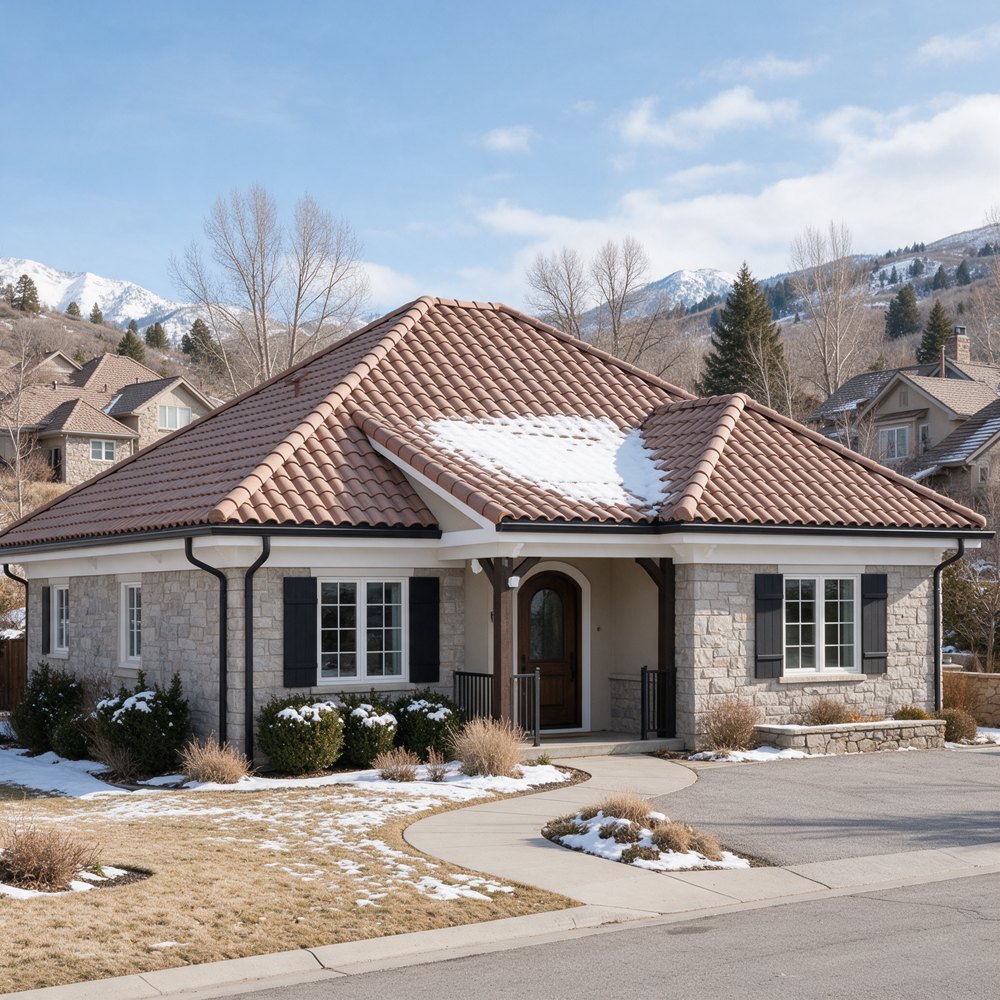
Clay tile can work on some Northern Utah homes, but it is not a simple substitute for asphalt shingles. The exact tile must suit freeze-thaw exposure, the structure must support the proposed assembly, and the installation must address snow, water, flashing, and the roof’s geometry. A homeowner should evaluate the whole system before choosing the appearance.
If you have wondered why terracotta roofs do not seem as familiar in your Wasatch Front neighborhood as they do in some warmer regions, it is tempting to answer, “Utah is too cold.” That is too broad. Appropriate clay products and cold-climate installation guidance exist. The more useful questions concern your house, budget, architectural goals, and access to qualified installation and future service.
We are not using a statewide roof-material census to rank popularity. This is a practical comparison of the considerations that can make clay a more involved choice for a replacement project.
Clay and concrete tile are different materials
Clay roof tile is a fired ceramic product. Concrete tile is made using a cement-based process. Both can have curved or flatter profiles, and a similar appearance does not mean they have identical weight, product specifications, or maintenance requirements.
Before comparing a tile proposal with shingles or metal, identify the actual material and product. “Spanish tile,” “tile-look roof,” and “terracotta color” can describe an appearance without telling you what will be installed. Some alternatives imitate tile while using entirely different materials.
That matters for structural review, fastening, underlayment, and repairs. A recommendation based on a generic tile photograph is not enough. Ask for product data, installation instructions, and the applicable evaluation or approval documents for the proposed assembly.
Can clay tile handle freezing weather?
Suitable products can. ASTM C1167 addresses clay roof tiles and includes weathering-resistance grades. The Tile Roofing Industry Alliance’s cold-and-snow guidance identifies Grade 1 clay tile for freeze-thaw conditions. Confirm the classification of the specific product rather than assuming that every clay tile has the same weathering resistance.
For a manufacturer example, Ludowici describes the Grade 1 performance of its clay products. That demonstrates why the statement “clay cannot survive Utah winters” is inaccurate. It does not establish that a particular tile is suitable for every roof or that All Star Roofing installs that manufacturer’s products.
The material rating is only one part of cold-weather suitability. Wind-driven snow, ice, meltwater, and roof access need to be considered in the design. A tile that tolerates freeze-thaw exposure cannot compensate for inadequate underlayment or an unsuitable flashing detail.
Snow exposure can change the recommendation
Northern Utah includes valley neighborhoods, foothills, and much higher-elevation locations. They should not be treated as one identical roof environment. Even nearby houses can differ in shade, wind exposure, roof complexity, and snow accumulation.
The U.S. Department of Energy’s Building America guidance on clay and concrete tile highlights special cold-climate considerations and cautions about clay tile in high-snow-load regions where snow removal may become necessary. That is an important limit to a simple “tile works in cold climates” answer.
For a mountain property, ask how the roof will be accessed and maintained when snow accumulates. Do not assume a material is a good fit merely because a manufacturer’s product passes a weathering test. The building’s design loads and a safe, practical maintenance plan are separate matters.
A roofing choice should also address snow movement near entries, walkways, and lower roofs. Retention systems, where appropriate, need compatible design and attachment. They should not be improvised as an accessory after the roof is complete.
The structure is an early decision point
Tile assemblies can impose substantially different dead loads from an existing asphalt roof. The actual weight varies by product and installation, so use the proposed assembly’s documented weight rather than a universal internet number.
If a house was built for a lighter covering, a qualified evaluation may be needed before converting to tile. That review should consider the existing structure and applicable loads; it is not something a homeowner can establish by looking at the rafters or comparing the house with a neighbor’s.
Salt Lake City’s reroofing questionnaire specifically asks about proposed materials and added weight and describes circumstances requiring engineering information. Other jurisdictions may use different procedures. Confirm the requirements for the actual address.
Resolve structural suitability before paying for a tile order. If reinforcement or other alterations are needed, include them in the budget comparison. Otherwise, the attractive material quote may represent only part of the project.
Tile is the visible layer, not the entire water-management system
A tile roof depends on compatible underlayment, flashings, penetrations, valleys, transitions, and attachment. The roof needs a coherent path for water rather than an assumption that the visible tile alone prevents every leak.
The Tile Roofing Industry Alliance publishes installation resources covering different conditions, including cold weather. Use current manufacturer instructions and applicable requirements for the actual project; an older guide should not be treated as the current local code.
During a replacement, ask what happens beneath the tiles. Will existing underlayment and flashing be replaced? How are roof-to-wall transitions handled? What access is needed for future work? These questions matter even when the tile itself remains visually attractive for many years.
A long-lasting visible material does not mean every concealed component has the same condition or replacement cycle. When an existing tile roof leaks, the investigation should distinguish broken or displaced pieces from underlayment, flashing, and other causes.
Budget for the installed project and future service
Clay tile can involve specialized labor, accessory pieces, delivery considerations, structural review, and more involved detailing. The amount depends on the house and product. An address-specific installed quote is more useful than a national per-square-foot range for budgeting a Utah tile conversion.
Ask for a complete installed estimate and compare it with alternatives using the same necessary scope. A useful comparison includes tear-off, disposal, substrate work, underlayment, flashing, permits, any required design work, and the proposed warranty—not just the visible covering.
Also ask who can service the roof later and how replacement pieces will be obtained. A specialty material is easier to own when there is a realistic plan for a broken tile, a new penetration, or a future repair. Confirm lead times for the selected product rather than assuming every color and profile is stocked locally.
Do not rely on a universal lifespan claim to justify the price. Product quality, exposure, installation, maintenance, and the rest of the assembly affect actual service life. Warranty duration and roof life are not interchangeable numbers.
Appearance and HOA acceptance may narrow the options
Clay can be an appealing choice when it fits the home’s architecture. Curved profiles, flatter tiles, natural tones, and glazed finishes can create very different results. A material that suits a Spanish-inspired design may look out of place on another house.
If the property is in an HOA, submit the exact proposed material, profile, color, and visible details through the applicable review process. Do not assume that approval for a tile-like color means approval for clay tile or that an approved neighbor’s roof establishes permission for your home.
The reverse is also important: an HOA’s appearance approval does not establish structural suitability or code compliance. Keep those decisions coordinated so you do not end up with an approved aesthetic that the building cannot reasonably accommodate.
How asphalt and metal compare for a replacement
For many replacement discussions, asphalt shingles and metal provide practical alternatives worth evaluating before committing to a tile conversion. They have different appearance, attachment, maintenance, and cost considerations. Neither should be presented as universally best for Utah.
| Decision | Clay tile | Asphalt shingles or metal |
|---|---|---|
| Existing-house conversion | Check assembly weight and structural suitability early | Still verify product weight and roof suitability; do not assume every conversion is simple |
| Cold and snow conditions | Verify freeze-thaw product suitability and specialized snow details | Specify a complete system for the same site conditions |
| Appearance | Distinctive profiles and finishes | Different styles, colors, and architectural effects |
| Future service | Confirm access, compatible parts, and qualified tile service | Confirm product availability, maintenance, and repair details |
All Star Roofing offers asphalt shingle roofing and metal roofing. If you are considering one of those alternatives for an existing tile roof, an assessment can help define the removal and replacement scope.
If metal becomes one of your alternatives, review snow-guard considerations for Utah metal roofs so snow movement is part of the comparison rather than an afterthought.
If you already have a clay tile roof
Do not walk it to investigate a leak or remove snow yourself. Roof access can create fall hazards and damage the covering. Arrange a qualified assessment and explain whether the problem follows rain, wind-driven weather, snowmelt, or work by another trade.
Keep any original product information, installation records, and spare pieces available for the inspection. Photographs taken safely from the ground or inside the building can help establish when a symptom appeared, but they do not replace a roof assessment.
If you are considering a complete replacement with asphalt or metal, ask how the existing roof will be removed and how the new system will integrate with walls, chimneys, valleys, and other details. Changing material is an opportunity to resolve those transitions, not just change the appearance.
Make the choice around the house
Clay tile is not automatically wrong for Northern Utah, and cold weather alone is not a complete reason to reject it. The right answer comes from product suitability, snow exposure, structural review, detailing, budget, appearance, and future service.
For a roof in Orem, Provo, Salt Lake City, or another area All Star Roofing serves, start with an inspection to understand the existing condition. If you want to compare a replacement with the company’s asphalt or metal options, request an estimate or call (801) 381-0727. A clear scope will make the decision more useful than a general claim about what roofs belong in Utah.