

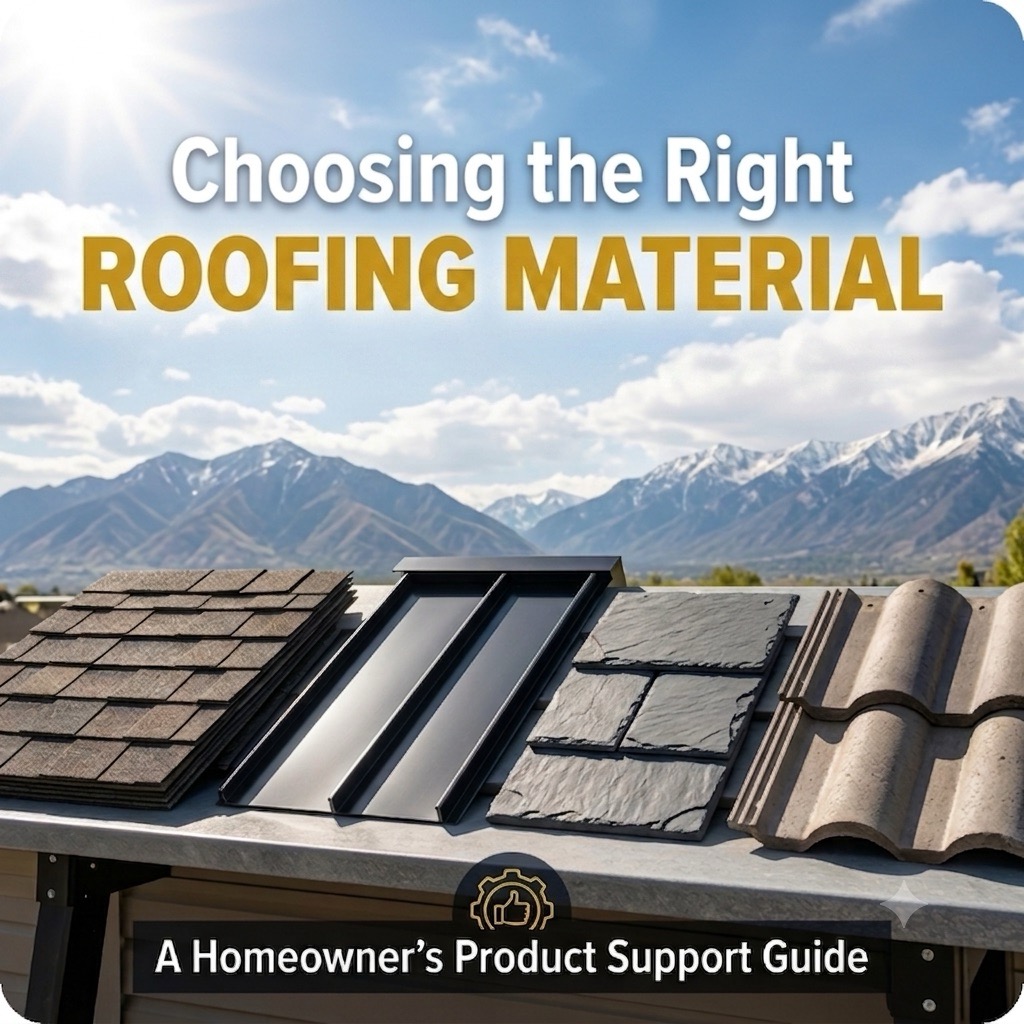
So you’re looking to start a roofing replacement? Excellent! Regardless of the exact project details, you’re eventually going to land on an important question: What roofing material should I use?
This is one of the most impactful decisions you will make when planning your roof replacement. With the variety of options available, it can be a little overwhelming when you are first getting started. A million questions are going to arise while you research. Should you stick with the common choice of asphalt shingles? Or should you go with a different material? Are the more expensive options worth the price? What options are better for the long run?
The most expensive option doesn’t inherently make it the best option. The best option is the one that fits your needs the most. Depending on the house, climate, budget, and long-term goals, the best choice is going to vary. In this guide, we are going to review the most common materials used in roof replacement, along with their advantages, disadvantages, and additional factors to consider.
Why Does the Material Matter?
The roof is the first line of defense for the home against the elements. Rain, wind, snow, hail, sleet, falling leaves and branches, and so much more. All these are the chaotic risks of Mother Nature that our roofs protect us from. Therefore, it’s important to understand what benefits different materials have to offer. The material you choose can affect:
- The expected lifespan of the roof
- How much maintenance and upkeep is required
- The look of the home
- How well your roof handles certain types of weather
- The overall cost of the project
- Your house’s energy efficiency
Sure, color and style of the roof are fun and important to think about, but that’s not the only consideration. Make sure you decide based on your practical needs first, and aesthetics second. And remember, roofing isn’t a one-size-fits-all project. What’s best for one home might not be best for another.
Factors to Account For When Choosing Roofing Material
Here are some of the considerations homeowners will need to take into account before comparing materials:
- Heavy rain
- Snow
- Ice
- Strong winds
- Extreme heat
- Exposure to sunlight
- Humidity
Think about which of these factors you deal with in the area where your home is located. Once you have a full accounting of your risk factors, you can move on to the next step.
Your Home’s Design
Style matters, not necessarily for the visual appeal, but because not every roofing material functionally works well with every style. Here’s what you’ll need to consider:
- Roof slope
- Architectural style
- Structural support
- Existing exterior material
- Neighborhood appearance/ HOA requirements
Modern home? You may like the appearance of metal roofing. Traditional? Consider asphalt shingles, wood, or tile! As long as your design choice still meets your functional requirements, take some time to consider what look you like!
Budget Constraints
As nice as the fanciest materials might look, you don’t always have to go for the most expensive option to meet your needs. It’s important to be realistic about the costs and your budget in order to take on this project in a financially responsible way. Here is what to consider when building a budget:
- Initial installation cost
- Roof lifespan
- Cost of maintenance
- Cost of future repairs
Think about it like a car. You can get a sports car or a luxury vehicle with all the trimmings, but you’ll need to use premium gas and pay more when it comes time for a repair. The same principle applies to your roofing materials. You don’t always have to choose the Mercedes when the Toyota meets all your needs at a lower price. At the same time, you need to remember that if you buy a used car, you don’t want to get a lemon. If you go for a lower upfront cost, your roof could require repair/replacement sooner. It’s simply a matter of being realistic about what you need and what you can afford.
Your Long-Term Plans
Some homeowners have found the place they want to live in forever. Other homeowners view the home as more of a monetary investment with plans to sell eventually. Here’s what you should ask yourself:
- How many years do I plan to live in this home?
- Do I already know I will sell this place one day?
- Did you initially buy the home to settle down in, and having second thoughts?
Answering these questions will help you determine if you should prioritize the lowest upfront cost or the longest lifespan. If you’re planning on selling, go with the lowest upfront cost. If you’re planning to settle down in your current home, you should prioritize the lifespan of the roof.
It’s important to note that prioritizing the lowest upfront cost in this section is strictly in terms of the type of material. There are some areas where the lowest upfront cost isn’t the best choice, like hiring a contractor who is going to rush the job to lower the price.
The Most Common Roofing Materials
Once you have taken a full accounting of all the factors we’ve gone over so far, we can start to look at the types of materials that will be available for your roofing project. Each option has its pros and cons, so it’s essential to know what you need before comparing materials.
Asphalt Shingles
This is the most popular option homeowners choose. This is because they are the most balanced option. Asphalt shingles offer an excellent middle ground when it comes to cost, aesthetic, and functionality.
Asphalt shingles are often available in a variety of colors and styles, so you can still build a reliable roof while meeting all your aesthetic needs.
Pros:
- Budget-friendly, more so than most other options
- Easy Installation
- A wide variety of options to choose from
- Repairs are usually simpler and more affordable
Cons:
- Shorter lifespan
- Repairs may need to be made more often
- Not the best option for severe weather locations
If you’re a homeowner who’s looking for a lower upfront pricetag in exchange for a shorter lifespan, and you’re not often exposed to severe weather conditions, asphalt shingles might be the best option for you.
Metal Roofing
This option has seen an increase in popularity in recent years for a variety of reasons. Metal roofing tends to be more durable and energy efficient. Another reason for their increase in popularity is that they tend to aesthetically match a modern-style home. Most often the choices available will be steel, aluminum, or copper.
Pros:
- Longer lifespan
- Good weather resistance
- Lower upkeep/maintenance
- Fire resistant
- Improved energy efficiency
Cons
- Higher installation price
- Higher repair cost
- More difficult installation and repair process
The long-term quality of metal is a significant increase from that of asphalt shingles. If it’s in your budget, you often deal with extreme weather conditions, and a long-term option is your priority, then metal roofing might be the best fit for you.
Wood Shingles and Shakes
Looking for a more unique option with a natural aesthetic? Then wood might be the right choice for you. Wood will usually have two different options, shingles and shakes. Shingles have a clear machine-cut look, while shakes tend to be thicker with a more natural appearance.
Pros
- Appealing natural aesthetic
- Good insulation
- Adds architectural character
Cons
- Increased maintenance requirements/costs
- Can be damaged by moisture and insects
- May not be allowed in certain areas due to fire restrictions
The main benefit here is appearance. If you have the budget, like the look, are willing to do the extra maintenance, and don’t have to worry about fire restrictions, wood could be the choice for you.
Tile
Looking for a balance between durability and style? Tile might be right up your alley! The most common tile options are clay and concrete, and are most commonly used for homes with a Mediterranean, Spanish, or Southwest aesthetic.
Pros
- Very long lifespan
- Weather and insect resistant
- Appealing design
- Low maintenance
Cons
- Higher installation pricetag
- Weighs heavily
- Certain structural support requirements due to increased weight
For homeowners looking for a unique design, an excellent lifespan, and weather resistance, all with easy upkeep? Consider tile roofing for your project!
Slate Roofing
If you’re looking for durability above all else, slate roofing is the way to go. It’s made from natural stone, offering a high-end natural look.
Pros
- Extremely good lifespan
- Natural aesthetic
- Excellent durability
- Easy to maintain
Cons
- Expensive upfront cost
- Specialized installation required
- Heavy weight, may have certain structural requirements
The homeowners who most benefit from slate roofing are those who desire a natural-looking, premium roof meant to last for generations.
Which Materials Have The Longest Lifespans?
One thing to keep in mind before comparing these lifespans is that the quality of the installation will affect the lifespan of the roof. You can pick the material with the longest lifespan, but if you get a contractor who rushes the job, you are sacrificing that advantage.
- Asphalt shingles: about 20-30 years
- Metal: Several decades, possibly longer based on the type of metal
- Wood: shorter lifespan, varies greatly based on maintenance and climate conditions
- Tile: Usually several decades
- Slate: Many decades with proper upkeep
Which Materials Have The Easiest Upkeep
Not every homeowner has the time to do the required maintenance certain materials call for. It is important to be realistic about how much upkeep you are able to handle or afford. In general, metal, tile, and slate won’t need as much maintenance than wood or low-cost options. Here’s the type of maintenance you can expect:
- Cleaning gutters
- Debris removal
- Flashing inspection
- Post-storm inspections
- Being proactive about fixing minor damage
No option is going to be completely maintenance-free, but some options require more maintenance than others.
Roofing Material and Energy Efficiency
Different materials absorb and retain heat differently, which has an impact on energy efficiency in your home! The following factors can also impact energy efficiency:
- Color of the roofing material
- Attic ventilation
- Insulation
- Design of the roof
- Quality of the installation
How to Balance Quality and Price When Choosing Material
It’s not uncommon to want to go right for the cheapest option. As important as price can be, it should never be the only factor. Going with the lower-cost material only makes sense in scenarios where:
- You have strict budget constraints
- You don’t plan on living in the home long-term
- You live in a mild climate
On the other hand, going with the more expensive materials is really most valuable when:
- You’re planning on staying in the home long term
- You want to deal with less replacements/repairs in the future
- Your home is located in a harsh weather climate
The Importance of Professional Installation
You can spend the time to research every detail about every type of roofing material, and take a full accounting of every factor relevant to your home. but to get all the benefits you researched you need to get a high quality installation from a trusted professional. The quality of the contractor you choose has an affect on:
- Leak prevention
- Roof lifespan
- Warranty coverage
- Quality of protection
When searching for a contractor, make sure it is an experienced, well-reviewed one. If you’re choosing a more premium or less common material, choose a contractor that has experience with that specific material.
Questions to Ask Before Selecting a Roofing Material
Before you’re certain of your decision, make sure not only that you’ve answered these questions, but are fully satisfied the with the answer:
- How long will the material last?
- How does the material handle the climate?
- What maintenance is required?
- Am I happy with the upfront cost?
- Will the structure of my home provide proper support for the material?
- What is included in the warranty?
- How difficult/costly will future repairs be?
If you are truly happy with the answers you’ve come up with to the questions above, and you’ve taken all the considerations we’ve gone over in this article, congratulations! You’ve found the right material for your home!
Reminder: One Size Doesn’t Fit All
Every homeowner has different priorities, budgets, house structures, and climate types. So what works for one homeowner won’t work for all.
For those seeking affordability, asphalt shingles might be the right choice. If you want your home to be handed down through the family for generations, slate might be the option for you. If you have a certain aesthetic in mind, maybe you’ll be searching for wood or tile. The true right decision is a combination of:
- Your budget
- The design of your home
- The weather conditions in your local area
- What maintenance you’re willing to do/pay for
- Your desired roof lifespan
Peace of mind in the roof over your head is priceless. The roof is the defense system of your home against the harsh elements of nature. Now that you have an understanding of the options available, and what you have to take into consideration, you can start the process of choosing the material that meets your needs.