

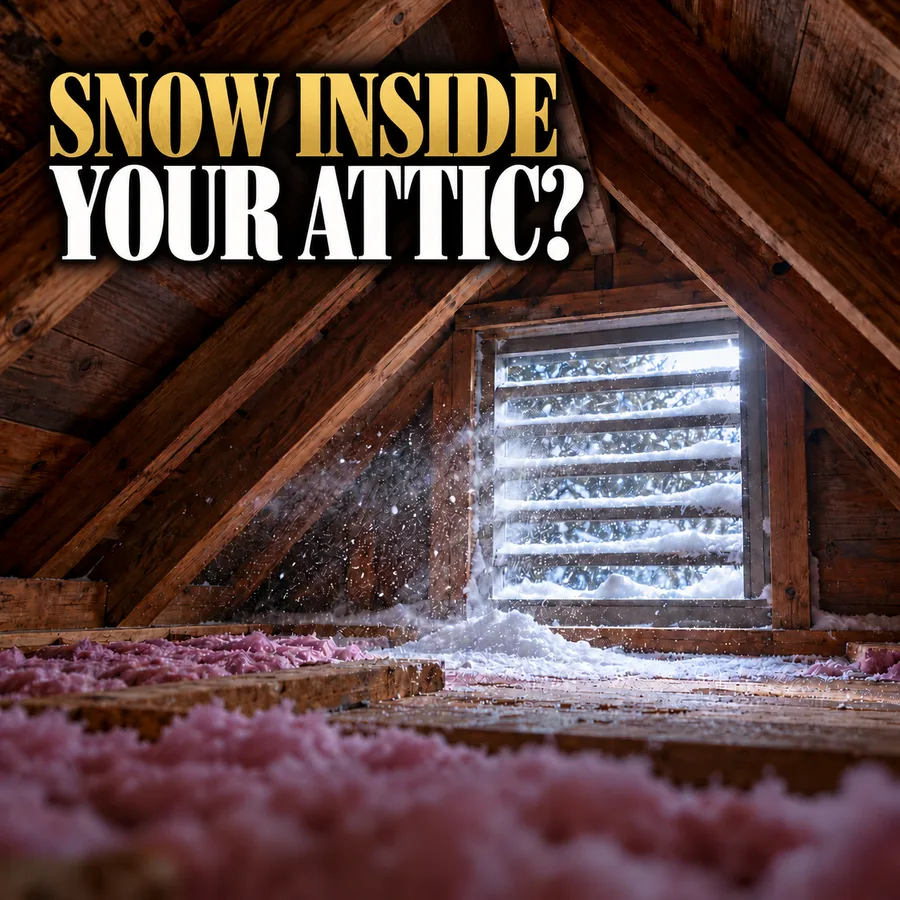
Quick answer: Wind-driven snow can enter some attic or roof openings when fine snow is pushed through damaged, poorly detailed, or unusually exposed vents and gaps. It may leave a small drift that later melts, but roof leakage and condensation can create similar moisture, so the opening and airflow system should be evaluated before anything is sealed.
The same opening that admits a small amount of windblown snow may be part of the roof’s ventilation system. Blocking it without a plan can create a different moisture problem.
Storm direction is an important clue. Record which side of the building faced the wind and where the interior evidence appeared.
Key Takeaways
- Fine, dry snow can move through openings that ordinary rain does not penetrate.
- Ridge, soffit, gable, and roof vents each need compatible detailing and weather protection.
- Wet insulation should be evaluated because it may hide the path and reduce thermal performance.
- Do not cover vents from inside as an improvised winter fix.
How does snow enter through a roof vent?
Strong wind can carry fine snow nearly horizontally or create pressure around a ridge, wall, or vent. If a baffle, hood, screen, cap, closure, flashing, or surrounding roofing is damaged or poorly matched to the exposure, snow may pass into the attic.
A small amount can remain hidden until warmer conditions melt it. The resulting spot may look like a conventional leak even though no liquid precipitation crossed the roof during the storm.
Which openings should be checked?
Inspectors may review ridge and roof vents, soffit intake, gable vents, plumbing penetrations, mechanical exhaust terminations, metal-panel closures, and roof-to-wall transitions. The examination should include flashing and the surrounding covering, not only the visible vent cap.
Snow appearing below one component does not prove that component is defective. Air currents and sloped surfaces can move the material before it settles.
- Bent or missing vent covers
- Open metal-panel closures
- Loose flashing or roofing around a vent
- Evidence concentrated on the windward side
How is wind-driven snow different from condensation?
Wind-driven snow often follows a specific storm direction and may appear as a localized drift or wet spot after thaw. Condensation tends to relate to warm indoor air, cold surfaces, humidity, air leaks, and ventilation, and may show as widespread frost on fasteners or decking.
The two can occur together. Photographs before the material melts, indoor humidity observations, exhaust-duct locations, and the exterior storm history help separate the possibilities.
Why should vents not be blocked for winter?
A vented attic relies on a planned intake and exhaust path. Covering openings may trap moisture or disrupt airflow. Any change should preserve the intended system and comply with product instructions and applicable requirements.
The durable correction may be a compatible vent, baffle, closure, flashing repair, or another detail selected for the roof and exposure. It is not automatically more caulk or less ventilation.
What should a professional evaluate?
A roofer can examine exterior vents, closures, flashing, fasteners, and covering damage. The attic review should trace staining, check insulation and exhaust ducts, and note whether moisture is localized or widespread.
If the issue involves mechanical exhaust, building pressure, or insulation, an HVAC or building-performance professional may need to coordinate with the roofer. The written recommendation should distinguish confirmed findings from likely causes.
Frequently Asked Questions
Can snow come through a ridge vent?
It can in some wind and exposure conditions, especially if the vent, baffle, end detail, or surrounding roofing is damaged or incompatible.
Should I close attic vents before a blizzard?
No. Do not block the planned ventilation system. Have the vent design and weather protection evaluated instead.
Will wind-driven snow ruin attic insulation?
A small wet area may dry, while repeated or extensive wetting can reduce performance or damage materials. The source and insulation condition should be evaluated.
How can I tell if the moisture is condensation?
Look for broader frost or dampness patterns, indoor humidity issues, air leaks, and exhaust ducts, but use a professional evaluation for a reliable diagnosis.
Can this happen on a metal roof?
Yes. Vents, closures, seams, and transitions must be detailed for the system and exposure. The metal panels themselves may not be the entry point.
Get a Clear Roof Recommendation
For related service information and next steps, explore roof inspections, roof repair, metal roofing options, and free roof inspection.
All Star Roofing is a family-owned, licensed and insured roofing company based in Orem with 30+ years of roofing experience. Call (801) 381-0727 or schedule a free inspection for a practical recommendation based on the actual roof and current conditions.