
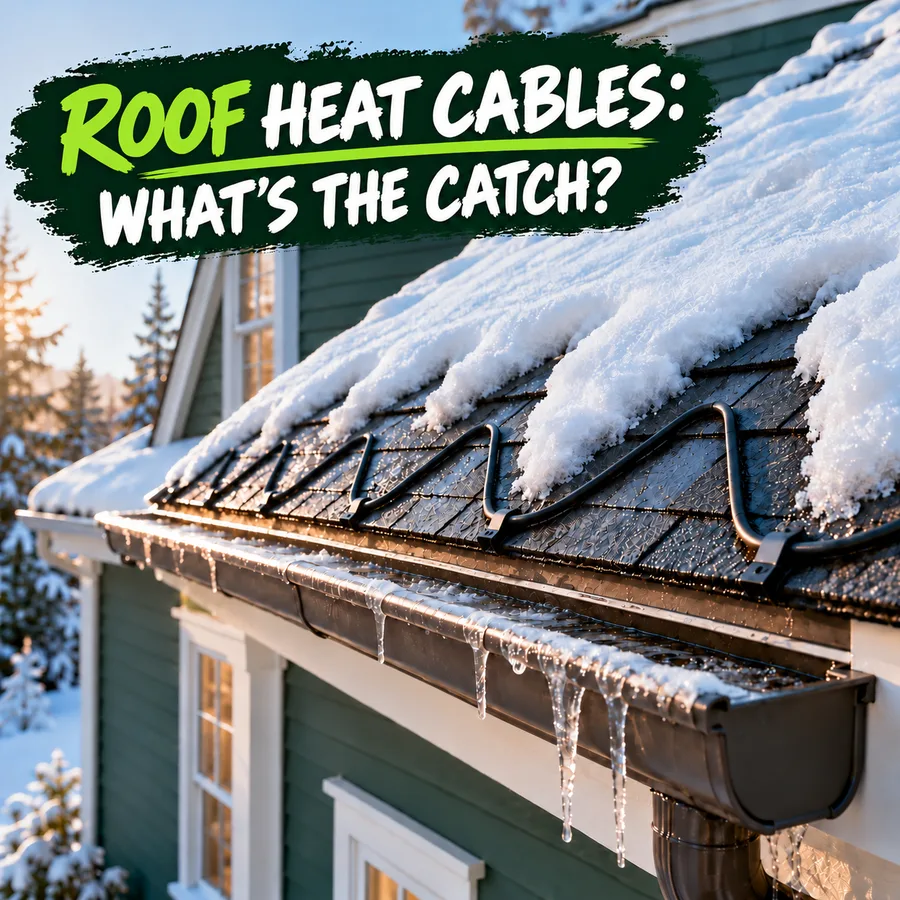
Quick answer: Roof heat cables can create melt channels through limited areas of snow and ice, but they do not remove the underlying causes of most ice dams. They may be useful in a designed, product-compliant application, yet recurring edge ice still calls for evaluation of air leakage, insulation, ventilation, drainage, and roofing details.
A cable is an active electrical system exposed to weather. Product listing, circuit protection, routing, controls, attachment, inspection, and maintenance all matter.
Do not use a heat cable as a reason to ignore interior stains, damaged flashing, blocked gutters, or large hanging ice.
Key Takeaways
- Heat cables manage a symptom by creating drainage paths; they do not make the roof uniformly cold.
- Improper fastening or routing can damage roofing or create an electrical hazard.
- Old, cracked, charred, or exposed cable should be taken out of service and evaluated.
- A permanent plan should start with the reason ice repeatedly forms in that location.
How do roof heat cables work?
Self-regulating or constant-wattage cable is arranged at selected roof edges or drainage paths according to the specific product instructions. When energized under appropriate conditions, it warms a narrow path so meltwater can move through ice toward an outlet.
The cable does not heat the entire roof and should not be expected to melt a deep snowpack. Layout, power supply, controls, roof material, gutters, downspouts, and local conditions must be compatible.
When might heat cable be considered?
It may be considered at a stubborn edge, valley, gutter, or downspout where the assembly and electrical plan support it, and other practical corrections do not fully manage the condition. Some buildings have geometry or exposure that makes targeted ice management useful.
That decision should follow an inspection. If warm indoor air is escaping into the attic, correcting air leaks and insulation may reduce the melt cycle more directly than adding electricity at the roof edge.
What are the limitations and risks?
Cable can be damaged by ultraviolet exposure, movement, animals, sharp edges, snow removal, or improper attachment. Clips and fasteners must not create new holes or interfere with shingles, metal seams, membranes, flashing, or drainage.
Electrical work should use the correct listed equipment, circuit protection, controls, and qualified installation. Extension-cord improvisation, crossed cable where prohibited, and installation outside product instructions can create shock, fire, or equipment hazards.
- Verify product suitability for the roof and gutter material.
- Inspect cable and controls before each season.
- Keep snow-removal tools from catching the cable.
- Use a qualified electrician where the circuit or connection requires one.
What should be checked before installation?
The roof review should identify damaged covering, flashing defects, drainage restrictions, loose gutters, and the location of ice formation. The attic or ceiling review should consider air leaks, insulation, mechanical exhausts, and ventilation.
A cable installed over a deteriorated edge may hide a repair need. A cable routed into a blocked downspout may create meltwater with nowhere to go. Treat the system as part of the entire water path.
What is the better long-term approach?
Use evidence to address the dominant cause: roof repair where water is entering, drainage correction where runoff is trapped, and building-envelope work where interior heat is warming the roof deck. Heat cable can remain a targeted management tool when justified by the design.
All Star Roofing can evaluate the roof and drainage portions and explain when an electrician or insulation professional is needed. Ask each trade to document its scope and how it connects to the others.
Frequently Asked Questions
Will heat cable melt all the snow on my roof?
No. It is generally intended to create limited melt paths, not clear the entire roof.
Can I staple heat cable to shingles?
Use only the attachment method allowed by the cable and roofing manufacturers. Improvised fasteners can damage the roof or cable.
Does heat cable use a lot of electricity?
Use depends on cable type, length, controls, weather, and operating time. Review the product specifications rather than relying on a general estimate.
Can heat cable stop a roof leak?
It may manage ice in a targeted area, but it does not repair damaged roofing, flashing, or underlayment.
Who should install roof heat cable?
Use qualified professionals familiar with the roofing material and electrical requirements, with coordination between the roofer and electrician when needed.
Get a Clear Roof Recommendation
For related service information and next steps, explore roof inspections, roof repair, residential roofing services, and free roof inspection.
All Star Roofing is a family-owned, licensed and insured roofing company based in Orem with 30+ years of roofing experience. Call (801) 381-0727 or schedule a free inspection for a practical recommendation based on the actual roof and current conditions.