

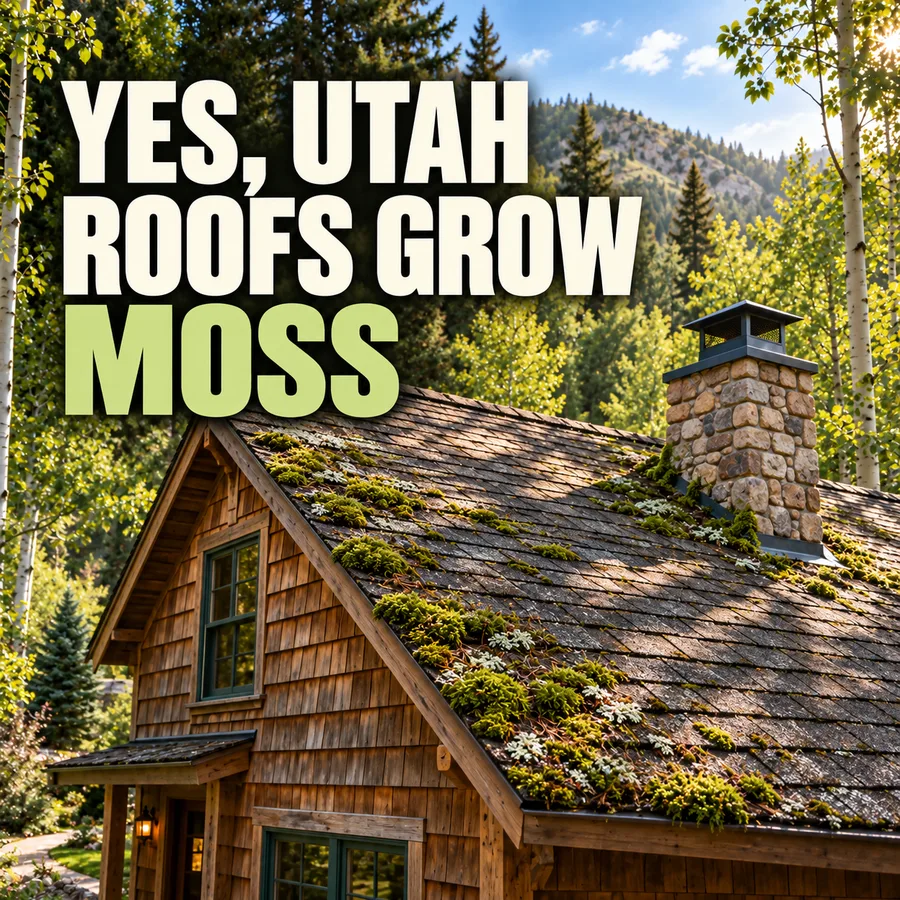
Quick answer: Yes. Moss and lichen can grow on Utah roofs where shade, retained debris, dew, irrigation overspray, or slow drainage creates enough recurring moisture. The growth should be identified before removal because scraping, pressure washing, or walking on the roof can cause more damage than the growth itself.
This question is best answered by connecting the visible condition to the surrounding roof system, the building history, and Northern Utah weather. Use free roof inspection to understand the relevant service context, then base the final decision on an on-site inspection and a written scope.
Key Takeaways
- Localized moisture conditions matter more than the region’s average dryness.
- Moss, lichen, and algae behave differently and should not be treated as one condition.
- Growth near laps, valleys, gutters, and flashing can hide the surface beneath it.
- Safe correction may include debris control, tree management, drainage work, and product-compatible treatment.
Where Does Roof Growth Usually Start?
Shaded northern slopes, areas below trees, valleys that collect organic debris, and roof sections reached by irrigation mist tend to stay damp longer. Chimneys, dormers, and neighboring buildings can create smaller pockets of shade that are easy to miss from the yard.
Leaves and needles can hold moisture against the covering and supply material in which growth establishes. Clearing the drainage path may be as important as treating the visible patch.
Why Is Physical Removal Risky?
Moss can grip shingle edges, while lichen attaches firmly to the surface. Pulling, scraping, or brushing may loosen granules, tear tabs, disturb laps, or leave the roof more vulnerable than before.
Wet growth and cleaning solutions make a roof slippery. A treatment that appears simple from the ground still involves fall exposure, runoff, chemical compatibility, and protection of landscaping and metal components.
What Does a Long-Term Plan Address?
A durable plan identifies why the area stays wet. It may include careful debris removal, qualified tree trimming, gutter or drainage correction, adjustment of irrigation spray, and a treatment permitted by the roofing manufacturer.
The roof should also be inspected after growth is managed because concealed cracks, lifted edges, or flashing conditions may become visible. Treatment does not restore material already damaged by age or abrasion.
What Should You Do Next?
- Document the growth from the ground and compare shaded and sunny slopes.
- Identify tree debris, irrigation overspray, blocked drainage, and other moisture sources.
- Review the roof manufacturer’s cleaning instructions and warranty limits.
- Use a qualified professional when access, chemicals, or attached growth makes removal hazardous.
For a condition-specific recommendation, review roof repair services. Keep photographs, dates, estimates, product information, and repair records together so later decisions use the same facts.
What Should a Professional Review?
- Type and extent of biological growth
- Shingle or panel surface beneath the growth
- Valleys, gutters, and drainage paths
- Shade, tree debris, and irrigation exposure
- Compatible treatment and runoff controls
A useful inspection separates the likely entry point or defect from contributing conditions. It should also identify when structural, electrical, mechanical, masonry, energy, design, or insurance questions belong with another qualified professional.
What Should You Avoid?
Avoid pulling moss by hand, scraping lichen, using high pressure, or applying a treatment without checking material compatibility and runoff effects.
Ground-level photographs and safely accessible interior observations are useful. Leave roof access, destructive testing, temporary coverings, and repairs to trained personnel, especially when surfaces are wet, icy, steep, or storm-damaged.
Frequently Asked Questions
Is moss common in Utah?
It is less uniform than in wetter regions, but shaded and repeatedly damp roof areas can still support moss.
Is lichen the same as algae?
No. They are different growths and can attach to roofing surfaces differently.
Will removing nearby branches solve the problem?
More sunlight and less debris may help, but tree work should be evaluated by a qualified arborist and the roof may still need treatment.
Can moss lift shingles?
Dense growth may occupy edges or hold moisture, but the actual condition should be inspected rather than diagnosed from one photograph.
Does treatment repair damaged shingles?
No. Treatment may manage growth; physically damaged roofing still needs an appropriate repair plan.
Get a Clear Roof Recommendation
The right answer depends on the actual roof, not one symptom viewed in isolation. Explore Utah roofing resources, or call All Star Roofing at (801) 381-0727 to schedule a free inspection or estimate. All Star Roofing is a family-owned, licensed and insured roofing company based in Orem with 30+ years of roofing experience. Insurance coverage decisions remain with the carrier, and project timing depends on weather, scope, materials, and scheduling.