

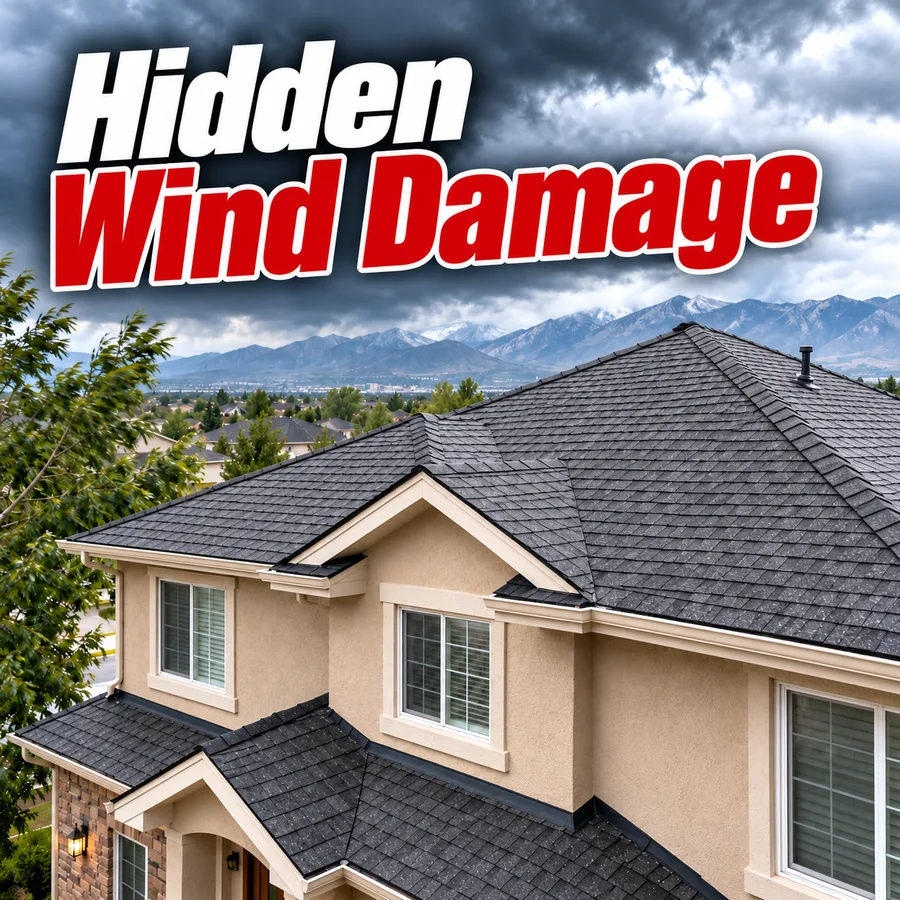
Quick answer: Yes. Wind can lift shingle edges, weaken seals, crease tabs, disturb flashing, loosen edge metal, or move vents even when the roof still looks complete from the ground. A recent wind event does not prove damage, so findings should be tied to physical evidence and the roof’s condition.
This question is best answered by connecting the visible condition to the surrounding roof system, the building history, and Northern Utah weather. Use storm damage roofing to understand the relevant service context, then base the final decision on an on-site inspection and a written scope.
Key Takeaways
- Missing shingles are only one form of wind-related roof damage.
- Edges, corners, ridges, and repaired areas often deserve close attention.
- Repeated lifting can reduce a shingle’s ability to reseal or remain flat.
- Insurance coverage depends on the policy and carrier findings, not the inspection alone.
What Damage Can Be Hard to See?
A shingle may lift and settle back while retaining a crease, torn seal strip, enlarged fastener opening, or disturbed bond. Ridge caps, rake edges, flashing, pipe covers, and vents can move slightly without falling to the ground.
Subtle conditions require close, safe access and knowledge of normal installation. Bending a shingle to ‘test’ it can create damage and should never be used to manufacture evidence.
Which Areas Receive Higher Wind Stress?
Roof perimeters, corners, ridges, hips, and areas near changes in height can experience different pressures from central field areas. Local terrain, neighboring buildings, canyon exposure, and the direction of the event also affect loading.
Older repairs, improperly placed fasteners, deteriorated seal strips, and brittle materials may respond differently from sound surrounding areas. The inspection should separate pre-existing wear from event-related evidence where possible.
What Documentation Is Useful?
Record the storm date, visible debris, displaced exterior components, and indoor symptoms. Wide roof-slope photographs and close images should be labeled by location rather than presented as isolated marks.
If a claim is considered, contact the carrier for policy and documentation requirements. A roofer can report visible roof conditions but should not promise coverage or determine the carrier’s settlement.
What Should You Do Next?
- Photograph the property from the ground and collect fallen roofing material without climbing.
- Check ceilings and a safely accessible attic for new moisture.
- Schedule an inspection when the roof is safely accessible.
- Keep the report, photos, weather date, repair proposal, and insurer communications together.
For a condition-specific recommendation, review free roof inspection. Keep photographs, dates, estimates, product information, and repair records together so later decisions use the same facts.
What Should a Professional Review?
- Perimeters, corners, ridges, and hips
- Shingle seals, creases, and fasteners
- Flashing, vents, and edge metal
- Prior repairs and material brittleness
- Interior or attic moisture evidence
A useful inspection separates the likely entry point or defect from contributing conditions. It should also identify when structural, electrical, mechanical, masonry, energy, design, or insurance questions belong with another qualified professional.
What Should You Avoid?
Avoid lifting shingles yourself, allowing anyone to create test damage, or treating a storm date as proof that every observed condition is covered.
Ground-level photographs and safely accessible interior observations are useful. Leave roof access, destructive testing, temporary coverings, and repairs to trained personnel, especially when surfaces are wet, icy, steep, or storm-damaged.
Frequently Asked Questions
Can shingles lift and lie back down?
Yes. They may settle after a gust while retaining a crease, weakened seal, or fastener damage.
Does no debris in the yard mean the roof is fine?
No. Some wind effects do not detach materials or create obvious ground debris.
Can a drone confirm wind damage?
A drone can document visible surfaces, but it may not show seal failure, flexibility, fastening, or concealed conditions.
Should I file an insurance claim after every windstorm?
No universal answer applies. Review the observed damage, estimated scope, deductible, and policy with the insurer.
Can a roofer approve my claim?
No. The carrier makes coverage decisions; a roofer can inspect, document, and estimate roofing work.
Get a Clear Roof Recommendation
The right answer depends on the actual roof, not one symptom viewed in isolation. Explore roof repair services, or call All Star Roofing at (801) 381-0727 to schedule a free inspection or estimate. All Star Roofing is a family-owned, licensed and insured roofing company based in Orem with 30+ years of roofing experience. Insurance coverage decisions remain with the carrier, and project timing depends on weather, scope, materials, and scheduling.