

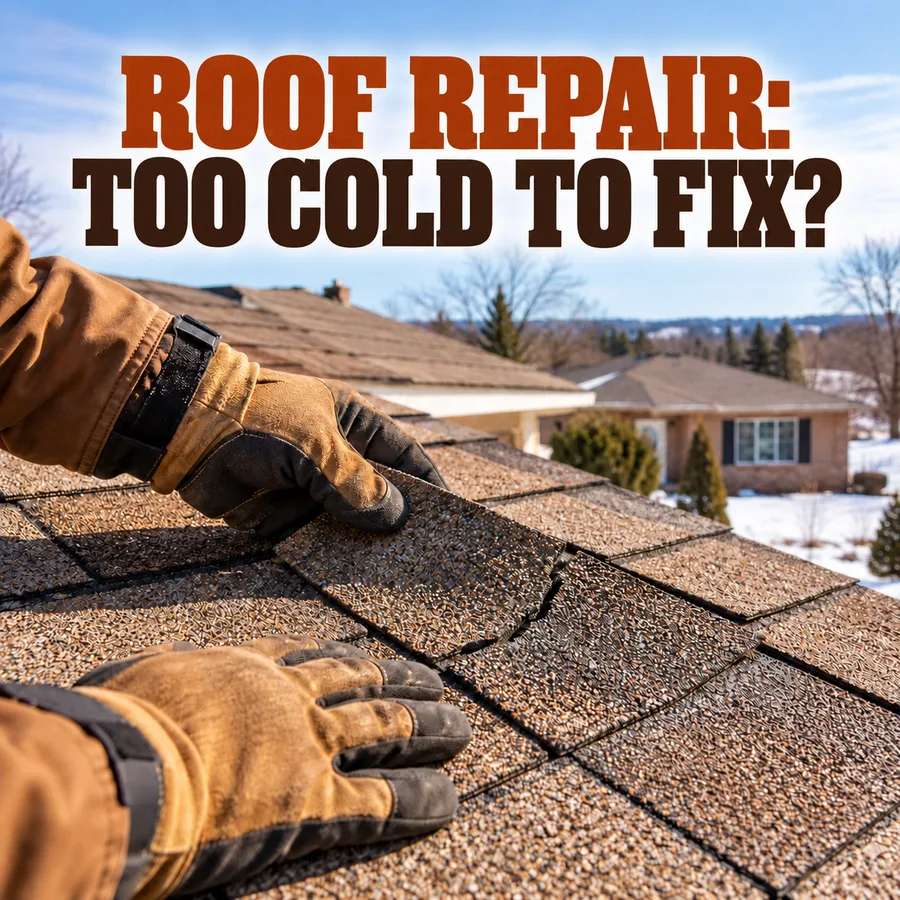
Quick answer: Asphalt shingles can sometimes be repaired in cold weather, but the decision depends on temperature, sun, wind, moisture, roof access, material condition, and manufacturer instructions. Cold shingles may be brittle, and self-sealing strips may need warmer conditions or an approved hand-sealing method.
A winter repair should protect the building without forcing materials to bend, bond, or seal outside their intended conditions. The repair plan may need a suitable weather window.
An urgent leak and a cosmetic shingle concern do not always require the same response. A roofer should separate immediate water control from the permanent repair.
Key Takeaways
- Cold weather can make asphalt shingles less flexible and more vulnerable to cracking during handling.
- The roof must be dry, safely accessible, and suitable for the repair method.
- Manufacturer instructions govern fastening, sealing, storage, and temperature-related precautions.
- Temporary protection should be clearly labeled and followed by a permanent plan.
What changes when shingles are cold?
Asphalt shingles stiffen as temperature drops. Bending a cold tab around a ridge, lifting surrounding shingles to reach fasteners, or forcing a curled piece flat can crack or distort the material. Bundles also need appropriate storage and handling before installation.
Many shingles rely partly on a factory-applied sealant that activates with heat and time. In cooler conditions, the product instructions may call for specific hand-sealing procedures or additional precautions rather than assuming the sun will create an immediate bond.
What conditions determine whether repair can proceed?
The roofer should consider surface moisture, frost, snow, wind, daylight, pitch, access, and whether the surrounding shingles can be lifted without damage. Sealants and accessories may have their own application limits.
A sunny, dry afternoon can present different conditions from a shaded north slope on the same house. Scheduling should follow the actual roof surface and the approved material instructions, not only the forecasted air temperature.
How are urgent leaks handled when conditions are poor?
The first goal is to protect people and limit water entry without creating a larger hazard. Interior containment, documentation, and professional temporary weather protection may be appropriate until a durable exterior repair can be completed.
A temporary step should have a defined follow-up. Ask what was installed, what remains open, which weather conditions are needed, and how the final repair will tie into the surrounding roof.
- Document the active leak and weather.
- Keep occupants away from bulging ceilings or electrical hazards.
- Ask whether the proposed exterior step is temporary or permanent.
- Schedule the return visit before the emergency is considered closed.
What belongs in a cold-weather repair scope?
The written scope should identify the damaged area, materials, removal and tie-in method, fastening and sealing approach, weather assumptions, deck or underlayment contingencies, and cleanup. It should also state how the contractor will verify the finished area.
Avoid vague promises that any repair can be completed at any temperature. Good scheduling protects the home, crew, and material warranty requirements.
When might waiting be the safer choice?
If the roof is icy, wet, snow-covered, exposed to strong wind, or too brittle for a durable tie-in, waiting for a suitable window may be safer. That does not mean ignoring an active leak; it means using an appropriate temporary plan and monitoring the interior.
All Star Roofing can assess the damage, explain the weather constraints, and provide a written repair recommendation based on the actual roof rather than a calendar rule.
Frequently Asked Questions
Is there one minimum temperature for every shingle repair?
No. Products and methods differ. Follow the specific manufacturer’s instructions and the roof’s actual surface conditions.
Why do cold shingles crack?
Lower temperatures make asphalt shingles less flexible, so lifting or bending them can cause damage.
Will a repaired shingle seal immediately in winter?
Not always. The product may need warmer conditions or an approved hand-sealing method.
Can a tarp stay on the roof all winter?
Temporary coverings require inspection and a permanent follow-up plan. Wind, fasteners, and trapped water can create additional problems.
Should I wait to call until spring?
No. Have damage or leakage assessed now, even if permanent work must wait for a suitable weather window.
Get a Clear Roof Recommendation
For related service information and next steps, explore roof repair, roof inspections, residential roofing services, and free roof inspection.
All Star Roofing is a family-owned, licensed and insured roofing company based in Orem with 30+ years of roofing experience. Call (801) 381-0727 or schedule a free inspection for a practical recommendation based on the actual roof and current conditions.