

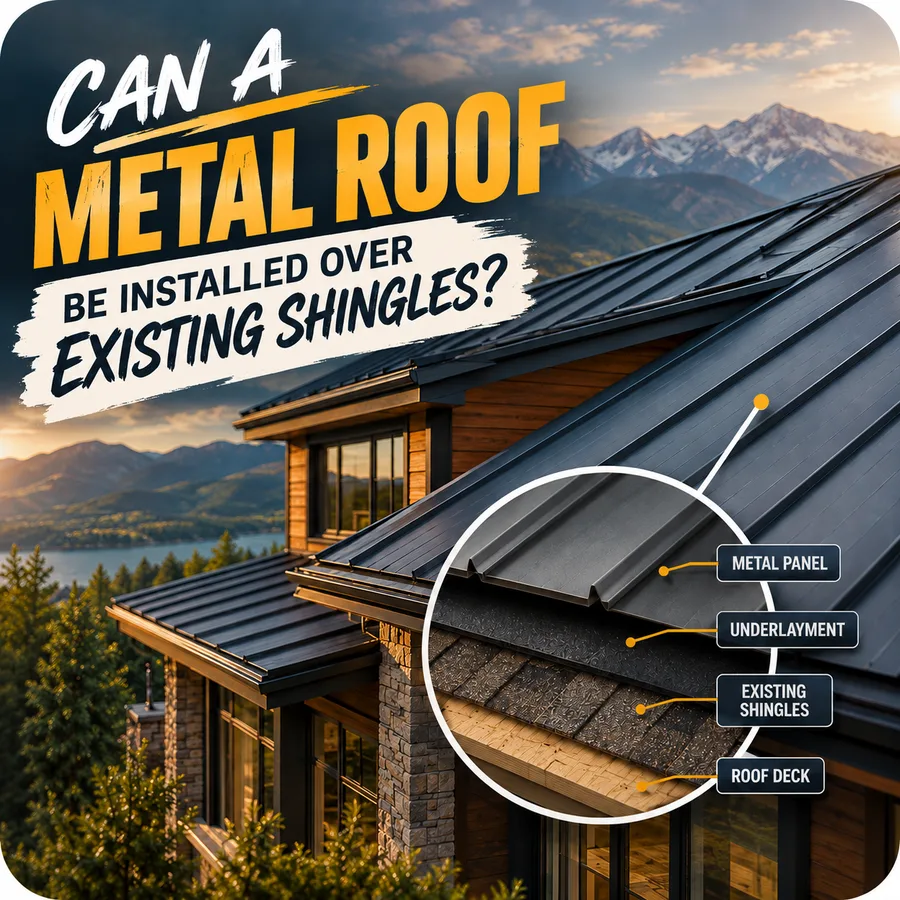
Quick answer: Some metal systems can be installed over one existing shingle layer when structure, deck, flatness, moisture, code, manufacturer instructions, and details allow. Tear-off offers better access to hidden conditions and is often the more transparent starting point.
Good decisions separate visible symptoms from the underlying cause. The company’s metal roofing options page explains the related service context before an on-site recommendation.
Key takeaways
- Some metal systems can be installed over one existing shingle layer when structure, deck, flatness, moisture, code, manufacturer instructions, and details allow. Tear-off offers better access to hidden conditions and is often the more transparent starting point.
- Utah temperature swings make panel movement and substrate flatness important, while snow and wind make attachment and edge details critical.
- Best next step: Verify project-specific code and manufacturer requirements.
What factors matter most?
Existing condition
Leaks, soft decking, trapped moisture, and uneven surfaces must be resolved. Look for evidence on this roof rather than assuming the same condition exists across every slope or area.
Weight and structure
The full assembly and building capacity need evaluation. Product instructions and the actual substrate help determine the appropriate response.
Attachment
Fasteners must engage the intended structural or deck substrate. Evaluate it with the surrounding assembly because water and movement rarely stop at one component.
Geometry
Edges, valleys, walls, penetrations, and ventilation can become more complex with added layers. Its importance depends on location, adjacent details, exposure, and the condition of the rest of the roof.
Future service
Concealed shingles can make later diagnosis and removal different. A useful scope states how this detail connects to drainage, attachment, flashing, or maintenance.
How do Utah conditions change the answer?
Utah temperature swings make panel movement and substrate flatness important, while snow and wind make attachment and edge details critical.
Utah’s seasons test roof components in different ways. Dry-weather, winter, and post-storm observations may each reveal a different part of the problem. Use product-specific requirements and local observations rather than a single statewide lifespan or performance promise.
What should you do next?
- Confirm existing layer count and deck condition. Write the result down so later estimates and inspections can use the same facts.
- Compare overlay and tear-off scopes in writing. The goal is to compare a complete scope instead of relying on a product name or a quick visual guess.
- Review attachment, underlayment or separation layer, ventilation, and flashing. Where safety, structure, code, or electrical work is involved, use the appropriately qualified professional.
- Verify project-specific code and manufacturer requirements. Keep photos, product data, and written recommendations with the property records.
When the visible evidence is unclear, start with roof replacement options. The next step should explain observed conditions, separate urgent work from maintenance, and result in a clear written recommendation.
What should a professional review?
- Panel profile, seams, and attachment
- Coating and cut-edge condition
- Edges, valleys, ridges, and penetrations
- Thermal-movement details
- Snow, drainage, and pedestrian consequences
A useful inspection connects exterior evidence with interior symptoms and the building’s history. It should also identify when another qualified professional is needed for structural, electrical, mechanical, design, policy, or legal questions.
What should you avoid?
Avoid presenting overlay as automatically cheaper or better without accounting for hidden deck risk and detail changes.
Safety limits the do-it-yourself portion of this work. Avoid walking on a damaged or slippery roof and keep people clear of active snow- or debris-shedding areas.
Frequently asked questions
Will shingles scratch the metal?
A compatible separation or underlayment strategy may be required; follow the system design.
Can an overlay hide leaks?
Yes. Existing moisture or defects can be concealed if they are not investigated first.
Does metal need a flat deck?
Panel systems need suitable support and tolerances; irregular shingles can telegraph or affect installation.
Is tear-off always required?
No universal answer applies; project conditions and requirements control.
Which option is easier to inspect?
Tear-off gives direct access to the deck and concealed conditions.
Get a clear roof recommendation
The right answer depends on the actual roof, not only its age or material. Learn about free roof inspection, or call All Star Roofing at (801) 381-0727 to schedule a free inspection or estimate. Coverage decisions remain with the insurance carrier, and project timing depends on weather, scope, materials, and scheduling.