

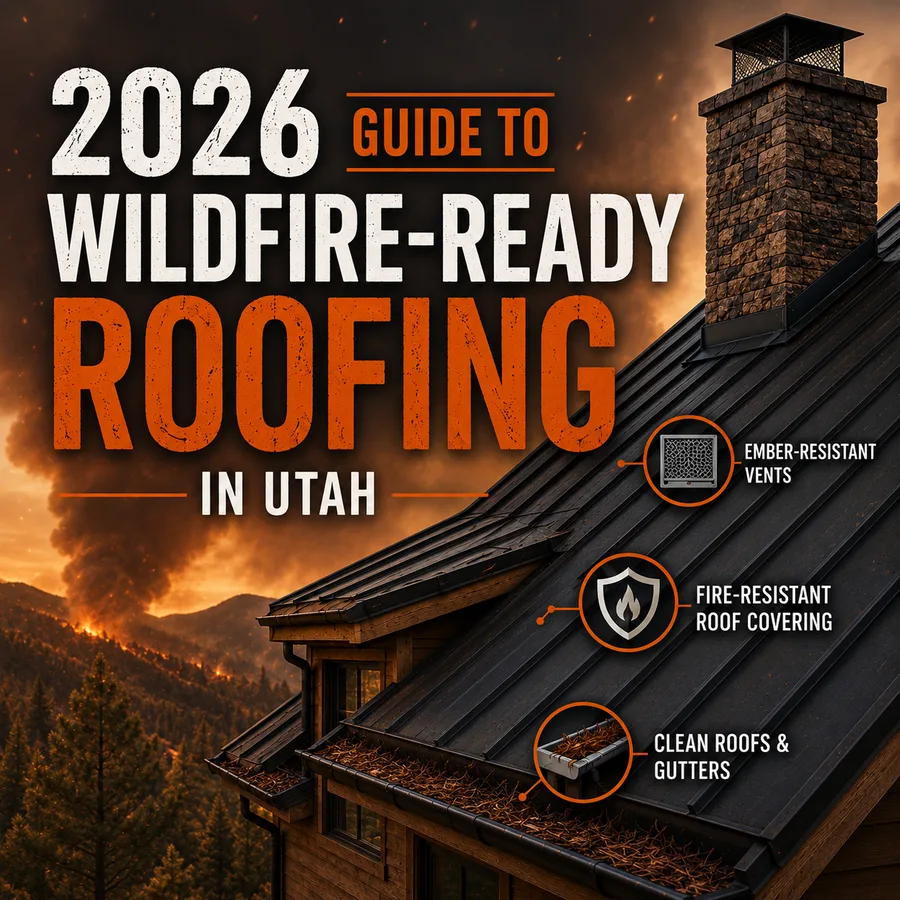
Quick answer: Wildfire-ready roofing begins with a fire-resistant roof covering, closed and maintained openings, clean roof and gutter surfaces, and attention to vents, edges, valleys, chimneys, and nearby combustible debris. The roof is one part of whole-property wildfire preparation.
Treat this as a system decision, not a single-component choice. A written scope should connect the findings to the applicable Utah roofing resources options.
Key takeaways
- Wildfire-ready roofing begins with a fire-resistant roof covering, closed and maintained openings, clean roof and gutter surfaces, and attention to vents, edges, valleys, chimneys, and nearby combustible debris. The roof is one part of whole-property wildfire preparation.
- USU Extension’s ember-awareness guidance emphasizes fire-resistant roof types, removal of roof debris, closing roof-covering openings, and appropriate vent screening or ember-resistant vent products.
- Best next step: Coordinate roofing work with defensible-space and emergency planning.
What factors matter most?
Roof covering
Replace vulnerable wood shake or shingle roofs with an appropriate fire-resistant system when reroofing. Product instructions and the actual substrate help determine the appropriate response.
Debris
Pine needles, leaves, bark, and twigs can collect in valleys, gutters, and behind rooftop features. Evaluate it with the surrounding assembly because water and movement rarely stop at one component.
Openings
Gaps at tiles, edges, vents, and damaged components can admit windborne embers. Its importance depends on location, adjacent details, exposure, and the condition of the rest of the roof.
Vents
Ember-resistant vent strategies should follow applicable guidance and maintain required ventilation. A useful scope states how this detail connects to drainage, attachment, flashing, or maintenance.
Chimneys and surroundings
Spark arresters, overhanging branches, decks, and adjacent fuels affect roof exposure. Look for evidence on this roof rather than assuming the same condition exists across every slope or area.
How do Utah conditions change the answer?
USU Extension’s ember-awareness guidance emphasizes fire-resistant roof types, removal of roof debris, closing roof-covering openings, and appropriate vent screening or ember-resistant vent products.
The useful question is not whether Utah weather is hard on roofs in general, but which exposures are acting on this roof and how the assembly manages them. Use product-specific requirements and local observations rather than a single statewide lifespan or performance promise.
What should you do next?
- Review the roof from the ground and schedule safe professional cleaning or repair. Write the result down so later estimates and inspections can use the same facts.
- Remove combustible debris from roofs and gutters. The goal is to compare a complete scope instead of relying on a product name or a quick visual guess.
- Inspect vents, tile ends, flashing gaps, and damaged edges. Where safety, structure, code, or electrical work is involved, use the appropriately qualified professional.
- Coordinate roofing work with defensible-space and emergency planning. Keep photos, product data, and written recommendations with the property records.
To turn these questions into a written scope, use metal roofing options. The next step should explain observed conditions, separate urgent work from maintenance, and result in a clear written recommendation.
What should a professional review?
- Site elevation and exposure
- Roof geometry and drainage
- Snow, wind, sun, and temperature patterns
- Covering, underlayment, and flashing
- Attic or building-enclosure conditions
A useful inspection connects exterior evidence with interior symptoms and the building’s history. It should also identify when another qualified professional is needed for structural, electrical, mechanical, design, policy, or legal questions.
What should you avoid?
Avoid describing any roof as fireproof or promising that one product will prevent wildfire loss.
A safe inspection plan matters as much as a thorough one. Homeowners and untrained staff should not climb onto an uncertain roof to confirm a suspected defect.
Frequently asked questions
What is a fire-resistant roof?
It is a roof assembly with a tested fire classification and compliant installation; classifications and requirements should be verified for the project.
Is metal roofing fireproof?
Metal is noncombustible, but roof performance also depends on the assembly, openings, underlayment, deck, and surrounding exposures.
Why clean gutters?
Combustible debris can collect there and be exposed to embers.
Can vent screens block airflow?
Poorly selected modifications can affect ventilation, so use an appropriate design and product.
Should wildfire work wait until reroofing?
No. Debris removal, damaged-opening repairs, and property planning can begin earlier.
Get a clear roof recommendation
The right answer depends on the actual roof, not only its age or material. Learn about free roof inspection, or call All Star Roofing at (801) 381-0727 to schedule a free inspection or estimate. Coverage decisions remain with the insurance carrier, and project timing depends on weather, scope, materials, and scheduling.