

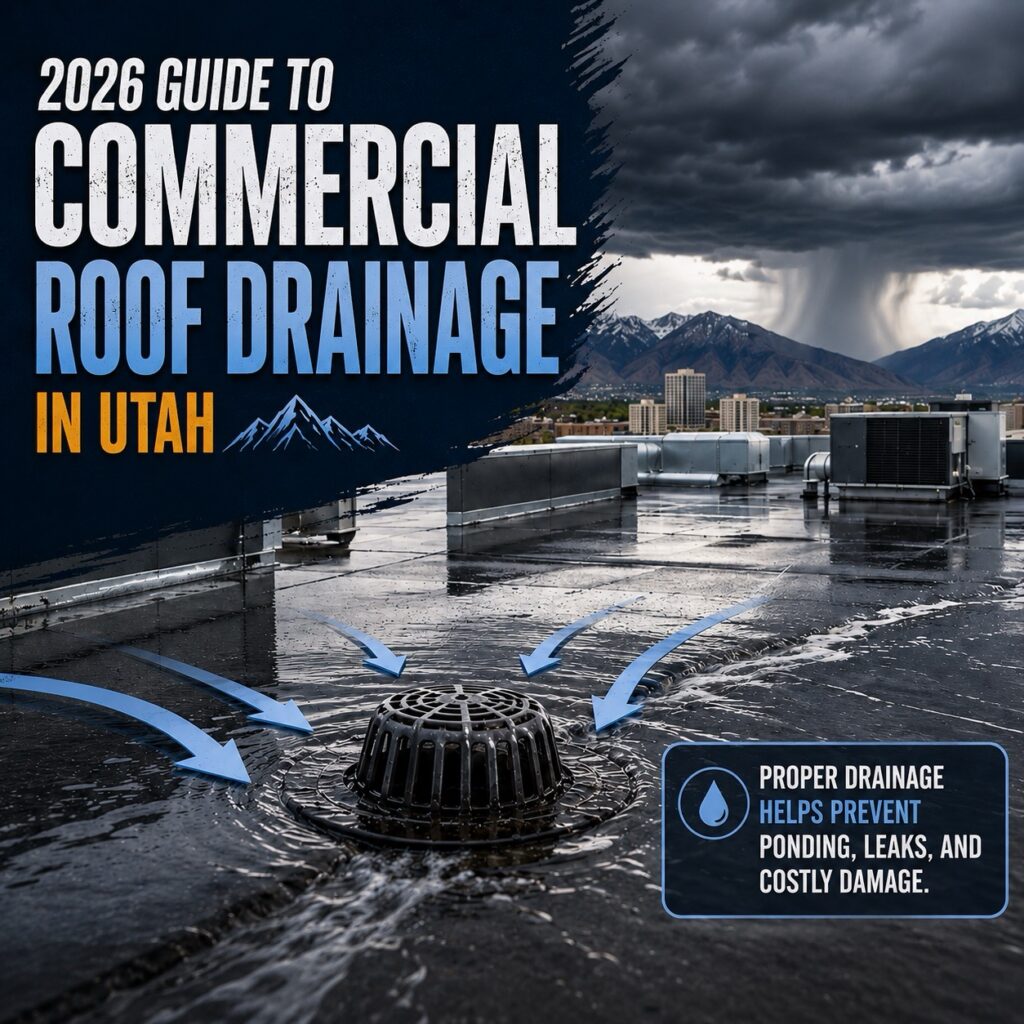
Quick answer: Commercial roof drainage is a system of slope, drains, scuppers, gutters, downspouts, overflow paths, and maintenance. Its job is to move water off the roof without overloading the assembly or sending it into the building.
The decision should begin with the building and site, not a generic rule. Compare observed conditions with a complete written scope and review the company’s commercial roofing services information.
Key takeaways
- Commercial roof drainage is a system of slope, drains, scuppers, gutters, downspouts, overflow paths, and maintenance. Its job is to move water off the roof without overloading the assembly or sending it into the building.
- Utah combines dry periods with sudden thunderstorms, snow accumulation, and melt events. A roof can look fine in dry weather yet reveal drainage problems during a short, intense event.
- Best next step: Correct the cause instead of repeatedly coating the symptom.
What factors matter most?
Positive drainage
The roof and insulation layout should direct water toward designed outlets. Evaluate it with the surrounding assembly because water and movement rarely stop at one component.
Primary outlets
Internal drains, scuppers, or gutters must remain open and correctly detailed. Its importance depends on location, adjacent details, exposure, and the condition of the rest of the roof.
Overflow paths
Secondary drainage provides a visible or alternate route when primary outlets cannot keep up. A useful scope states how this detail connects to drainage, attachment, flashing, or maintenance.
Penetrations and curbs
Water can collect near rooftop equipment when slope and flashing do not work together. Look for evidence on this roof rather than assuming the same condition exists across every slope or area.
Maintenance access
A drainage design still requires inspections and debris removal by trained personnel. Product instructions and the actual substrate help determine the appropriate response.
How do Utah conditions change the answer?
Utah combines dry periods with sudden thunderstorms, snow accumulation, and melt events. A roof can look fine in dry weather yet reveal drainage problems during a short, intense event.
Conditions can change across short distances in Utah. Orientation, elevation, shade, terrain, and building use may change which detail deserves the most attention. Use product-specific requirements and local observations rather than a single statewide lifespan or performance promise.
What should you do next?
- Map all primary and overflow outlets. Write the result down so later estimates and inspections can use the same facts.
- Record recurring ponding areas after weather events. The goal is to compare a complete scope instead of relying on a product name or a quick visual guess.
- Inspect transitions, seams, flashings, and drains on a planned schedule. Where safety, structure, code, or electrical work is involved, use the appropriately qualified professional.
- Correct the cause instead of repeatedly coating the symptom. Keep photos, product data, and written recommendations with the property records.
For a property-specific next step, review commercial roof repair. The next step should explain observed conditions, separate urgent work from maintenance, and result in a clear written recommendation.
What should a professional review?
- Membrane or panel field
- Seams, flashings, curbs, and penetrations
- Drainage and recurring ponding
- Insulation or deck moisture indicators
- Access history, repairs, and rooftop equipment
A useful inspection connects exterior evidence with interior symptoms and the building’s history. It should also identify when another qualified professional is needed for structural, electrical, mechanical, design, policy, or legal questions.
What should you avoid?
Do not give a universal acceptable ponding time or modify drainage without design review; roof system, structure, code, and manufacturer guidance all matter.
Keep roof access out of the homeowner or tenant checklist. Steep, wet, icy, storm-damaged, and unfamiliar surfaces require trained people and appropriate safety procedures.
Frequently asked questions
Is any standing water normal?
Brief wetting can occur, but recurring or prolonged ponding deserves evaluation.
What blocks commercial drains?
Leaves, windblown debris, roofing material, sediment, ice, and neglected strainers are common contributors.
Can a coating fix ponding?
A coating does not correct inadequate slope, blocked outlets, or structural deflection.
Why are overflow scuppers important?
They can provide an alternate path and a visible warning that primary drainage is overwhelmed.
How often should drains be checked?
Use a planned maintenance schedule and inspect after significant storms or rooftop work.
Get a clear roof recommendation
The right answer depends on the actual roof, not only its age or material. Learn about free roof inspection, or call All Star Roofing at (801) 381-0727 to schedule a free inspection or estimate. Coverage decisions remain with the insurance carrier, and project timing depends on weather, scope, materials, and scheduling.