

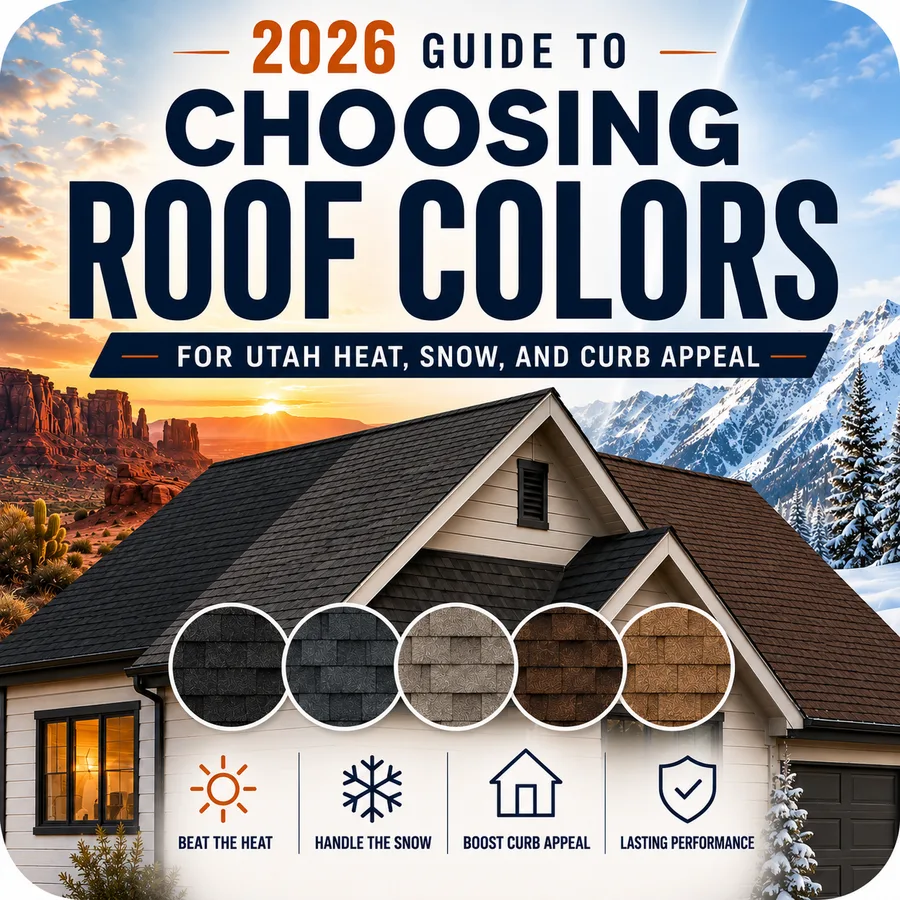
Quick answer: Choose a roof color by balancing tested solar properties, material type, home style, neighborhood rules, visibility of dust or snow, and long-term appearance. Color alone does not determine roof temperature or life.
The decision should begin with the building and site, not a generic rule. Compare observed conditions with a complete written scope and review the company’s roof replacement options information.
Key takeaways
- Choose a roof color by balancing tested solar properties, material type, home style, neighborhood rules, visibility of dust or snow, and long-term appearance. Color alone does not determine roof temperature or life.
- Utah ranges from hot desert communities to snowy mountain locations. The U.S. Department of Energy cautions that cool-roof benefits vary by climate and building conditions.
- Best next step: Coordinate color with ventilation, insulation, drainage, and full-system quality.
What factors matter most?
Product ratings
Two similar-looking colors can have different tested reflectance and emittance. Evaluate it with the surrounding assembly because water and movement rarely stop at one component.
Climate
Cooling priorities may carry more weight in southern Utah, while winter tradeoffs and snow visibility may matter elsewhere. Its importance depends on location, adjacent details, exposure, and the condition of the rest of the roof.
Architecture
Roof pitch, exterior materials, trim, and landscape influence how a large color field reads. A useful scope states how this detail connects to drainage, attachment, flashing, or maintenance.
Aging and soiling
Dust, algae, fading, and weathering can change appearance over time. Look for evidence on this roof rather than assuming the same condition exists across every slope or area.
HOA and jurisdiction
Confirm applicable design rules before ordering. Product instructions and the actual substrate help determine the appropriate response.
How do Utah conditions change the answer?
Utah ranges from hot desert communities to snowy mountain locations. The U.S. Department of Energy cautions that cool-roof benefits vary by climate and building conditions.
Conditions can change across short distances in Utah. Orientation, elevation, shade, terrain, and building use may change which detail deserves the most attention. Use product-specific requirements and local observations rather than a single statewide lifespan or performance promise.
What should you do next?
- View full-size samples outside at different times of day. Write the result down so later estimates and inspections can use the same facts.
- Compare tested product data rather than color names alone. The goal is to compare a complete scope instead of relying on a product name or a quick visual guess.
- Check HOA approval and neighborhood context. Where safety, structure, code, or electrical work is involved, use the appropriately qualified professional.
- Coordinate color with ventilation, insulation, drainage, and full-system quality. Keep photos, product data, and written recommendations with the property records.
For a property-specific next step, review asphalt shingle roofing. The next step should explain observed conditions, separate urgent work from maintenance, and result in a clear written recommendation.
What should a professional review?
- Roof covering and visible wear
- Flashings, valleys, edges, and penetrations
- Decking and interior moisture clues
- Ventilation and drainage
- Repair history and storm exposure
A useful inspection connects exterior evidence with interior symptoms and the building’s history. It should also identify when another qualified professional is needed for structural, electrical, mechanical, design, policy, or legal questions.
What should you avoid?
Avoid guaranteeing energy savings from a color choice or assuming the lightest sample is best for every Utah home.
Keep roof access out of the homeowner or tenant checklist. Steep, wet, icy, storm-damaged, and unfamiliar surfaces require trained people and appropriate safety procedures.
Frequently asked questions
Does a dark roof always make the attic hot?
Dark surfaces often absorb more solar energy, but product properties and the whole building enclosure affect attic conditions.
Can a dark metal roof be reflective?
Some coatings use reflective pigments; compare tested ratings for the exact finish.
Will snow slide faster on a darker roof?
Snow behavior depends on material, slope, sun, temperature, geometry, and retention, not color alone.
Should roof and siding match?
They should coordinate, but exact matching is not required; contrast can improve the overall design.
Can I rely on a small sample?
Use large outdoor samples or completed-project references because scale and sunlight change perception.
Get a clear roof recommendation
The right answer depends on the actual roof, not only its age or material. Learn about metal roofing options, or call All Star Roofing at (801) 381-0727 to schedule a free inspection or estimate. Coverage decisions remain with the insurance carrier, and project timing depends on weather, scope, materials, and scheduling.